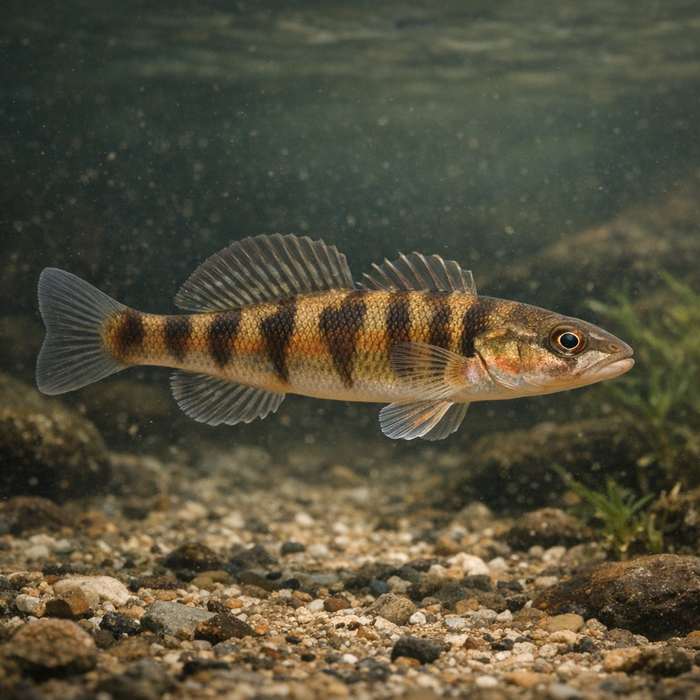
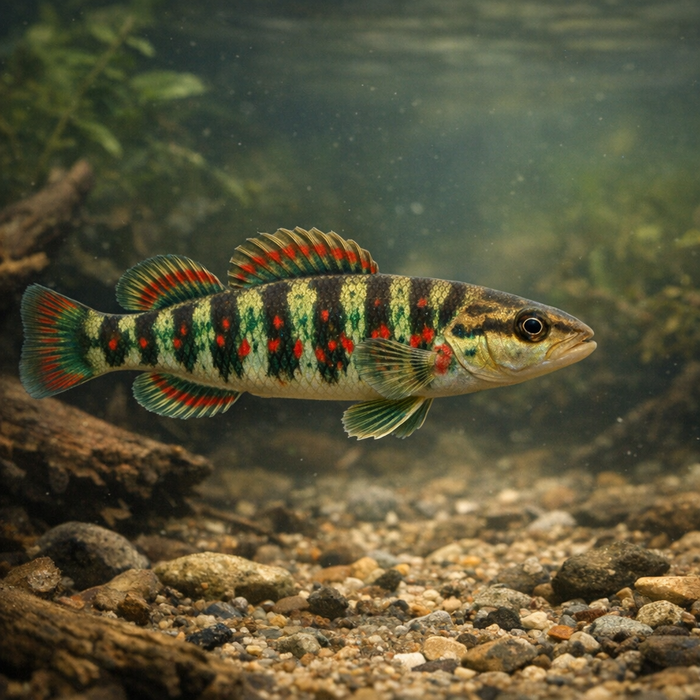
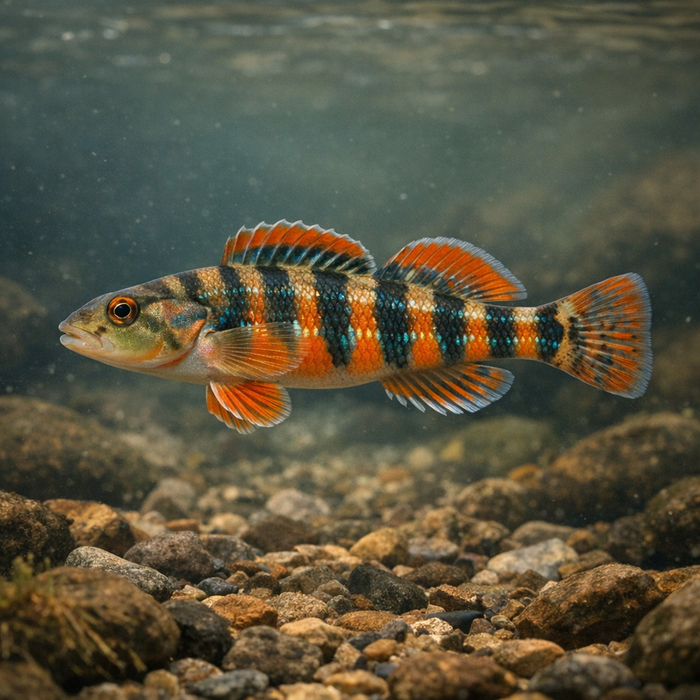
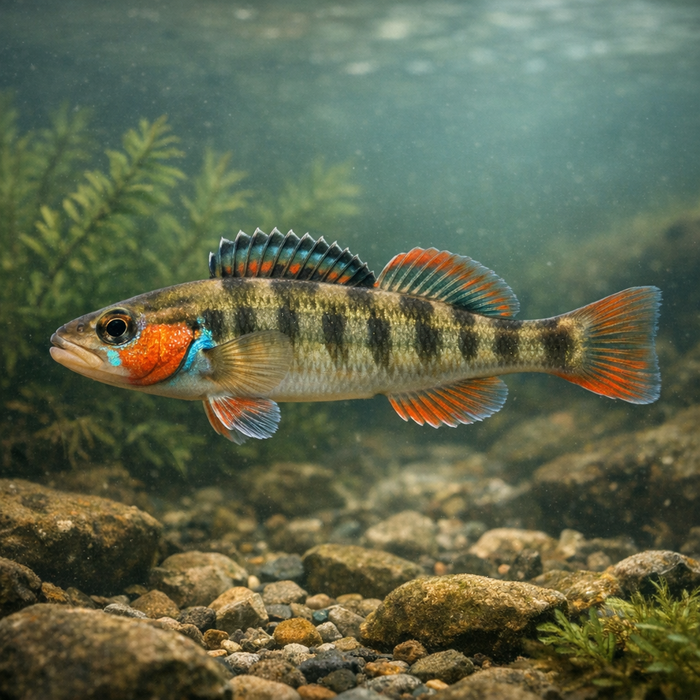
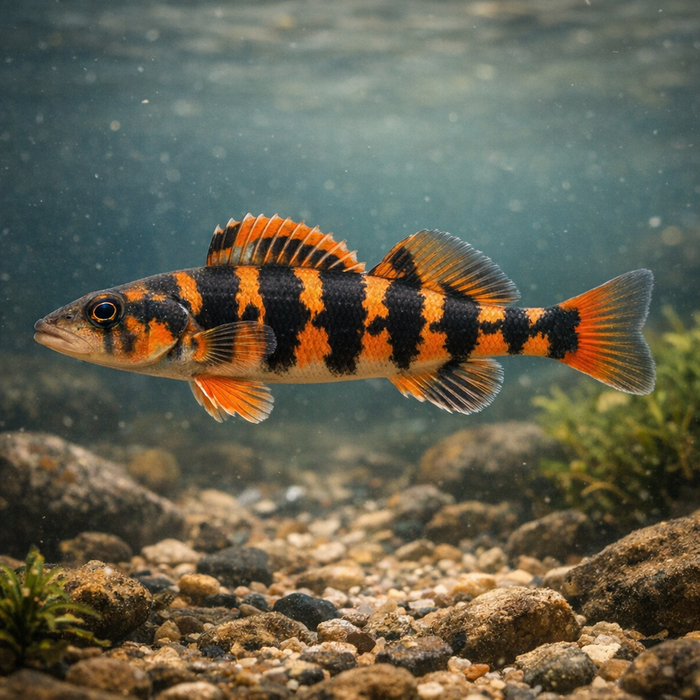
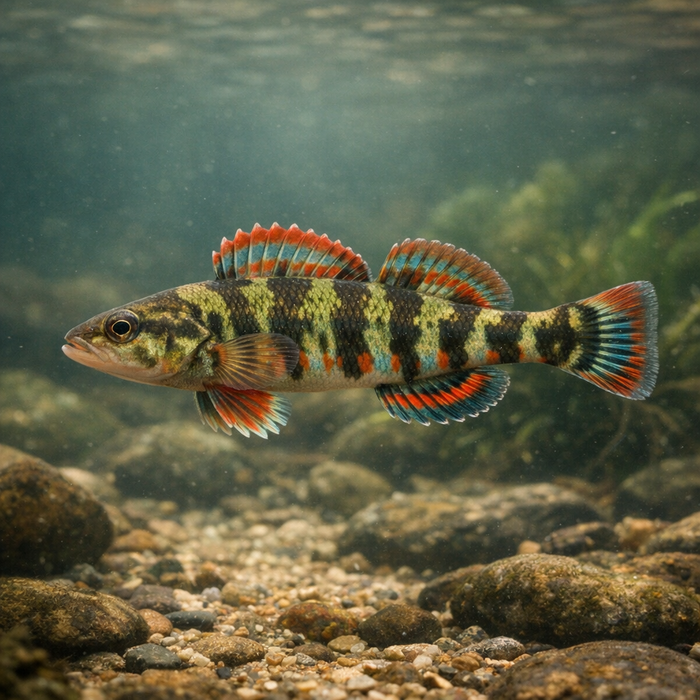
Tuskaloossa Darter (Etheostoma douglasi): Small Fish, Big Personality In Fast WaterIntroductionThe Tuskaloossa darter is proof that a fish doesn't need mass to have swagger. It's a thumb-length bottom sprinter wired for current, sharp in color when the season's right, and completely unapologetic about living where water moves and the substrate bites your boots. If you're here for Tuskaloossa darter facts or curious about authentic Tuskaloossa darter habitat, buckle up for a micro-sized fish with maximum attitude.What Makes the Tuskaloossa darter Unique?First, it's a specialist. The Tuskaloossa darter hugs the bottom with an almost lizard-like posture, using wide pectoral fins as stabilizers so it can scoot between stones without tumbling downstream. Second, breeding males don't just dress up; they flip on high contrast bars and crisp fin accents that look airbrushed. Third, Etheostoma douglasi is a microfishing grail target: tiny, precise, and a genuine test of stealth and presentation. You don't stumble into this fish. You plan, you slow down, and you get deliberate.Habitat & Global RangeCall it riffle royalty. The Tuskaloossa darter prefers shallow, clear, well-oxygenated flows where gravel, pebble, and cobble dominate and silt is the villain. Think inches to a foot of water, brisk current, and clean substrate with scattered slab rocks. It's a southeastern U.S. native with a tight footprint, especially around the Tuscaloosa, Alabama area that inspired its name. If you want one, you're reading riffles, not pools. Flip the mental switch from "fishing a river" to "fishing ten square feet of perfect velocity and structure." That's where this species clocks in.Behavior & TemperamentThis darter is a bottom-hugger and a current-user, not a cruiser. It spooks fast, bolts a few stones, then freezes. Feeding is hyper-local: microinvertebrates swept by the flow or plucked from gravel, all within a body-length or two of cover. It's not a schooling spectacle; scattered individuals hold micro-territories, especially around prime rocks. In the lead-up to spawning, males claim real estate, court with quick fin flashes, and guard adhesive eggs under flat stones with surprising intensity for something so small. The Tuskaloossa darter isn't powerful, but it's tactical.Ecological ImportanceThe Tuskaloossa darter is a living water-quality meter. Because it insists on clean, fast, well-oxygenated riffles with minimal silt, its presence signals a watershed that's still doing something right. It also plugs into the insect-fish-bird food web, transforming drifting invertebrates into energy that ripples upward. When you protect the riffle and the darter, you're also protecting aquatic insects, mussels, and the bigger sportfish upstream and down. Small fish, big footprint.Conservation & Environmental PressuresThis species' strength is also its weakness: specialization. Silt from poor land use, stormwater surges that blow out gravel, or chronic low clarity that blocks courting cues all hit hard. Habitat fragmentation can isolate populations into short river slices, amplifying any local problem. While formal conservation status can change as assessments update, the playbook is universal: protect clean flow, manage sediment, and keep riparian buffers intact. The Tuskaloossa darter doesn't negotiate with mud.The FishyAF TakeWe love how unapologetically niche the Tuskaloossa darter is. It asks you to slow way down, think like current, and treat a pocket of water the size of a doormat like a whole fishery. If your fishing life needs a reset, go find a brisk riffle, crouch, and watch until those little shapes materialize between rocks. Land one cleanly, snap a fast photo, and slide it back like it was never there. The Tuskaloossa darter won't pad your freezer or your biceps, but it will sharpen your eyes and your respect for rivers. That's a trade we'll take every day.