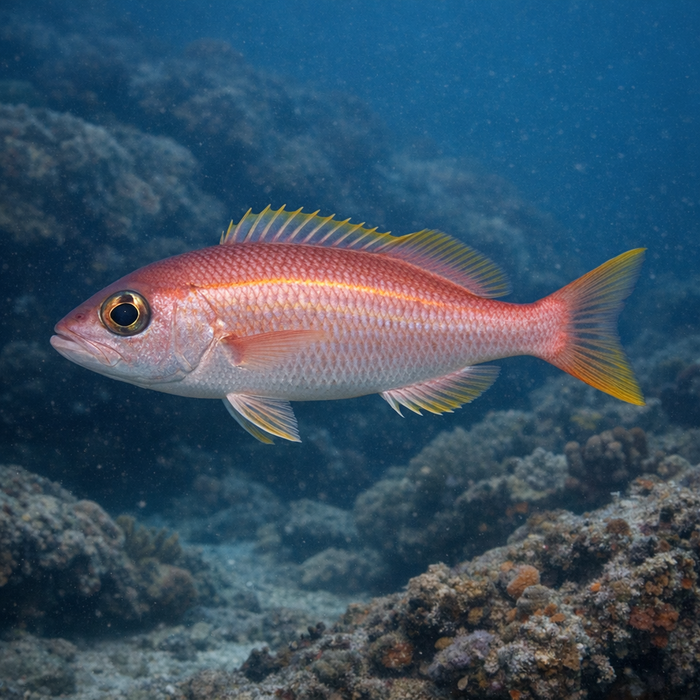
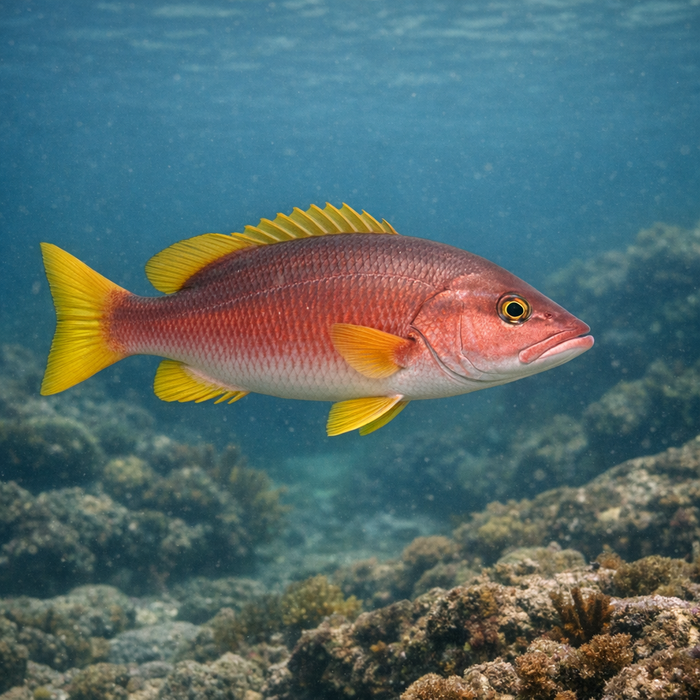
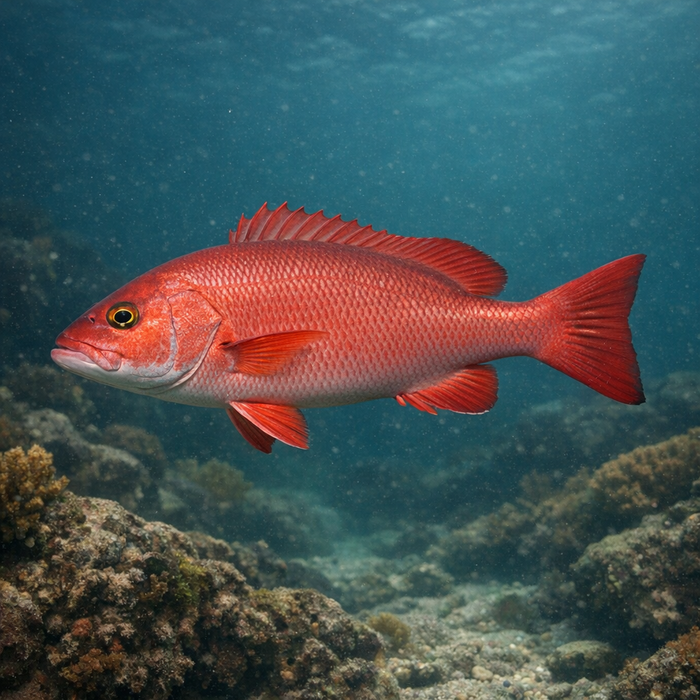
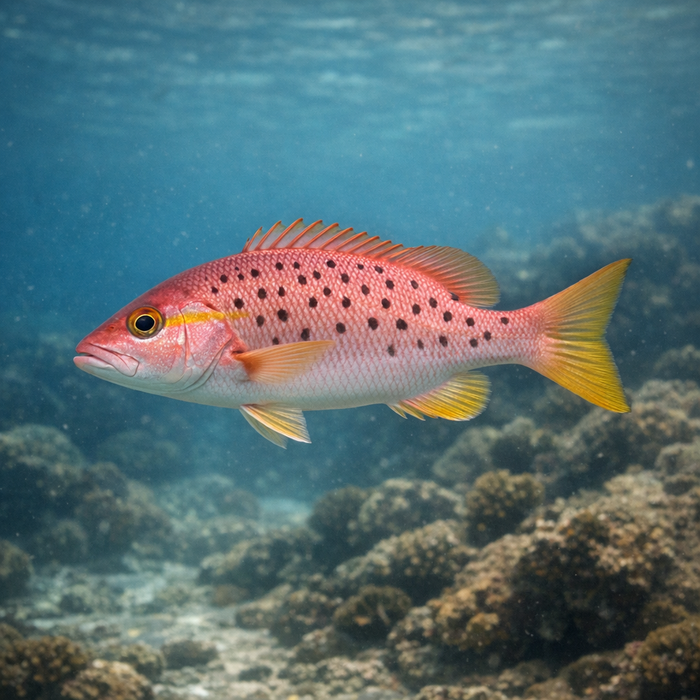
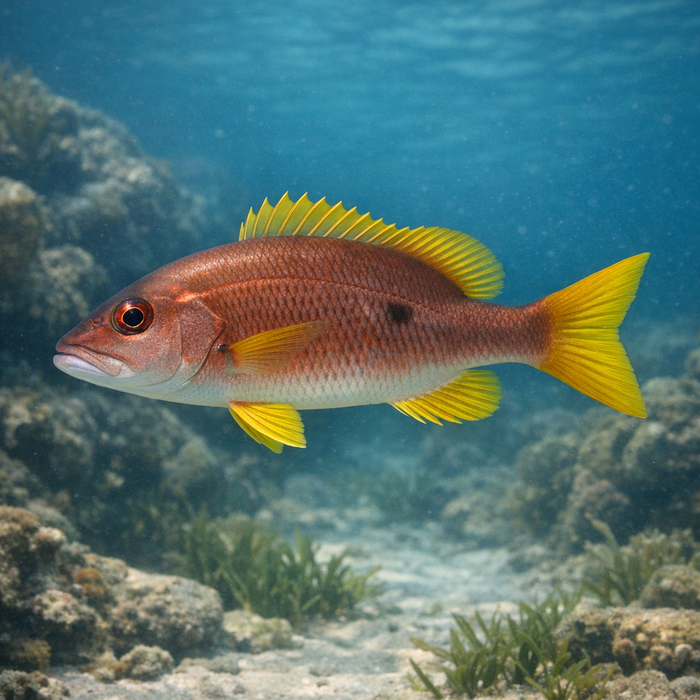
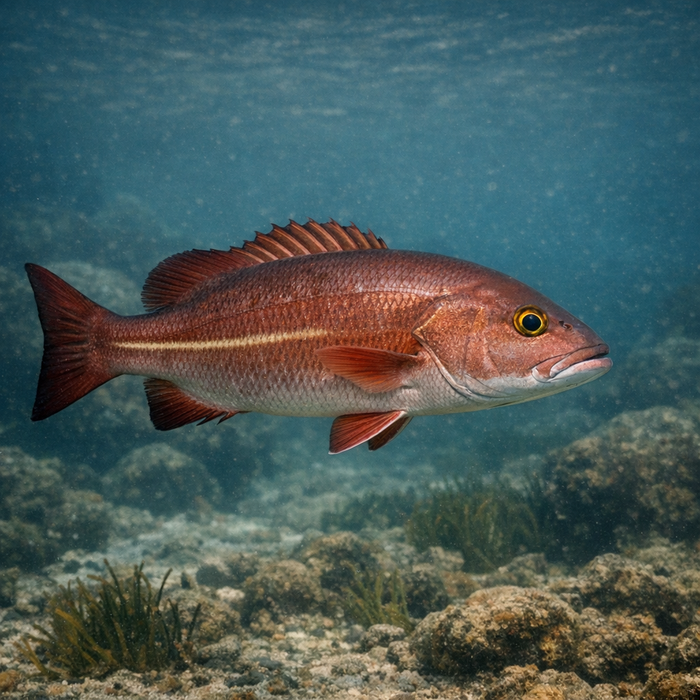
Wenchman (Pristipomoides aquilonaris): A Bold, Memorable Hook LineIntroductionThe wenchman is the snapper you meet when you fish deeper, think smarter, and pay attention to the ledge instead of the beach. It won't win any size contests, but it will absolutely fill a cooler and expose slack rigs and lazy technique. If you're hunting Wenchman facts or sorting out Wenchman habitat, start here: this is a deep-shelf, small-bodied predator that rewards precision and punishes slop.What Makes the Wenchman Unique?Two things set the wenchman apart. First, those big, glassy eyes. They're built for twilight depths where sunlight fades to cobalt and bait hangs midwater. Second, its behavior. Unlike many snappers glued to the rocks, the wenchman often hovers above structure, picking off small fish and squid with quick darts. It's more suspend-and-snipe than cling-and-pounce. Add the pink body and yellow-tinged fins, and it's a dead giveaway in a mixed deep-drop bite.Habitat & Global RangeThe wenchman roams the outer continental shelf of the western Atlantic, from the Southeast U.S. through the Gulf of Mexico and into the Caribbean. It prefers reef edges, hard-bottom patches, wreck perimeters, and the shoulders of deep ledges. Think depths deep enough to need heavy lead and braid, not surf rods. Current matters, as does relief; any rise that funnels bait is a wenchman magnet. In short, Wenchman habitat is structure-rich and off the beaten path, where electronics and boat handling make or break your day.Behavior & TemperamentThis species schools loosely, often suspending 10 to 60 feet off bottom. It feeds by ambush and opportunism, not frontal assault. Drop something meaty that moves, keep it vertical, and you're in business. Hooked wenchman fight with steady pulses rather than wild runs, but deep water magnifies every headshake and turns a two-pounder into a real lift. They do not fuss over fine presentations as much as they care about a consistent angle and a clean, vertical reach into the strike zone.Ecological ImportanceWenchman are mid-tier predators in a deep shelf food web. They convert clouds of small fishes and cephalopods into biomass that bigger reef predators cash in on. By hovering off structure, they bridge benthic and midwater energy, passing calories up the ladder. They're also a tidy bycatch buffer in multi-species deep-drop fisheries, smoothing out pressure across the snapper guild rather than hammering one marquee species.Conservation & Environmental PressuresAs snapper go, the wenchman sits on the quieter side of management spotlights. It's currently assessed as Least Concern, but that doesn't mean it's invincible. Deep-shelf species are vulnerable to effort creep, better electronics, and the all-too-human desire to drop one more time. Barotrauma is a serious reality. Smart anglers carry descending devices and use them. And while not typically a ciguatera headliner, any reef predator in tropical waters can be part of that conversation depending on region and size.The FishyAF TakeThe wenchman is the blue-collar deep-shelf snapper: unpretentious, highly edible, and a brutally honest judge of your deep-dropping fundamentals. Want proof your braid angles are tight and your boat control is dialed? Catch a pile of these. Want a sushi-grade ego check? Miss the bite window because you didn't adjust for current. The wenchman won't trend on social, but if you fish offshore structure seriously, it's part of your vocabulary. Fish them right, respect releases, and keep a mental notebook. Master the wenchman, and a lot of other deep-reef problems start solving themselves.