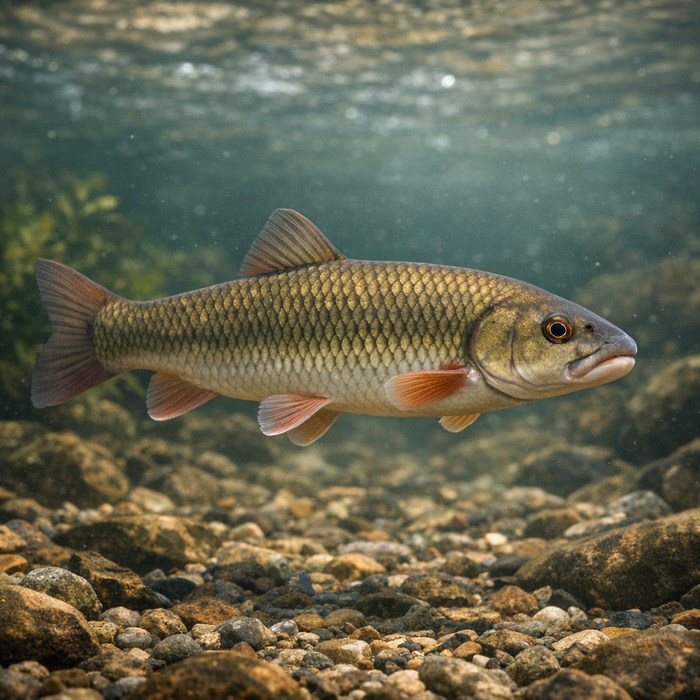
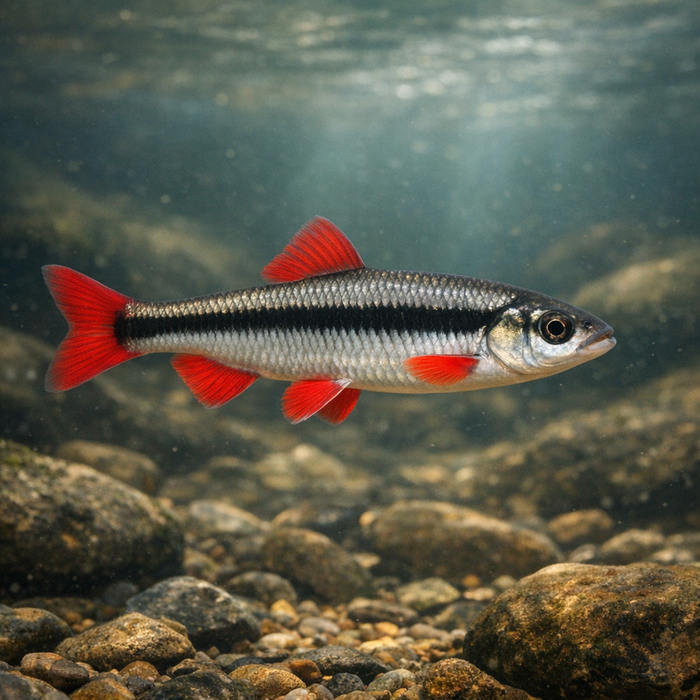
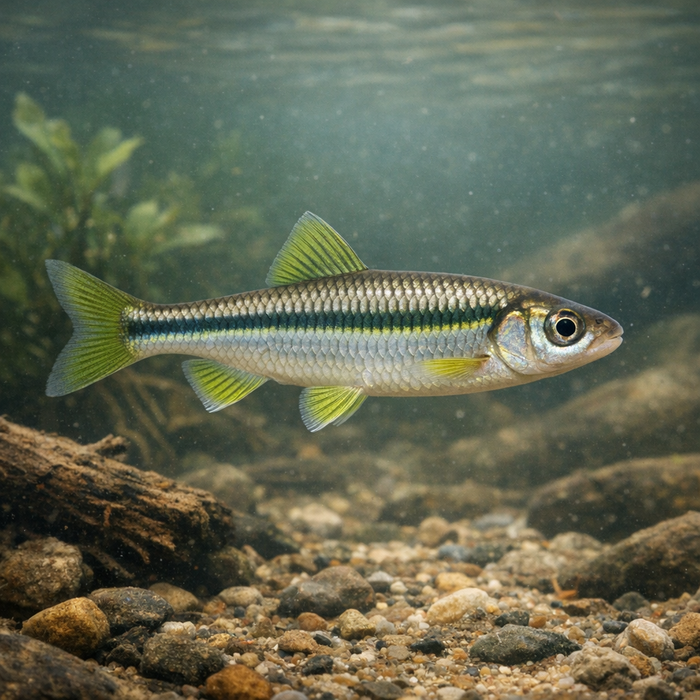
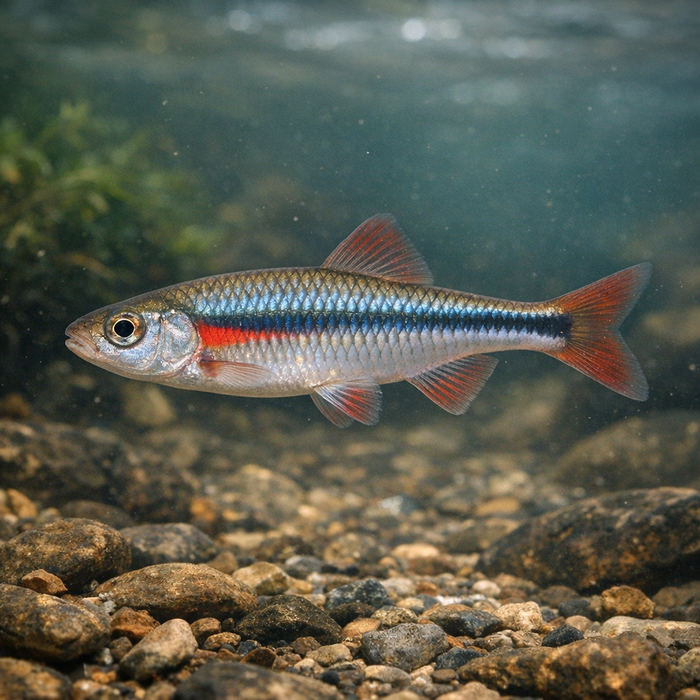
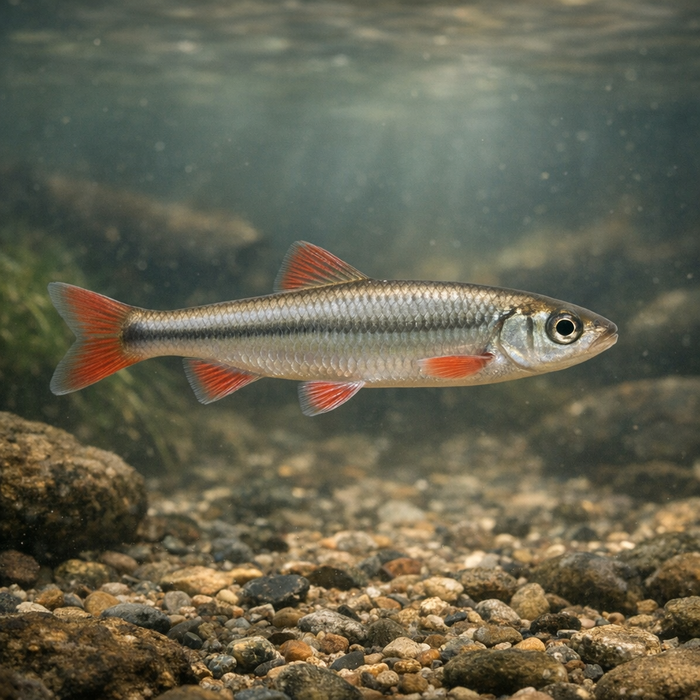
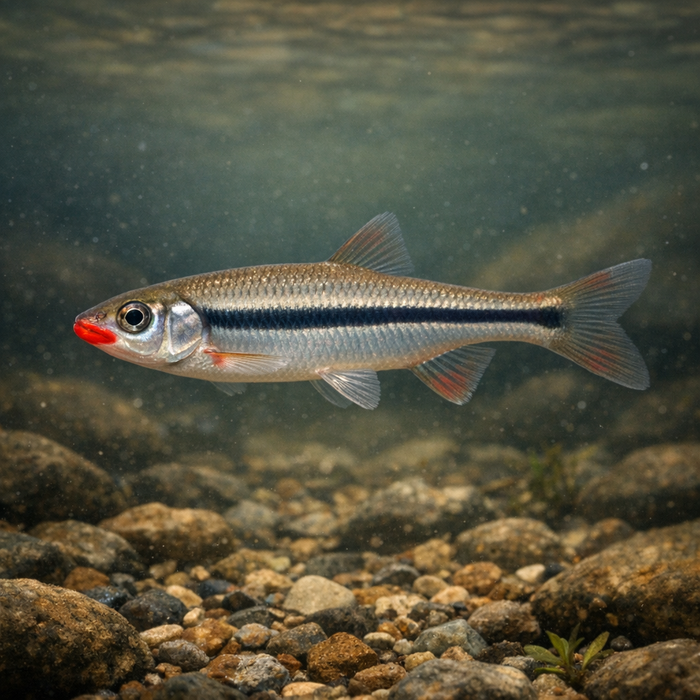
Whitefin Shiner (Cyprinella nivea): A Bold, Memorable Hook LineIntroductionThe whitefin shiner is the little flashbulb of Piedmont streams, a schooling spark plug that turns riffles into laser shows when the sun hits right. It's tiny, quick, and way prettier than its "baitfish" label suggests. For anglers who appreciate finesse and the weirdly satisfying world of microfishing, the whitefin shiner offers plenty of action in ankle-to-knee-deep current. Consider this your crash course in whitefin shiner facts without a lecture hall vibe.What Makes the Whitefin shiner Unique?Two things: color and courtship. During the spawn, males throw on a blue-green back, jet a dark side stripe, and flash those milky white fin tips like runway lights. Up close you'll see rough little bumps on their snouts called tubercles, used for quick shoves and nest guarding. The whitefin shiner also favors a crevice-spawning strategy. Instead of spraying eggs everywhere, fish pack them into narrow rock cracks or under slabs, with one or more males holding the real estate and fanning fresh water across the eggs. It's surprisingly tactical for a fish that fits in your palm.Habitat & Global RangeThe whitefin shiner is a Southeastern specialty centered on Atlantic-slope drainages. Think North Carolina into South Carolina and Georgia, especially Piedmont waters with decent gradient and clean gravel. The whitefin shiner habitat sweet spot is clear riffles and runouts where flow stays honest but not insane. You'll also bump into them in pools below riffles and along undercut banks, especially when predators cruise through. They're not a reservoir headliner, but small tributaries feeding bigger rivers often host big schools. If you're scouting, look for stable cobble, visible seams, and that faint river tea color you get from leaf litter, not sludge.Behavior & TemperamentSchooling is the whitefin shiner's superpower. Dozens to hundreds move like a single organism, darting, pivoting, then settling to feed midwater. They graze on drifting insects and fine organic bits, but a well-placed crumb or micro-nymph gets mauled. Current is their conveyor belt; where it concentrates food, they're there. They spook fast in glassy water, then regroup seconds later once the world stops shaking. During spawning season, males claim prime cracks, turning ordinary river cobble into contested real estate. Hook one and it's not about the fight. It's about precision, timing, and that instant swirl of silver telling you the school approved your presentation.Ecological ImportanceThis species is small but not small-time. Whitefin shiner schools are walking buffets for bass, sunfish, and stream predators, shuttling energy up the food chain. By vacuuming up drifting invertebrates and biofilm, they help keep nutrient cycles moving and maintain the river's biological "middle class." Their need for clean gravel and steady current makes them a handy barometer for stream health: if whitefin shiners are thriving, your local watershed is likely doing a lot right.Conservation & Environmental PressuresOverall, the whitefin shiner is doing fine, but that's not an excuse to trash the creek. Sedimentation from construction and poorly managed agriculture gums up the crevices they use to spawn. Low dissolved oxygen from warm, stagnant pools can push schools into shrinking refuges. Add culverts that slice streams into fragments and you've got subtle, chronic stress. The good news: riparian buffers, smart stormwater control, and keeping rocks in the water instead of on trucks go a long way. If you want more whitefin shiner, you want functional riffles and clean flows.The FishyAF TakeThe whitefin shiner is proof that "baitfish" can be a blast. If your idea of fishing glory requires a graphite trophy, cool, go swing streamers for a bruiser. But when your fun meter recalibrates around skill instead of size, this fish shines. Micro hooks, 2-4 lb line, knee-deep riffles, and a few crumbs or tiny flies will teach you more about current and presentation than a month of chuck-and-wind. It's simple, honest fishing in water you can read with one glance. And when those white fins flare in the sun, you'll remember why you walked past the crowded parking lot to the little creek in the first place. That's Whitefin shiner habitat turned into a smile.