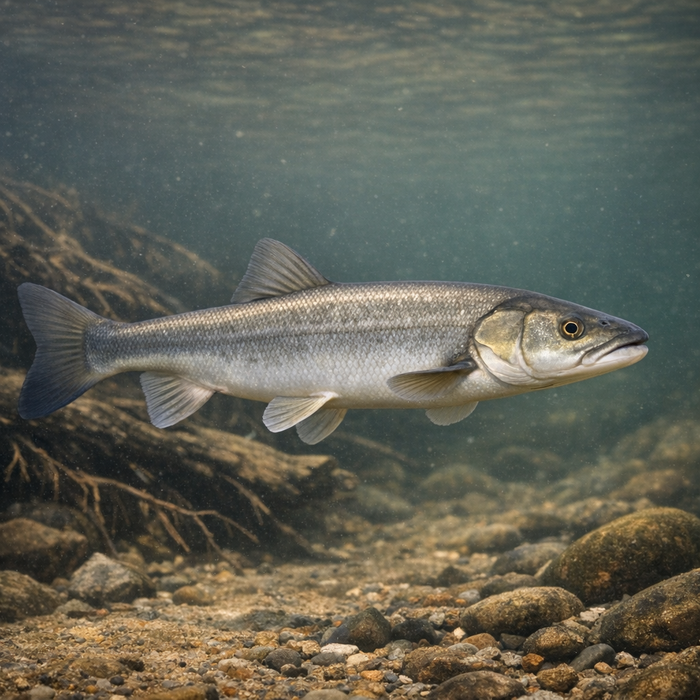
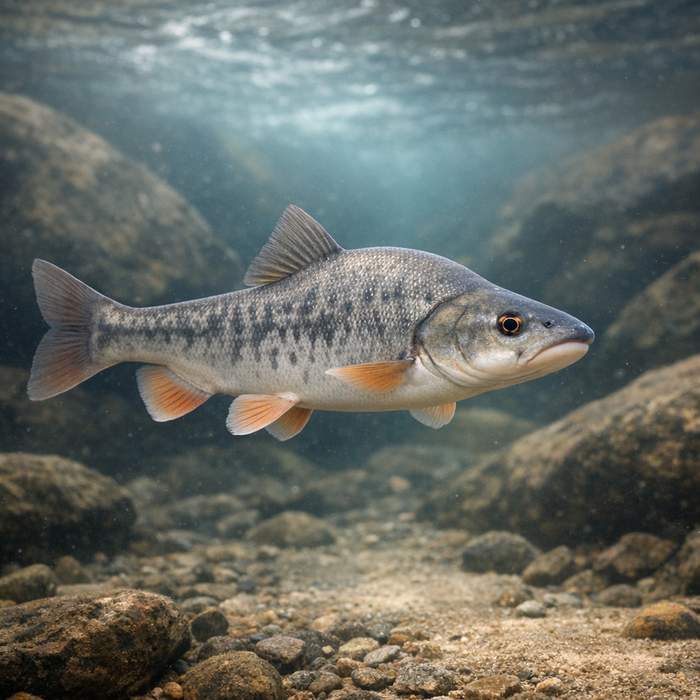
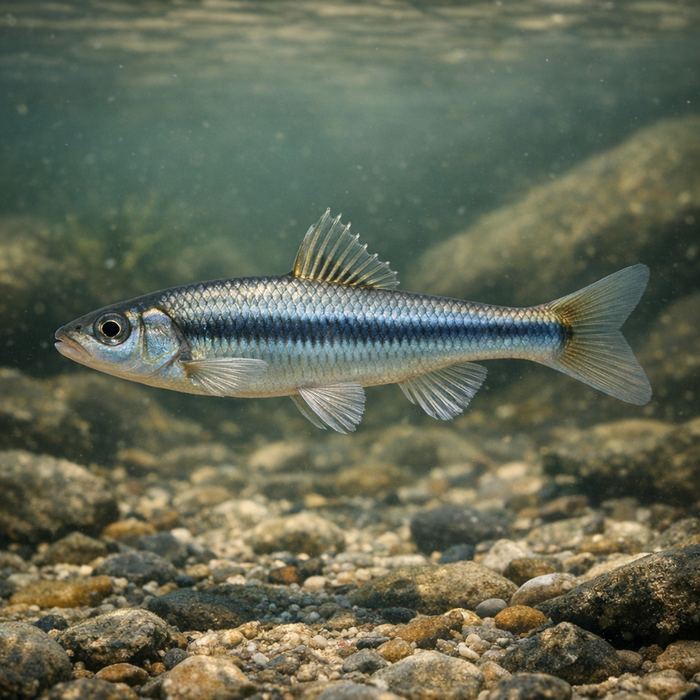
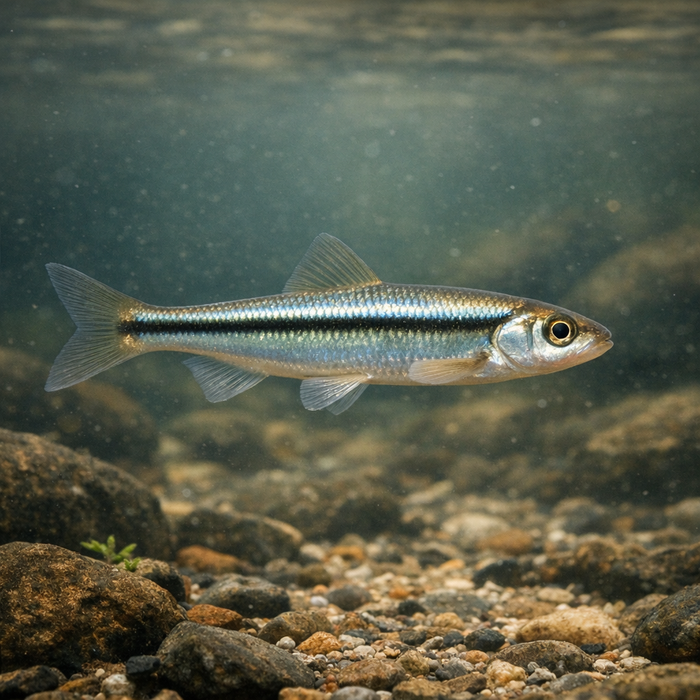
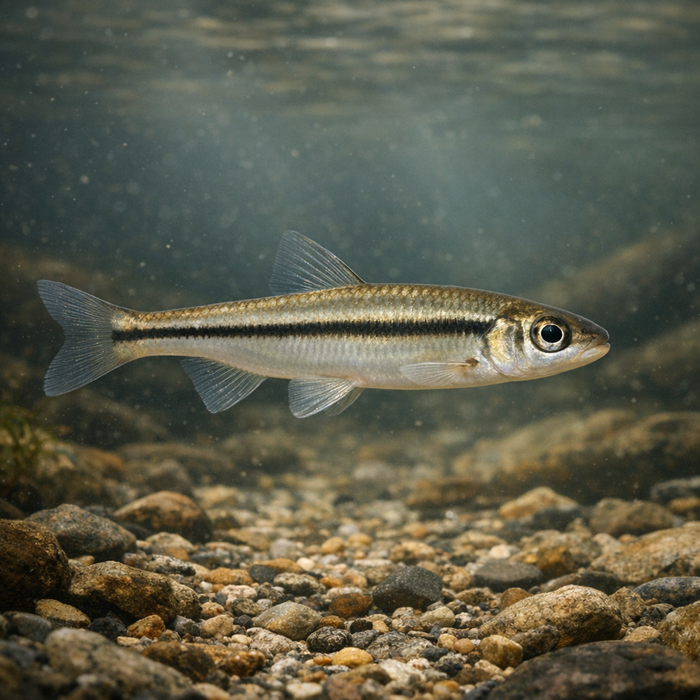
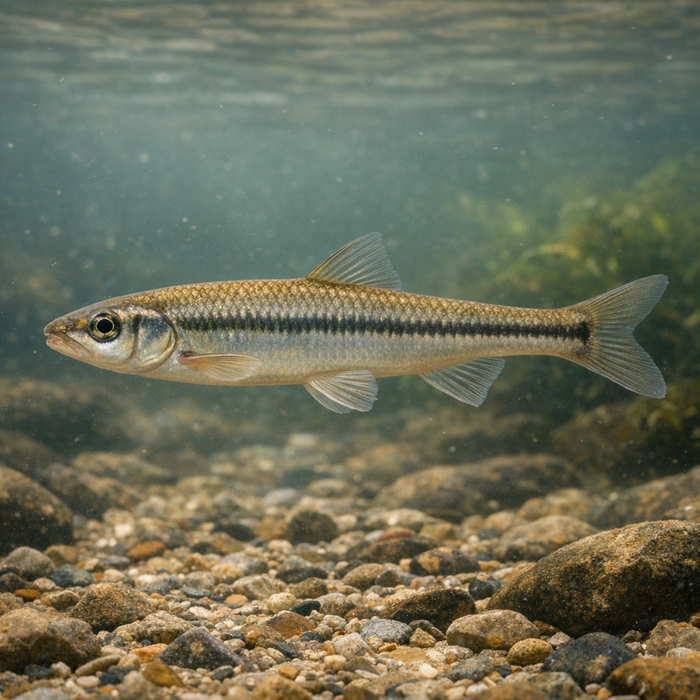
Woundfin (Plagopterus argentissimus): Desert sprint car in a silver suitIntroductionThe woundfin is the desert's little torpedo, a scaleless slip of silver that survives where sane fish won't. Think bathtub-warm flash floods, sand-scoured runs, and current that shoves you sideways. This isn't a bucket-list gamefish; it's a conservation icon with a cult following among fish nerds and river diehards. If you came for meat or a mount, you took a wrong turn. If you want real Woundfin facts and gritty river truth, keep reading.What Makes the Woundfin Unique?Start with the build: slim, nearly scaleless, and streamlined for speed in abrasive, turbid water. That slick skin reduces drag and wear when the river turns into liquid sandpaper. Up top is a sharp first dorsal ray, the tiny "wound" that gave the fish its name. And unlike many minnows, woundfin are heat-tolerant sprinters, hanging on through summer spikes that would melt the edges off other species. Short life, early maturity, and a high-rev metabolism keep the lineage going between floods, droughts, and everything nasty a desert river throws at them.Habitat & Global Range"Woundfin habitat" isn't a broad category; it's a razor-thin niche. Picture warm, turbid desert rivers with swift runs, shifting sand, and thin boundary layers where laminar flow kisses chaos. That's their track. Historically they roamed more southwestern drainages, but today they're tied tightly to select reaches of the Virgin River system. It's not a lake fish. It's not a backwater cruiser. It lives where the water moves, the bottom flexes, and visibility is a rumor.Behavior & TemperamentWoundfin hold on seams and riffle edges like tiny athletes, conserving energy until the drift brings food to them. They're not thugs; aggression is low and spooking happens fast in skinny water. They'll stage inches deep when the flow lays out right, then slip lower when the river roars. Schooling is loose and practical, not a baitball spectacle. Feeding windows sync with current and temperature: warm enough to rev the engine, steady enough to keep them balanced on the seam.Ecological ImportanceThe woundfin is a heartbeat species for desert rivers. When flows, temperatures, and sediment pulses sit in the right groove, woundfin hang on and spawn, and that story echoes across the food web. When invasive competitors like red shiners jam the nursery or water management flattens the hydrograph, the tiniest link snaps first. Keep woundfin around and you keep a lot of desert-river function intact. Lose them and you didn't just lose a minnow; you lost the signal telling you the river is sick.Conservation & Environmental PressuresHere's the hard truth: the woundfin is critically endangered. Fragmented habitat, altered flows, nonnative species pressure, and drought stack the deck. Conservation work reads like triage: refuge rearing, strategic translocations, invasive removal, and flow management that tries to mimic natural surges without blowing the doors off what's left. Handling is for biologists with permits. Anglers should admire, not target. If you're banking Woundfin facts for the barstool, make this the headliner: survival hinges on keeping desert rivers messy, moving, and seasonally wild.The FishyAF TakeThe woundfin is proof that small doesn't mean soft. It's a chrome sliver purpose-built for a river that eats gear, shreds banks, and laughs at comfort zones. You don't chase the woundfin with a rod; you chase the idea that rivers deserve room to breathe. Learn the seams, read the sand, love the ugly, high-energy water most folks walk past. Respect the rules, support the crews doing the wet work, and let the woundfin keep its mystique. Out here, winning isn't a grip-and-grin. It's seeing that silver flash bolt through a riffle and knowing the river still has a pulse.