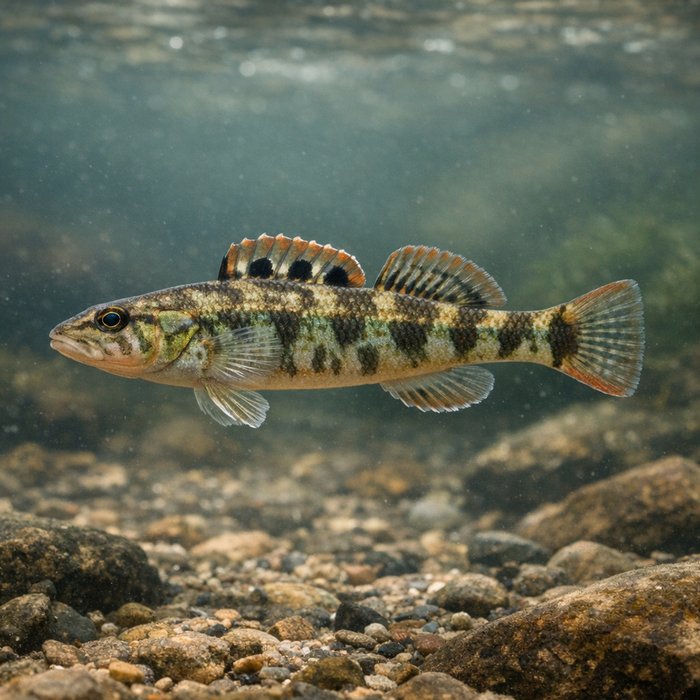
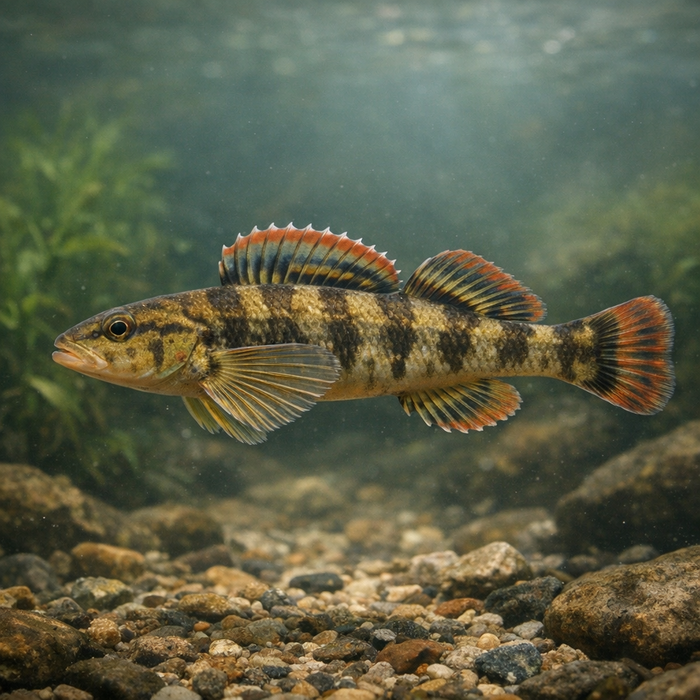
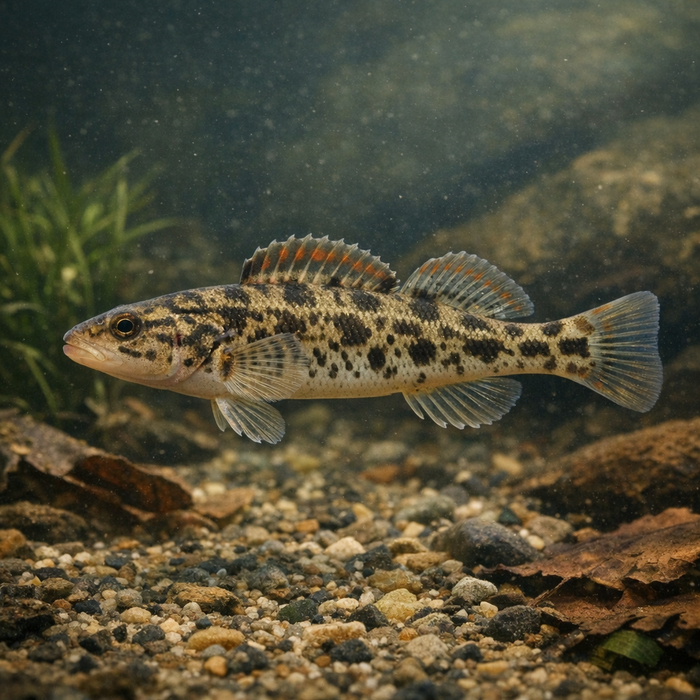
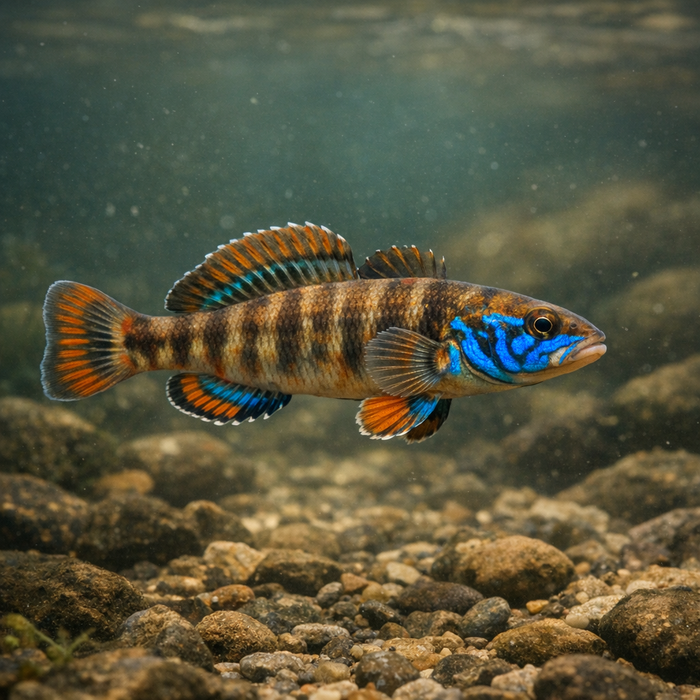
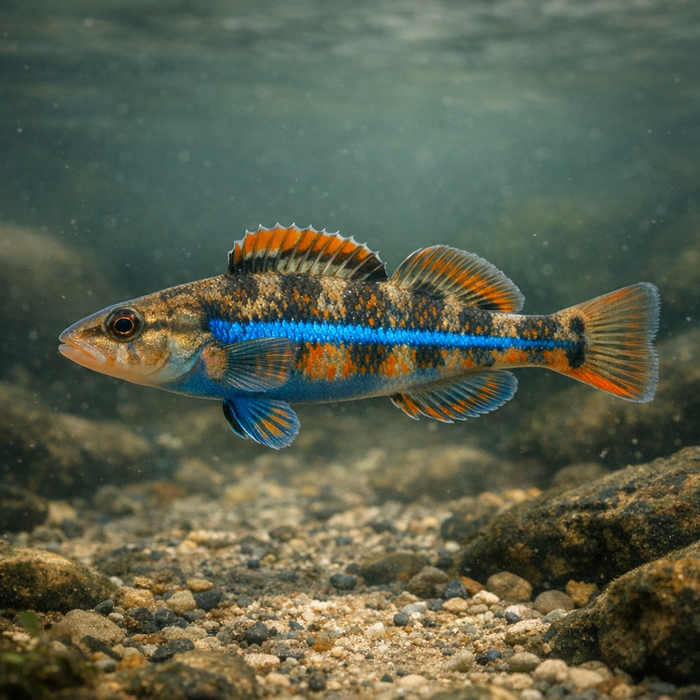
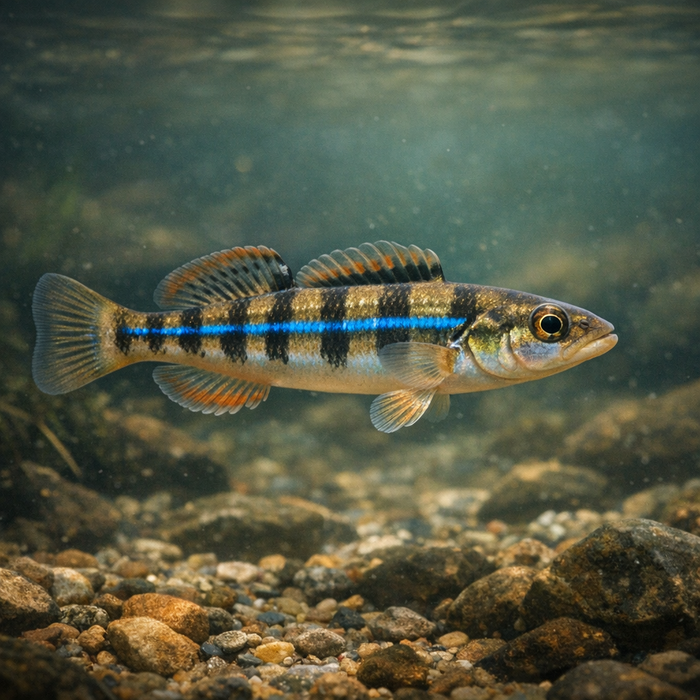
Yoke Darter (Etheostoma juliae): Small Fish, Big Riffle EnergyIntroductionYou're staring at whitewater and cobble, thinking nothing that tiny could own this current. Then a blur with a black throat bar rockets between stones. That's the Yoke darter, an Ozark riffle specialist with zero patience for slack water. It's small, feisty, and pure current junkie. If you're into microfishing or just love collecting weird river trivia, this little bruiser delivers.What Makes the Yoke darter Unique?First, the namesake "yoke" is real. In breeding season, males darken a bold band across the throat and breast that looks like an ox yoke stamped in ink. Second, the Yoke darter is built like a bottom-hugging torpedo with a reduced swim bladder. It doesn't float; it clings and darts, using broad pectorals to pin itself to rock in frothy flow. Third, it's a sprinter. Strikes are vacuum-fast, a flick-and-suck feeding style that turns caddis larvae and midges into instant calories. You won't mistake this for a lazy pool fish.Habitat & Global RangeThe Yoke darter lives a focused life. Think clear, cool Ozark streams with limestone bones, spring influence, and honest-to-goodness current. Gravel, cobble, and bedrock riffles are home base, especially where oxygen cranks and silt stays low. This isn't a pond cruiser. When folks ask about Yoke darter habitat, point them to knee-deep riffles that make your ankles hum. Its geographic range is tight, which keeps the species a local specialty and a fun microfishing target for anglers who appreciate Ozark water.Behavior & TemperamentYoke darter don't roam much. They hold territories in productive riffle lanes and make short, decisive moves. Skittish in bright water, they still hit tiny offerings when presented perfectly on the bottom. Spawning fires up in early spring when males crank up the yoke and guard egg patches under flat stones. Despite the tough-guy posture, a Yoke darter fight is more jitter than tug. The thrill is the sight game, not a drag-screaming run.Ecological ImportanceCall the Yoke darter a riffle quality-control inspector. It trims benthic insect populations, recycles nutrients up the food ladder, and broadcasts habitat condition better than any signboard. When silt chokes gravel or nutrients go haywire, Yoke darter numbers fade. Healthy populations usually signal cold, clear flow and intact riparian buffers. In other words, it's a perfect stream report with fins.Conservation & Environmental PressuresThe Achilles' heel is habitat. Excessive silt from poor land use, channelization, low-head dams, and heavy groundwater withdrawals can flatten riffles and mute current. Nutrient spikes turn clear water cloudy, and once-grippy stones get slimed. While many Yoke darter populations remain stable where Ozark streams are protected, localized declines appear when riffles get buried or fragmented. Practical fixes aren't fancy: stabilize banks, keep buffers shady, manage runoff, and respect the spring-fed heartbeat of these creeks.The FishyAF TakeThe Yoke darter is proof that charisma comes in three inches. It's picky about flow, unapologetically local, and looks like it painted its own throat for battle. If you're collecting species or chasing micro-milestones, this one is a rite of passage. Nail the presentation, admire the yoke, and let it rocket back to its lane. For anglers who crave current and nuance, few fish punch this far above their weight. File it under Yoke darter facts you can brag about later: small fish, loud personality, and a habitat snob in the best possible way.