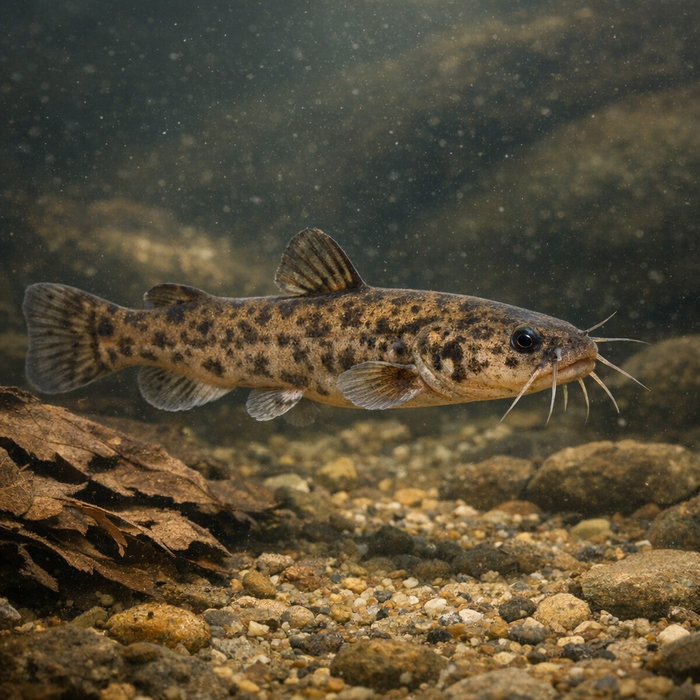
Amur Catfish (Silurus asotus): The Bottom-Dweller That Blows Up Your Topwater
A slow retrieve, a clacking surface plug, and a quiet riverbank: then the water interrupts. The Amur Catfish makes a convincing argument against treating every catfish as a bait-and-wait proposition. In Japan, this freshwater predator is an established target for noisy topwater fishing, delivering surface attacks that can be considerably easier to hear than to convert into hooked fish. That uncertainty is part of the appeal. You are not simply waiting for a rod tip to move; you are working cover, controlling pace, and trying not to strike at the splash instead of the fish.
What Makes the Amur Catfish Unique?
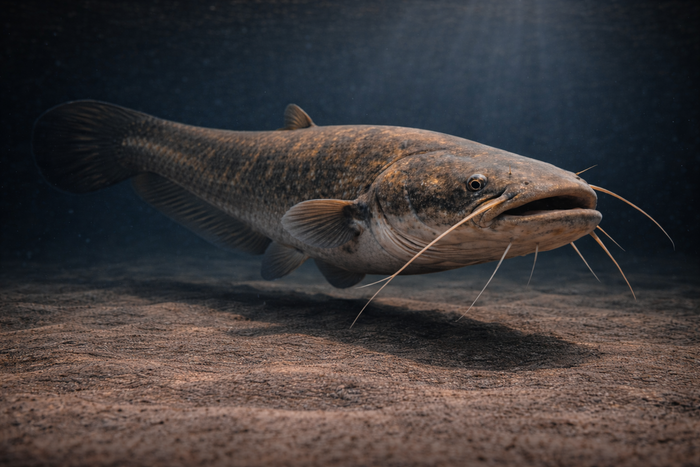
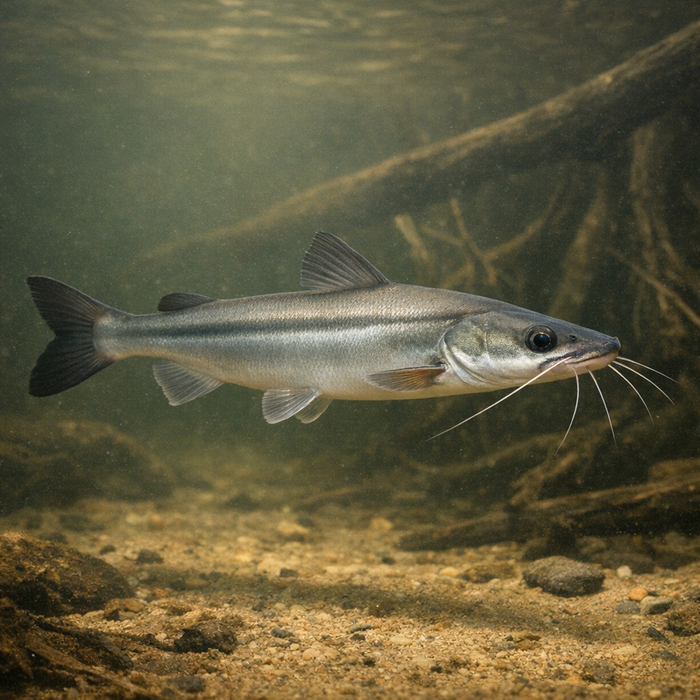
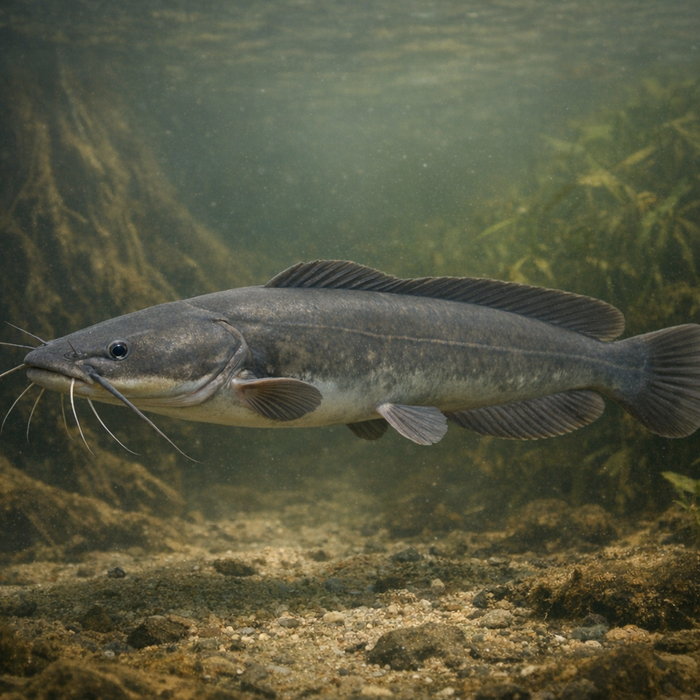
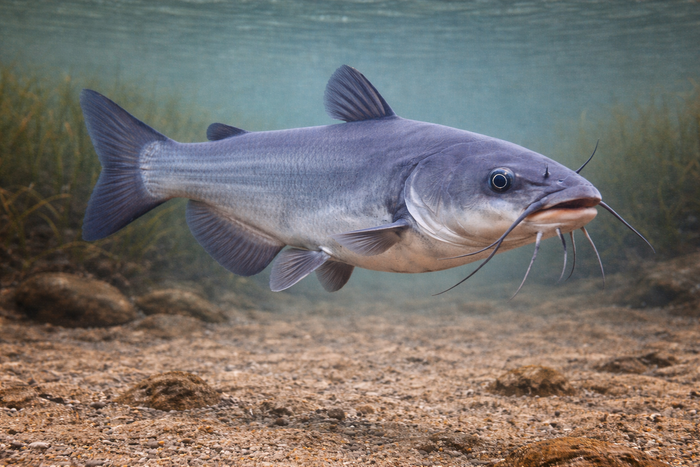
Start with the whiskers. Adults have four barbels, but young fish can have six, losing one lower pair during development. It is an unusually visible reminder that a juvenile is not always just a miniature adult. Laboratory observations have documented that disappearing pair alongside a shift toward spending more time on the substrate. Those familiar whiskers come with a developmental plot twist.
The Amur Catfish also takes reproduction beyond the permanent river channel. Japanese populations enter temporary waters, including flooded rice fields, to spawn. Rainfall and irrigation can open reproductive habitat that barely existed beforehand. Males pursue females and wrap around their bodies during spawning, with behavioral differences documented between populations. This is not a fish whose entire life can be understood by staring at the deepest pool. Some of the most interesting Amur Catfish facts happen where land temporarily becomes water.
Habitat & Global Range
The species belongs to the freshwater catfish family Siluridae and occurs across East Asia, including Japan, China, the Korean Peninsula, Taiwan, and Russia. Slow rivers, lakes, ponds, and connected lowland waterways provide its familiar setting. In Japan, vegetated muddy bottoms, middle and lower river reaches, and irrigation channels are characteristic places to encounter it. Think sheltered freshwater rather than a cold, crashing mountain torrent.
For anglers, Amur Catfish habitat is best read through edges and connections. Vegetation, submerged obstacles, and gentle-current refuges offer places to investigate. The Tama River around Tokyo and the Tsurumi River basin in Kanagawa are useful Japanese starting points, but a river name is not a guarantee of fish behind every bridge. Local access and suitable freshwater reaches matter more than a famous label. Presence in the Tsurumi basin is documented by fish surveys.
Behavior & Temperament
The Amur Catfish is primarily nocturnal. During daylight it commonly shelters around bottom structure or vegetation; darkness brings more active hunting. Small fishes, crustaceans, and frogs appear among its prey. That combination of concealment and predation explains why fishing close to cover can be more productive than treating open water as an undifferentiated casting range. The fish has a broad mouth and an appetite, but neither makes every presentation irresistible.
Surface fishing highlights the entertaining contradiction. A predator associated with the bottom will attack a noisy plug overhead, yet spectacular strikes often fail to connect. A slow, controlled presentation gives anglers a practical way to work the opportunity. Daytime fishing is possible around suitable shelter, so nocturnal does not mean unavailable until midnight. For planning purposes, warmer months offer the stronger Japanese fishing window, while winter activity drops. Weather, shade, and water conditions still deserve more attention than a rigid calendar.
Ecological Importance
In Japanese freshwater systems, this species functions as a high-level predator. Its feeding links it to smaller aquatic animals, while its reproductive movements connect permanent waters with seasonally flooded margins. Those margins are not decorative extras; they can be part of the machinery that produces the next generation.
Research around rice-field waterways shows why that distinction matters. Adults and eggs may occur in channels used for spawning even where conditions are less suitable for subsequent development. Seeing a large catfish in a drain does not establish that the drain provides a complete, successful nursery. Habitat quality has to include the vulnerable stages, not just the impressive ones.
Conservation & Environmental Pressures
The Amur Catfish is assessed as Least Concern globally. That is a statement about overall extinction risk, not permission to assume every local population is thriving. Japanese research has examined declining paddy-associated populations and the consequences of modifying their waterways.
Concrete channel improvements can change spawning and nursery conditions, and research has questioned how effectively modified channels replace the habitat they displace. Keeping water moving is not necessarily the same as keeping a functioning fish habitat. Seasonal connectivity, submerged plants, and places where young fish can develop deserve consideration alongside flood control and agricultural drainage. For anglers, the sensible response is straightforward: respect local restrictions, avoid damaging vegetated margins, and handle released fish efficiently. Protecting the places that make catfish is more useful than admiring adults while their nursery disappears.
The FishyAF Take
The Amur Catfish deserves better than being filed under miscellaneous bottom fish. It offers a distinctive surface game without requiring giant-fish mythology: cover, darkness, a slow noisy lure, and a strike that may or may not become a hookup.
Our take? Fish it deliberately. Scout the bank, make the accurate cast, and resist turning every splash into a full-body hookset. The satisfaction is in learning an overlooked predator on its own terms. You do not need to inflate its size or promise a bite every evening. A fish that can make a quiet freshwater edge suddenly sound very occupied already has enough personality.