Indian Glass Catfish (Kryptopterus bicirrhis): Small Catfish, Long Whiskers, and a Seriously Misleading Name
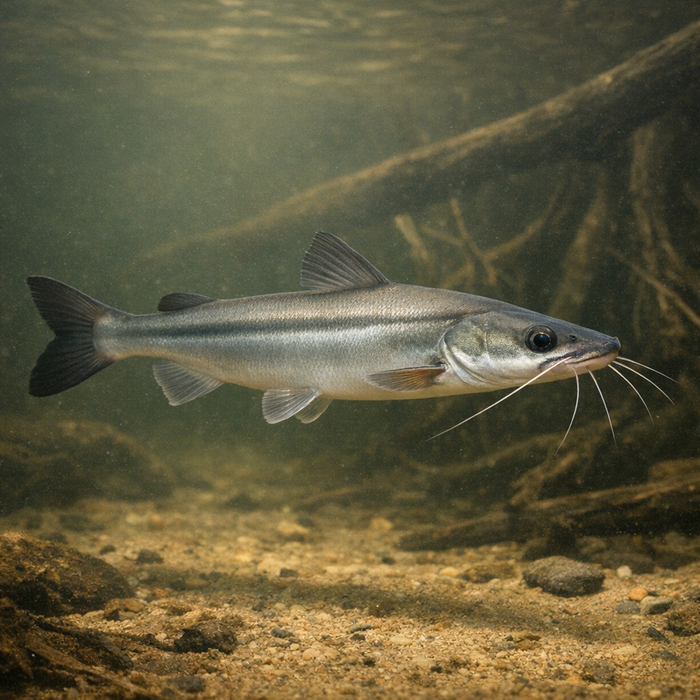
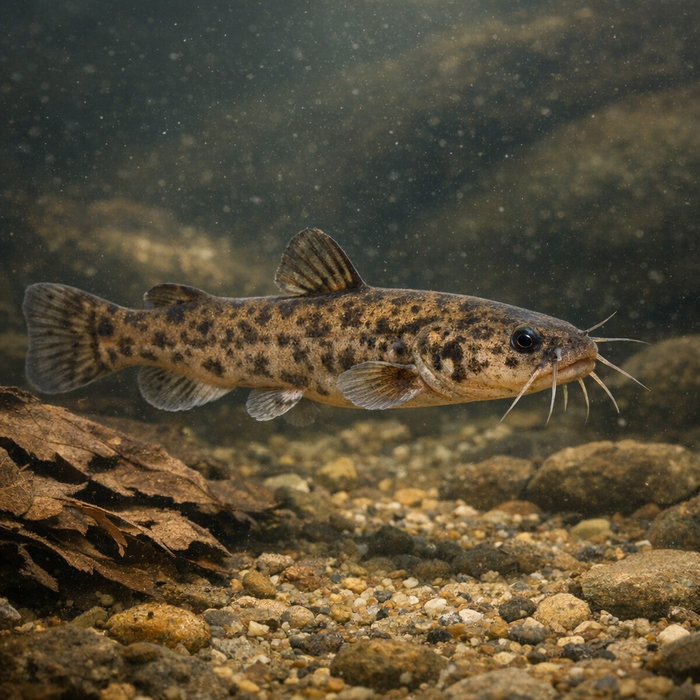
The Indian Glass Catfish comes with two traps before you even wet a line: its name points toward India, and “glass” suggests a completely transparent body. Neither is a reliable identification shortcut. This is a Southeast Asian freshwater catfish, and the true Kryptopterus bicirrhis is not the crystal-clear aquarium fish commonly confused with it. Its appeal is subtler: an elongated body, remarkably long barbels, and proportions that reward a close look rather than a trophy pose.
For anglers, think precision rather than horsepower. The typical size range is just 3.5–4.5 inches, so this is an identification challenge with fins, not an excuse to buy a heavier rod. Getting the name right matters more than making the catch sound big.
What Makes the Indian Glass Catfish Unique?
Start with the whiskers. Its upper-jaw barbels extend back to the anal fin, giving this little fish a strikingly long sensory silhouette. Then look at the fins: the dorsal fin is rudimentary, while the extended anal fin carries 55–68 soft rays. Its pectoral fins are longer than its head. Those are useful identification details, not merely decorative trivia.
The biggest surprise among Indian Glass Catfish facts is what this species is not. The familiar transparent aquarium “glass catfish” is generally Kryptopterus vitreolus, formally described in 2013. Research distinguishes that transparent species from the translucent or opaque K. bicirrhis. Borrowing its see-through skeleton, aquarium behavior, or laboratory discoveries would give the wrong fish the credit. A common name is an introduction, not a diagnosis.
Habitat & Global Range
Indian Glass Catfish habitat includes turbid rivers and floodplain waters. Its recognized distribution covers the Mekong and Chao Phraya basins, the Malay Peninsula, Sumatra, and Borneo. Biological accounts describe large, cloudy rivers, often with fish occurring near shores in flowing water, and also report entry into flooded fields. That combination makes river margins and connected floodplain habitat more relevant than a generic search for deep catfish holes.
The listed destinations include the Kapuas River, Danau Sentarum, Kampar Kiri River, Jemut Lake, and the Mekong around Kratie. Treat these as starting points for local investigation, not guaranteed fishing spots. Jemut Lake has species-specific biological research behind it, but occurrence alone does not establish reliable recreational catch rates. Ask about access, identification, and current water conditions before planning a session.
Behavior & Temperament
The Indian Glass Catfish is described as diurnal, which immediately challenges the usual assumption that catfishing starts after dark. Its recorded food includes insects, worms, crustaceans, and small fish. Small body, genuine predator. There is no need to inflate that into a miniature river monster; the interesting part is a small catfish exploiting animal prey without fitting the familiar bulky, bottom-grubbing image.
For fishing purposes, keep observation separate from invention. A tiny float and small bait are reasonable experiments, but published catch patterns, fight descriptions, and dependable feeding windows remain limited. Do not promise savage strikes or elaborate runs simply because the fish belongs to the catfish crowd. With this species, detecting a take and confirming the identity are the worthwhile skills.
Ecological Importance
An Indian Glass Catfish occupies the predatory side of a freshwater food web. A Jemut Lake study identified animal food including fish, worms, water fleas, and shrimp, supporting the predator classification. Those observations also explain why small natural offerings are a sensible starting point for anglers, although stomach contents are not proof that a particular hook bait consistently works.
Its value is not limited to recreation. Fisheries accounts report use in fermented fish products, including prahoc and fish sauce. That places this modest fish within local food systems rather than solely inside an aquarium display or species checklist. For a visiting angler, recognizing that context is basic respect: local people may know this fish through livelihoods and meals, not novelty catches.
Conservation & Environmental Pressures
The Indian Glass Catfish is listed as Least Concern, consistent with the species profile. That classification describes assessed extinction risk; it does not certify every population as abundant, every river as healthy, or every collection practice as harmless. Keep those distinctions intact. A reassuring category is useful information, not permission to stop paying attention.
Across the Mekong, fisheries management must contend with fishing pressure and changes to aquatic habitat and connectivity. These are regional concerns, not proof of a measured decline in this particular species. Anglers can still make sensible choices: respect conservation zones, avoid unnecessary collection, and leave banks cleaner than they found them. Small fish do not require small standards.
The FishyAF Take
This fish exposes lazy species writing beautifully. Give it a famous cousin’s transparency, a made-up trophy record, and a confident bait ranking, and suddenly the page sounds impressive while describing almost nothing honestly.
We would rather get the little things right. Fish light. Treat the recommended float setup as provisional. Photograph identifying features, handle the fish carefully, and do not mistake a local nickname for a confirmed species. The reward here is not a dramatic drag scream. It is learning enough about an overlooked catfish to recognize what you actually caught. That is a better fishing story than another oversized claim.