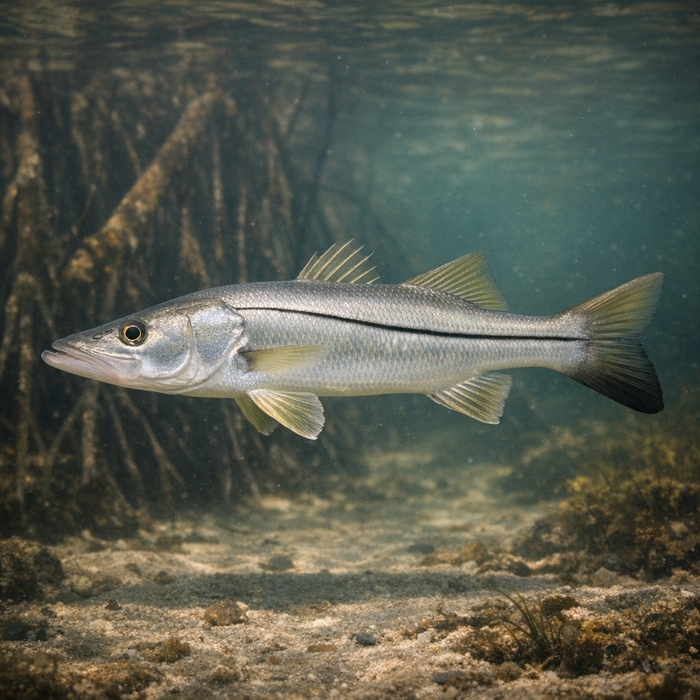
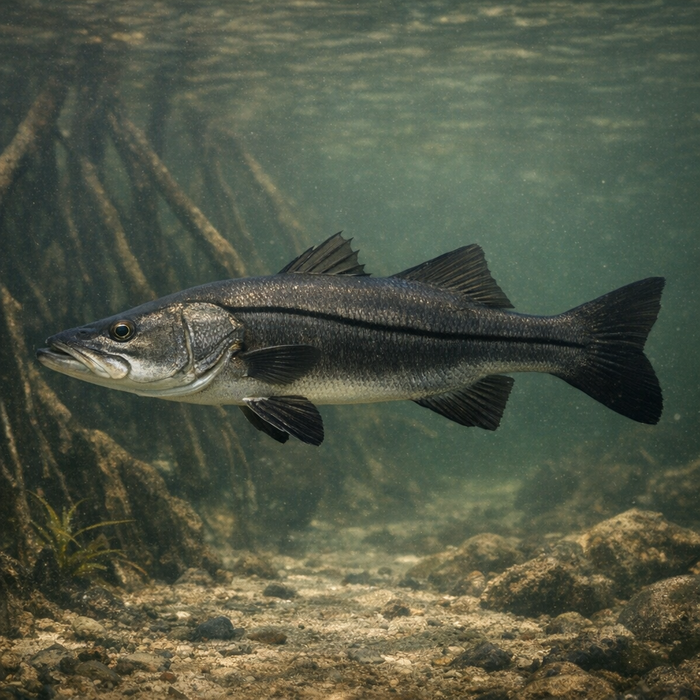
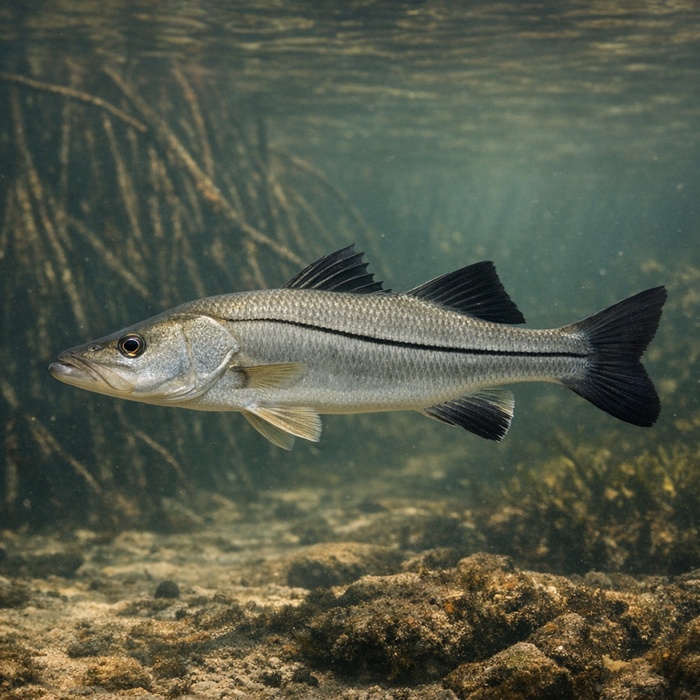
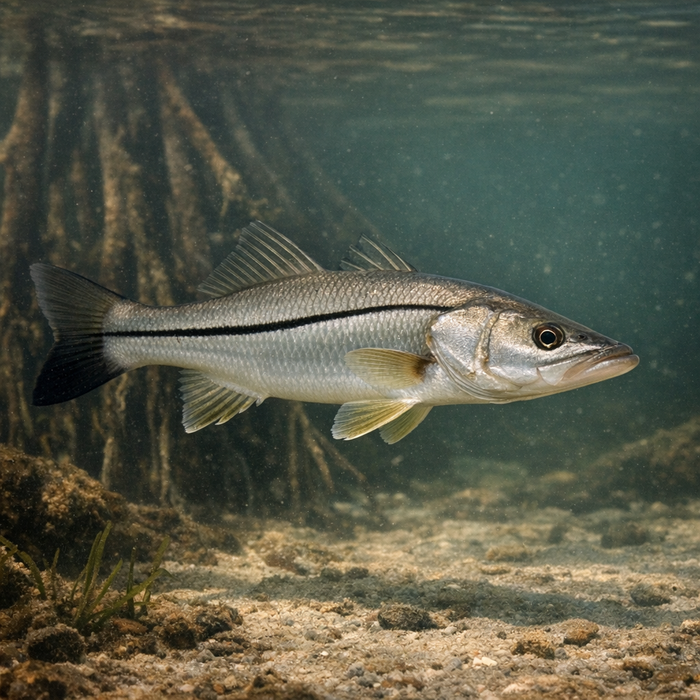
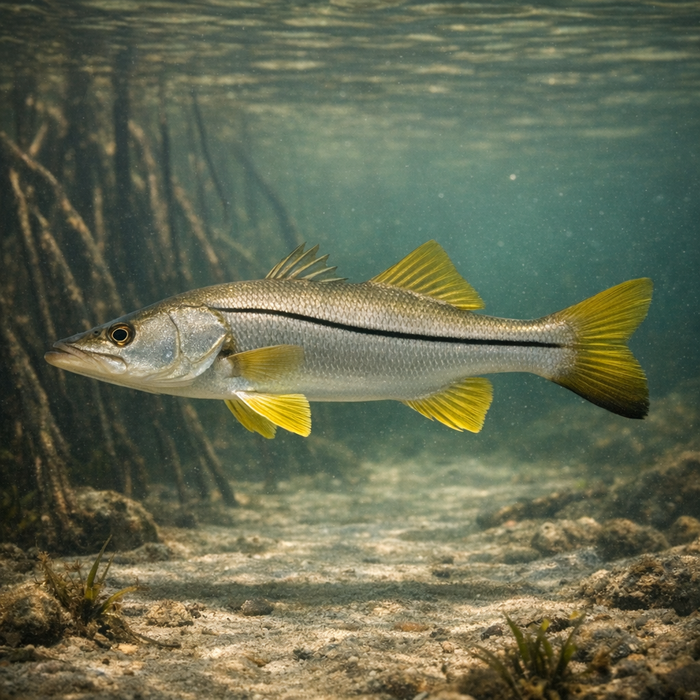
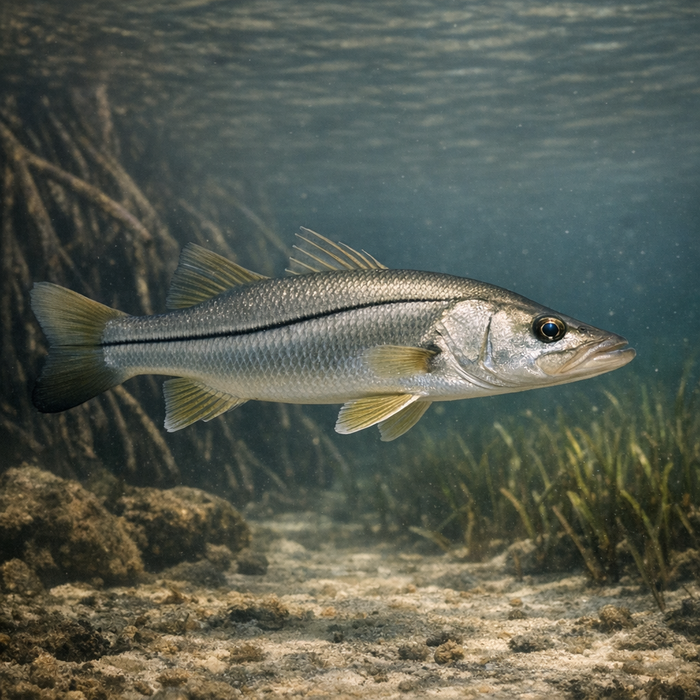
Armed Snook (Centropomus armatus): A Bold, Memorable Hook LineIntroductionThe armed snook is the slick, surf-running ambusher your thumb will remember. Equal parts mangrove ninja and beach bully, this Pacific snook merges precision senses with nasty hardware on its gill plate. If you've heard tales of snook blasting baits in chocolate-brown outflow and then cartwheeling like acrobats, you're in the right neighborhood. Consider this your crash course in Armed snook facts, fit for anglers who prefer truth over tall tales.What Makes the Armed snook Unique?First, the "armed" label isn't marketing. This fish carries sharp preopercular spines that earn respect the second you grab its jaw. It also sports that classic snook lateral line running clean onto the tail, essentially a motion detector tuned for muddy, turbulent edges. Compared to some cousins, the armed snook is a specialist in brackish chaos: river plumes, mangrove drains, surf seams right outside a river mouth. Put simply, if there's a mixing zone with current and bait, this fish shows up ready to mug something.Habitat & Global RangeIf you're plotting Armed snook habitat, start on the Pacific side of Central and northern South America. Think estuaries, tidal rivers, mangrove mazes, and the adjacent surf. Armed snook slide between fresh and salt with almost smug ease, using wet-season floods to push far inland, then drifting back toward coastal passes as salinity creeps up. They hunt eddies, sand points, cutbanks, and submerged roots, often tight to shadowlines. Turbid water is more friend than foe; it gives them cover to crash bait undetected.Behavior & TemperamentArmed snook are crepuscular assassins. Dawn, dusk, and tide changes light the fuse, with night bites turning downright rowdy around river mouths. The strike is signature snook: a vacuum-gulp detonation that telegraphs up the braid before the fish clears the surface, gill-rattling like a maraca. They're structure loyal, but not sedentary, patrolling current edges and slipping into surf troughs when outflows send a buffet line down the beach.Ecological ImportanceAs mid-to-top predators in estuaries, armed snook push baitfish and shrimp schools hard, shaping where prey hide and when they move. Their ability to shift between salinities helps connect river floodplains to coastal food webs. When they're riding wet-season plumes, they become delivery drivers for energy, translating inland nutrient pulses into nearshore predator fireworks.Conservation & Environmental PressuresWhile not headline endangered, armed snook feel every insult hurled at estuaries: mangrove clearing, silt-choked river mouths, polluted runoff, and overharvest in tight hotspots. Because multiple snook species stack in the same places, pressure concentrates. Add inconsistent species ID in creel counts, and managers face fuzzy data. The result: healthy one year, thin the next. Sensible slot-minded harvest, habitat protection, and better reporting keep the lights on for this bite.The FishyAF TakeArmed snook are the perfect storm fish: tannin-stained water, a rising tide, nervous mullet flicking, and then absolute violence. If you want reliable, fish golf. If you want electricity, chase this snook where brown water kisses blue. Keep your leader honest, respect those gill spines, and don't sleep on the surf line outside a river mouth. The armed snook rewards anglers who read current like a map and cast with intent. That's the whole game, and it's a beautiful one.