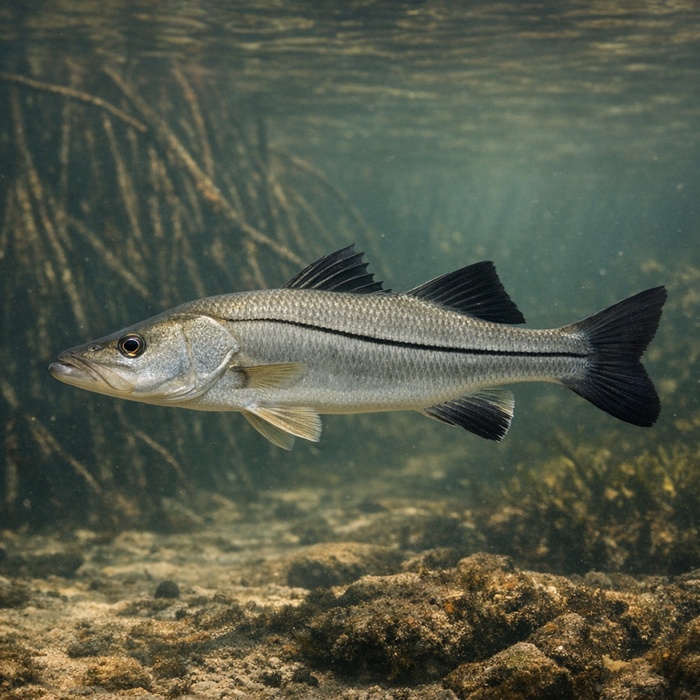
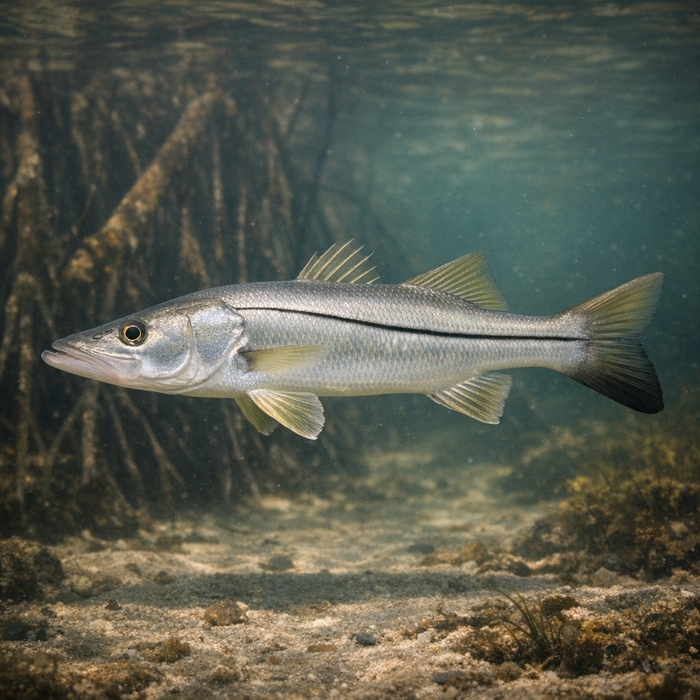
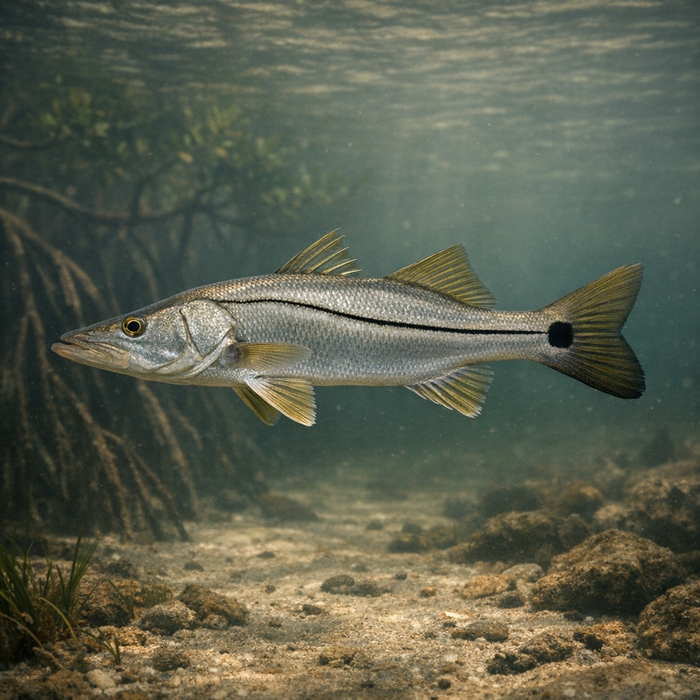
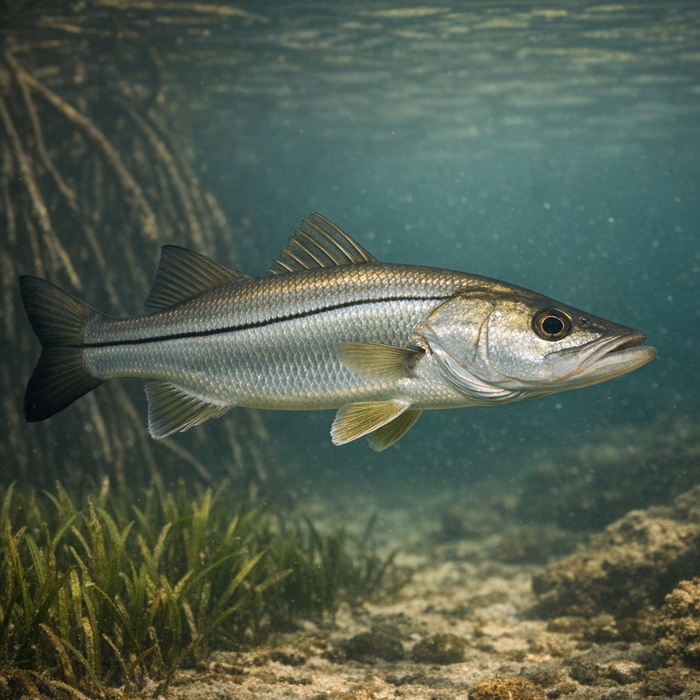
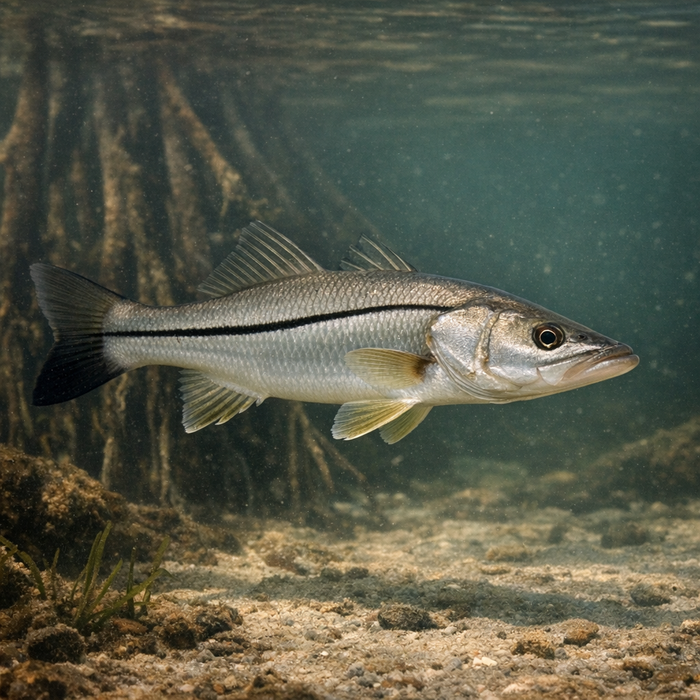
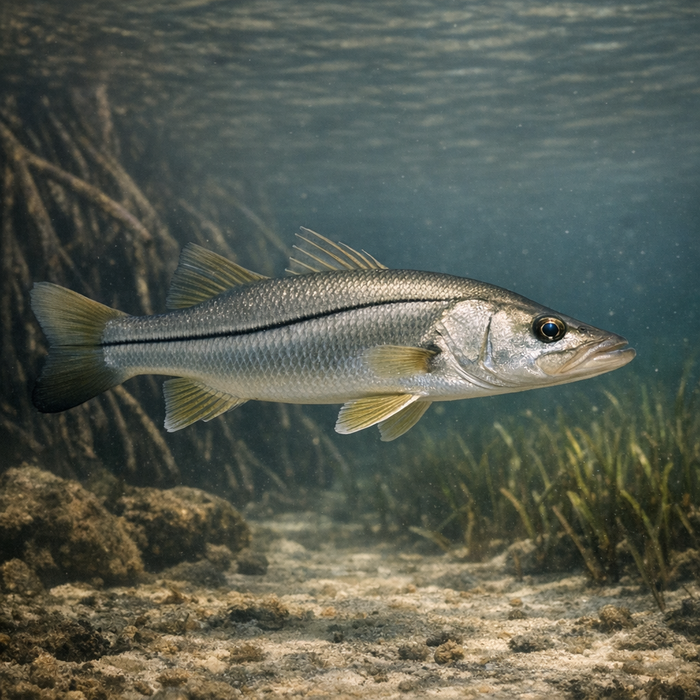
Black snook (Centropomus nigrescens): A Bold, Memorable Hook LineIntroductionThe black snook is the bruiser of the snook world. It looks like a standard-issue snook until it doesn't: suddenly thicker, darker, and angrier, especially where mangroves choke the banks and the water runs tea-brown. If you've tangled with common snook, picture that fight with more torque, more dirty tricks around roots, and a higher chance of watching your leader pop. That's the black snook experience.What Makes the Black snook Unique?First, sheer size. Among snook, the black snook owns the heavyweight belt. While plenty of fish run in the teens, true trophies snowball past 30 pounds and the elite tier breaks 50. Second, color and attitude. In clear surf this fish shows a classic silvery snook sheen, but in tannic estuaries it can shade out nearly coal-black, especially after living deep in the sticks. Third, design. The exaggerated lateral line, broad head, and big low-light eyes scream ambush predator. Put a nervous mullet near a mangrove point and watch the water detonate.Habitat & Global RangeLet's talk Black snook habitat. Think Pacific-side estuaries from southern Mexico through Central America into northern South America. They thrive in brackish creeks, mangrove arcades, tidal rivers, and surf lines where river plumes meet the Pacific. During wet seasons they push surprisingly far upriver following bait and better water. During drier spells, they slide toward inlets and outer bars. If you're scouting a new system, prioritize current seams, eddy pockets, dark cuts under overhanging roots, and pressure edges where freshwater meets salt. These are the classic "Black snook habitat" tiles that keep producing year after year.Behavior & TemperamentBlack snook are moody assassins with short, hot feeding windows. Dusk, night, and first light are prime, especially on tides that move bait. They'll crush topwater in low light, then switch to more subtle meals as the sun rises. Hook one and you'll feel that unmistakable snook sequence: a savage hit, a surface thrash, and then a brutal dive for cover. They're structure loyal and unapologetically dirty fighters, sawing line on roots and flaring those razor gill plates. Stealth matters. So does leader. And so does making the first cast count.Ecological ImportanceBig black snook are apex ambushers in estuary webs. They regulate schooling baitfish, trim surplus mullet, and force prey movements that ripple through the food chain. Many start life as males and transition to females as they grow, so protecting large fish disproportionately supports future recruitment. Spawning often aligns with tide cycles near estuary mouths, sending eggs and larvae offshore where currents eventually ferry juveniles back into protected mangroves and creeks.Conservation & Environmental PressuresThe black snook's greatest allies are healthy mangroves, intact river flows, and reasonable harvest rules. Remove any of those and the wheels wobble. Estuary development, mangrove clearing, and untreated runoff reduce nursery value. Overharvest of big females can gut local age structure. Regulations vary by country and even by province, and recorded stock data can be patchy. Still, the pattern is obvious: where wetlands remain and spawning closures are respected, black snook quality holds. Where they're bulldozed and netted during aggregations, quality collapses.The FishyAF TakeIf you fish to feel something, the black snook is your fish. It's a masterclass in tight-quarter violence: precision casts, moon-timed tides, and gear that's just barely enough. You'll lose some. You'll question your knots. You'll buy heavier leader and still get filleted by a gill plate. But when it all connects, a black snook turns mangrove shadows into chaos and hands you a memory you can't put down. That, plus the fact it's the biggest snook on the block, is all the "Black snook facts" you really need.