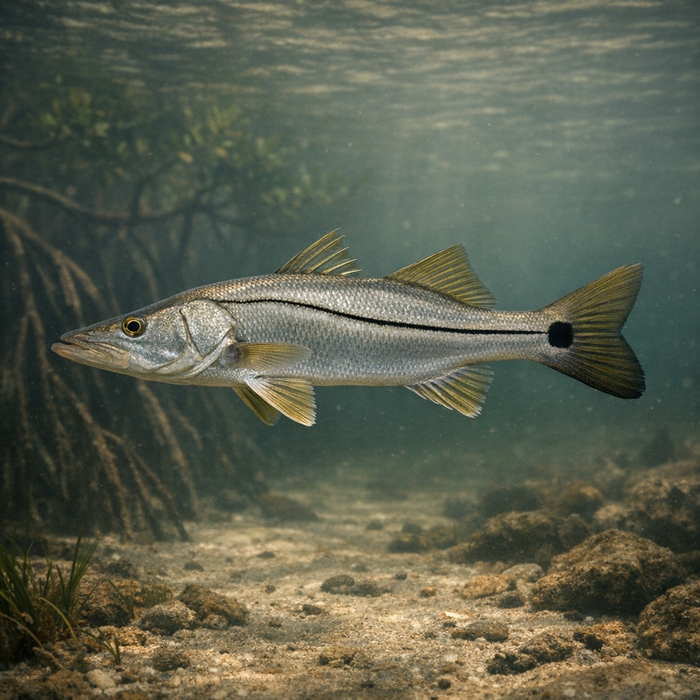
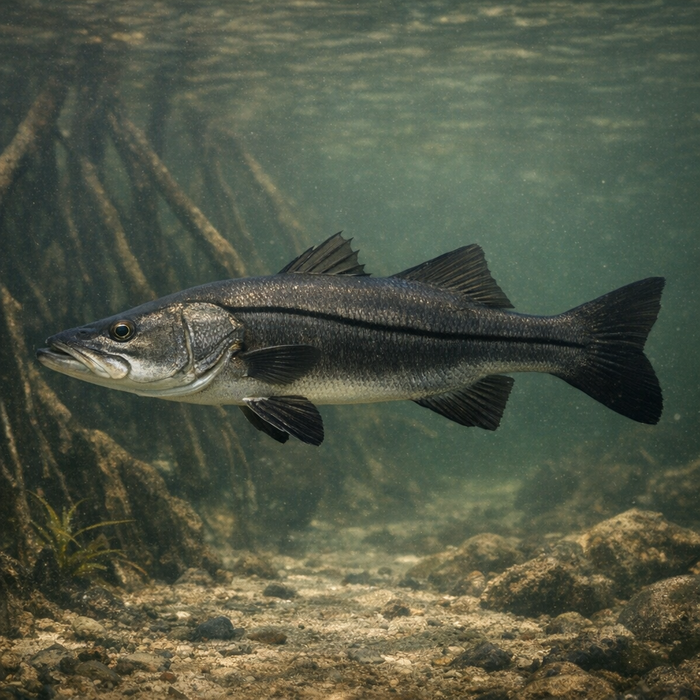
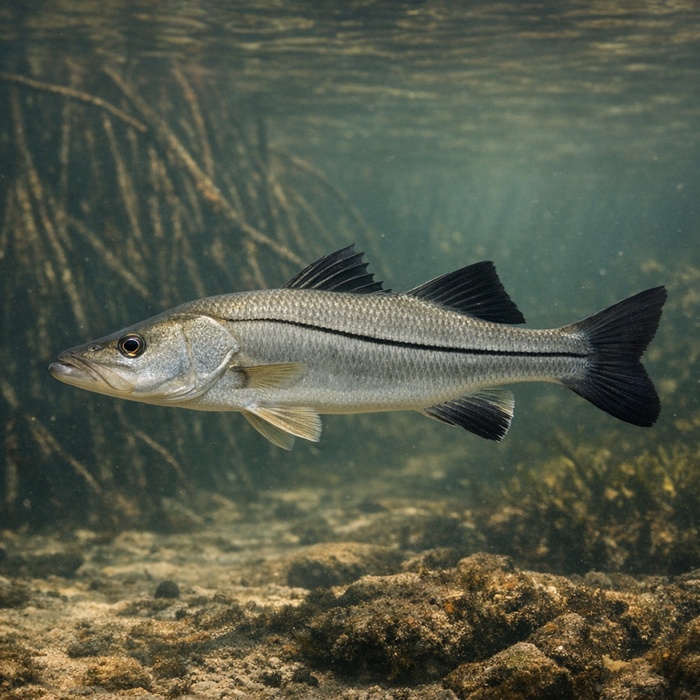
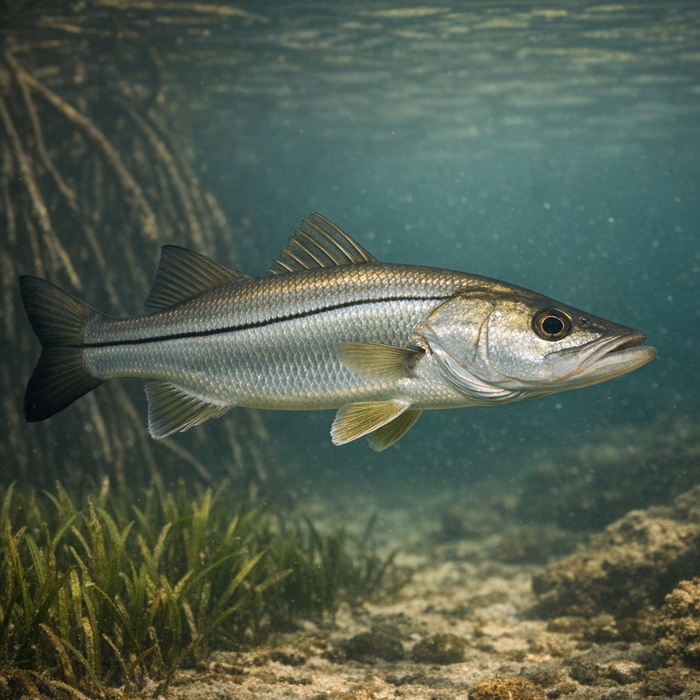
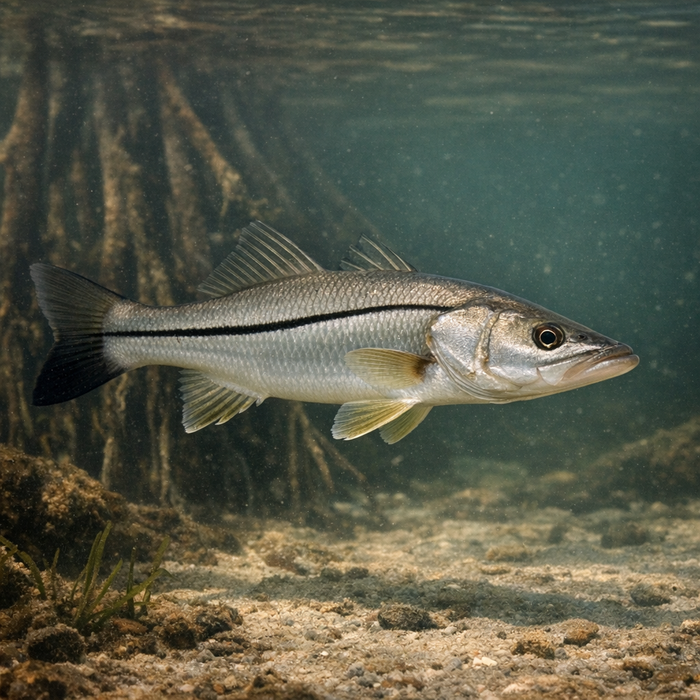
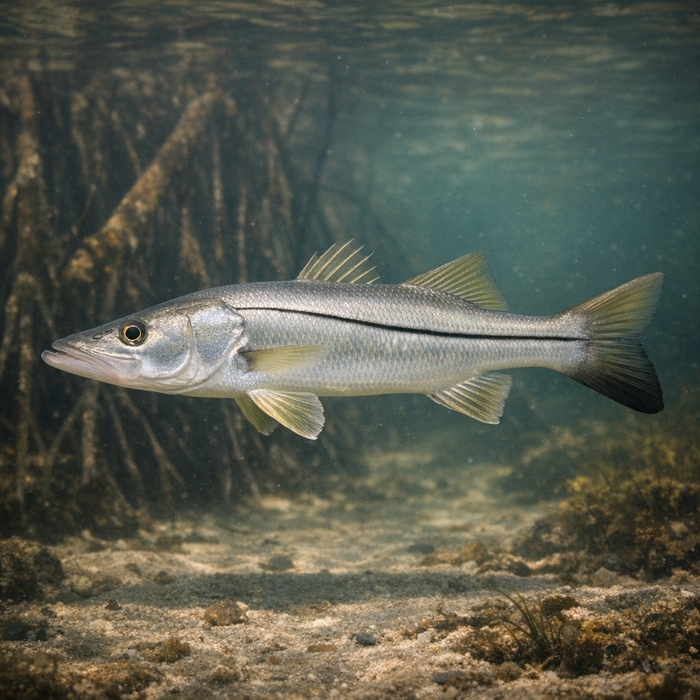
Largescale Fat Snook (Centropomus mexicanus): A Bold, Memorable Hook LineIntroductionThe largescale fat snook is the thick-bodied, shadow-loving cousin in the snook clan that keeps ambush fishing interesting. It is built like a torpedo with a beer belly, flashes chrome in the sun, and hits with a hollow pop that makes your heart skip. If you like tight quarters, roots, and casts that count, this snook rewards precision better than a casting coach. These are the kind of Largescale fat snook facts that hook anglers for life.What Makes the Largescale fat snook Unique?First, the namesake: larger, more pronounced scales compared to its close relative, the classic fat snook. That oversized scale pattern and the chunky body give it a distinctive look when you know what you are seeing. Second, the mouth mechanics are pure vacuum cleaner. The lower jaw juts forward, the gill plates flare, and prey simply disappears. Third, like other snook, it is protandrous, meaning it starts life as a male and many individuals transition to female later. That quirk shapes local size structures and helps explain why truly big fish are precious.Habitat & Global RangeThe largescale fat snook is an inshore operator through and through. Think mangrove creeks, tidal drains, back-bay lagoons, river mouths, and the edges of shallow flats with moving water. It's a fish that thrives in brackish chaos, slipping between salt and fresh like a seasoned smuggler. You are most likely to cross paths with it in tropical and subtropical waters of Mexico, Central America, the Caribbean, and into the northern tier of South America. Where shorelines are scalloped with roots and tide pushes bait against structure, the largescale fat snook is right at home. If you want a quick snapshot of Largescale fat snook habitat, imagine a narrow creek with tea-colored flow, oyster rubble, and the last hour of an incoming tide.Behavior & TemperamentThis fish is a patient mugger. It stages tight to anything that blocks current and feeds in short windows when tide and light line up. Dawn, dusk, and night are prime, but it will slash a bait under bright sun if the water is moving and you hit the right pocket. It is wary in clear water and surprisingly bold in dirty flow. Hook one and the first move is a surging run to structure, often followed by head shakes designed to flick the hook. Light tackle anglers love that burly, bullish fight packed into a compact frame. They often travel as singles or small groups, not big schools, so one missed presentation can spook the set.Ecological ImportanceThe largescale fat snook is an ambush predator that turns small fish, shrimp, and crabs into high-octane energy for the food web. Juveniles pack into root mazes where they snap up tiny crustaceans and help keep nursery habitats balanced. Adults serve as both hunter and hunted, fueling bigger predators offshore when they roam toward inlets to spawn. Healthy snook numbers tell you a lot about estuary flow, shoreline structure, and water quality. If mangroves and tidal creeks are alive with bait, snook tend to be thriving too.Conservation & Environmental PressuresThis species lives where people live. That means boat traffic, shoreline hardening, pollution pulses after rain, and net pressure in some regions. Because identification between snook species can be tricky, data quality also suffers. Slot limits and seasonal closures in some countries help, but much of its security rests on intact mangroves, healthy river mouths, and predictable flow. Habitat loss and poor water management can hammer recruitment far faster than fishing alone. The best insurance policy is water quality, protected nursery habitat, and anglers who handle fish like they want them around next year.The FishyAF TakeThe largescale fat snook is the thinking angler's snook. It asks for stealth, lands you in tight cover, and punishes sloppy line management. When it eats, the bite is decisive and deeply addictive. If you chase snook because you love cracking tidal puzzles, this one is your homework and your prize. The more you learn to read tiny drains, shadow lines, and quiet seams, the more the largescale fat snook shows up like you planned it all along. That's the real magic, and exactly why anglers keep searching for better Largescale fat snook facts every season.