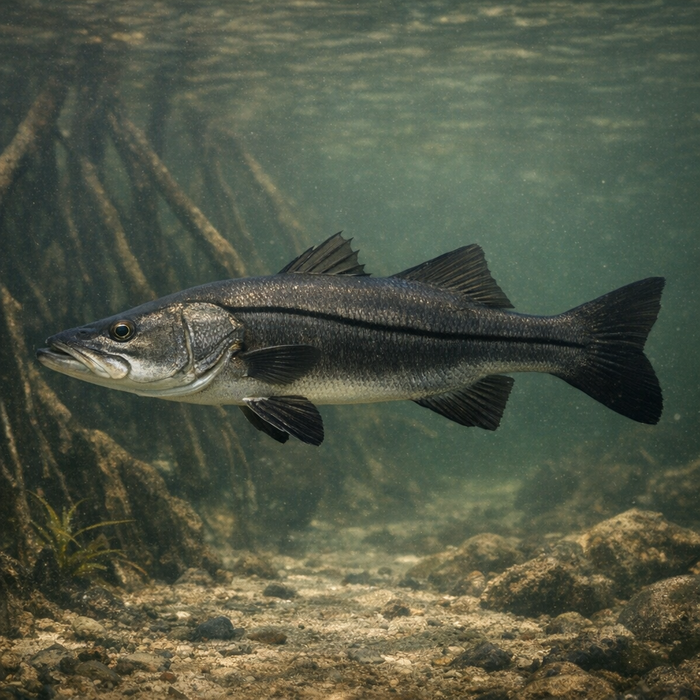
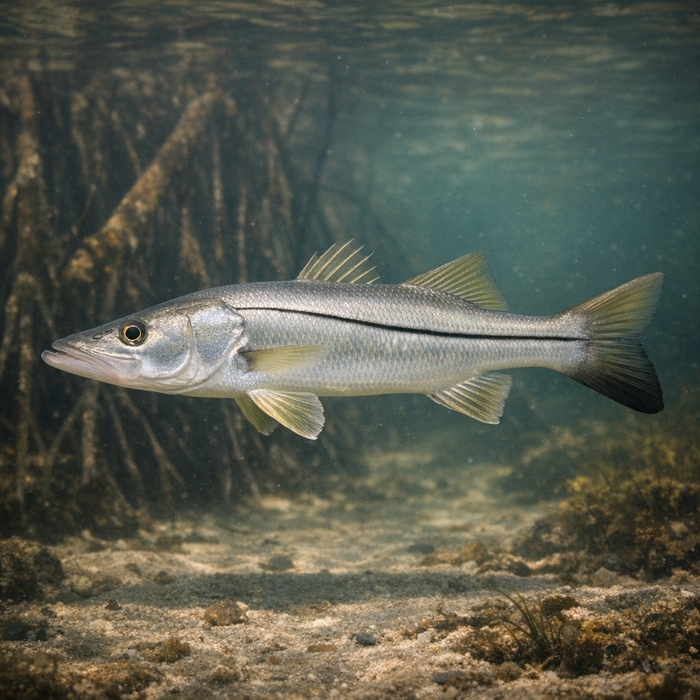
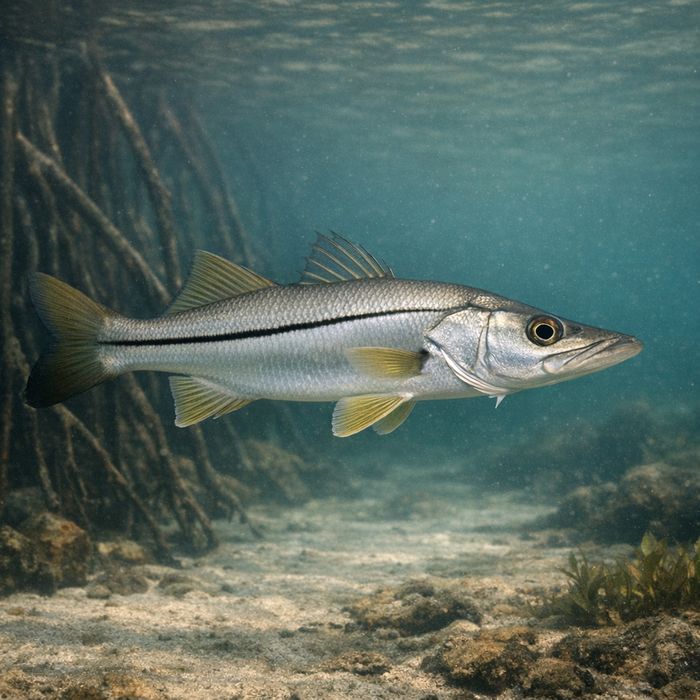
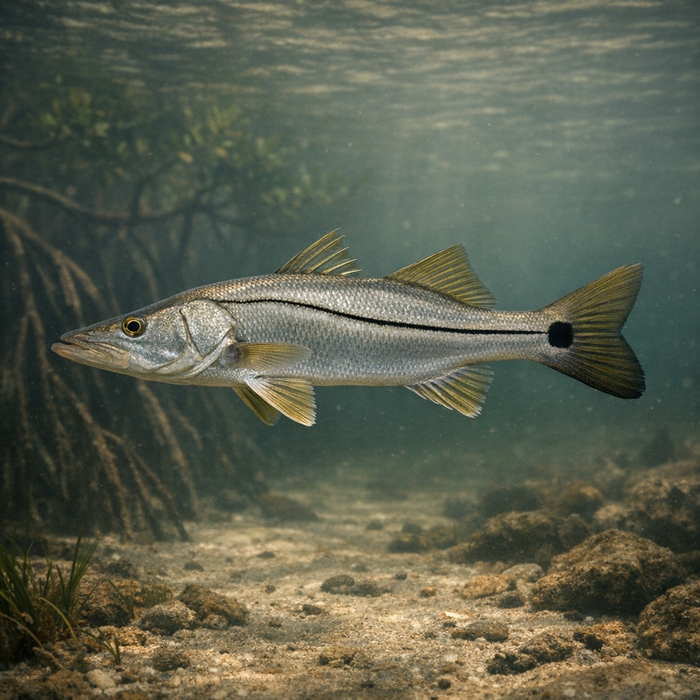
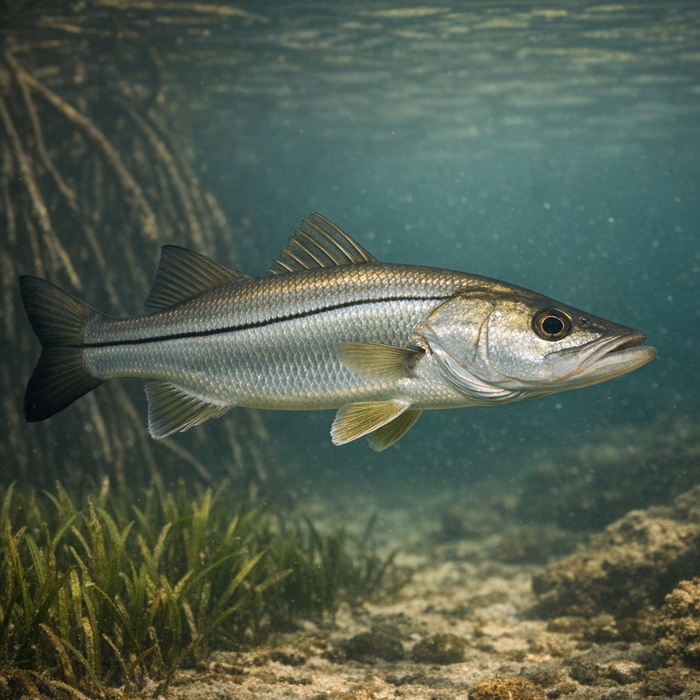
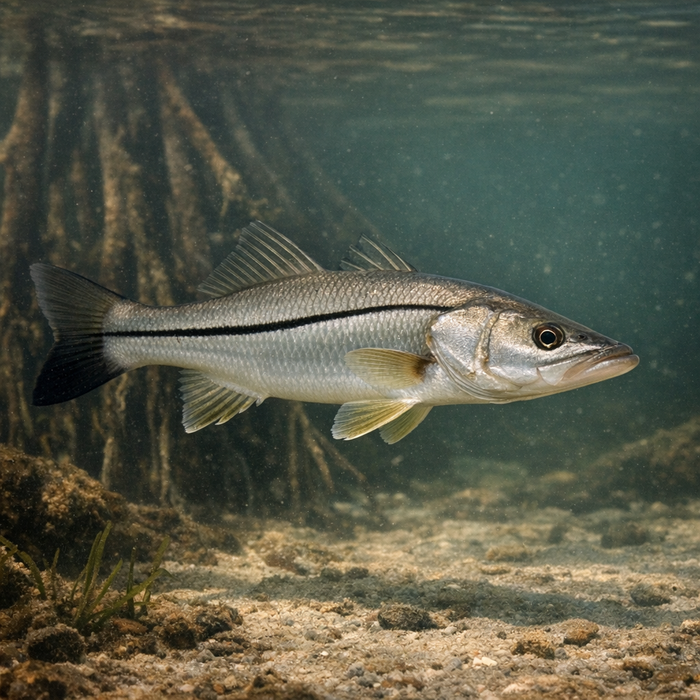
Blackfin Snook (Centropomus medius): A Bold, Memorable Hook LineIntroductionMeet the quieter troublemaker of the snook family. The blackfin snook doesn't need hype to be dangerous; it just needs an outgoing tide, a patch of nervous bait, and one bad decision from your drag setting. For anglers prowling the Eastern Pacific's estuaries and surf-washed river mouths, this fish delivers that signature snook pop, violent headshakes, and a whole lot of attitude in a sleek, torpedo body. If you're hunting practical Blackfin snook facts without the fluff, pull the trolling motor and read on.What Makes the Blackfin snook Unique?Two things jump out. First, the look: dusky-tipped fins and a strong lateral line that marches right onto the tail, classic snook branding that sets blackfin apart once you learn the family face. Second, the life story: like most Centropomus, many individuals start life as males and transition to females later, a reproductive curveball that shapes population dynamics and size structure. Tack on the trademark vacuum strike and you get a predator built to win the first two seconds of any fight. That's the blackfin snook edge.Habitat & Global RangeBlackfin snook work the Eastern Pacific, especially around Central America down into parts of South America. They thrive in brackish tangles, surf-lit river mouths, and tidal creeks where salt and fresh argue daily. Picture ambush points: mangrove root alleys, current seams, shadow lines from docks and bridges, and sandy cuts that form mini rips. During wet seasons, runoff opens new ground and blackfin cruise farther, riding color changes where baitfish stack. Translation for anglers: this species rewards time spent reading tide, flow, and the edges where comfort meets chaos. That's classic Blackfin snook habitat and the heartbeat of productive sessions.Behavior & TemperamentCautious and mean is the combo. Blackfin snook are hyper-aware around clear, still water and boat traffic, but flip the switch when current and cover turn the lights down. Expect short feeding windows tied to tide movement, classic low-light ambushes, and sudden surface mayhem. The first run is nasty, often straight for structure. Headshakes are designed to throw hooks or saw off leaders on those razor gill plates. They'll roam, but this species is a structure hugger at heart. Precision casts and quiet feet earn more bites than hero bombs.Ecological ImportanceThe blackfin snook is a mid-tier predator that edits the roster of small fish and crustaceans in estuaries. It helps keep bait pulses honest and moves energy from the swampy margins to bigger mouths offshore. Because adults and juveniles use different slices of the system, the species acts as a living connector between freshwater pulses and coastal food webs. Protecting those mangrove nurseries, freshwater inflows, and tide-driven corridors isn't just tree-hugging; it's how you keep a snook fishery breathing.Conservation & Environmental PressuresSnook live and die by water quality. Silt-choked creeks, mangrove removal, and polluted runoff punch this species right in the nursery. Add in uncertain species-level monitoring in parts of its range and you get a fish that can slip through management cracks. Seasonal closures and size limits elsewhere in the snook world hint at best practices: give them breathing room when they're spawning and protect a chunk of bigger, egg-heavy females. Local rules vary, but the logic holds for blackfin: guard the edges, mind the flow, and you'll keep the bite.The FishyAF TakeBlackfin snook aren't social media divas, and that's a gift. They're the fish that makes you check the drag twice, measure leaders in inches not guesses, and hunt tide like a religion. If you love surgical inshore fishing, this one's your lab coat and scalpel. Learn the moons, trust the current, and stop yanking baits across the kill zone like you're mowing a lawn. Do that and blackfin snook will make you look smart. Ignore it and they'll make you humble. That's the real Blackfin snook habitat: right between your patience and your precision.