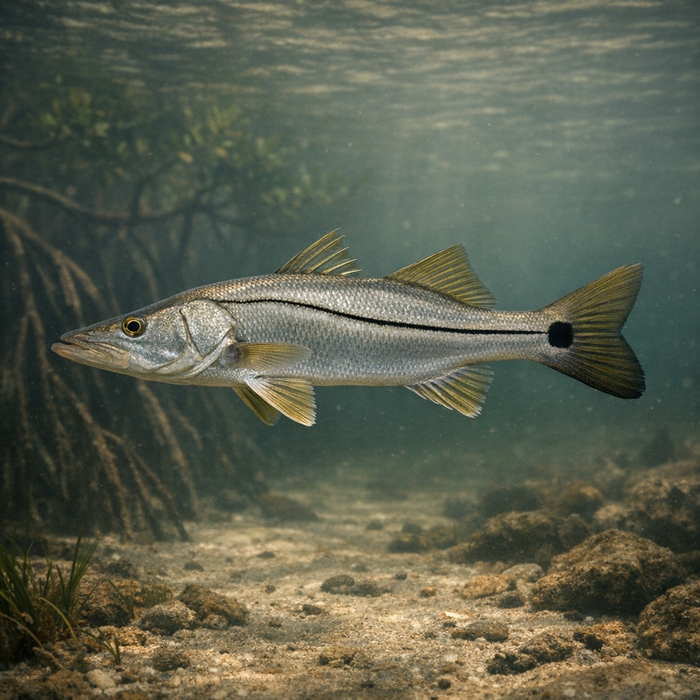
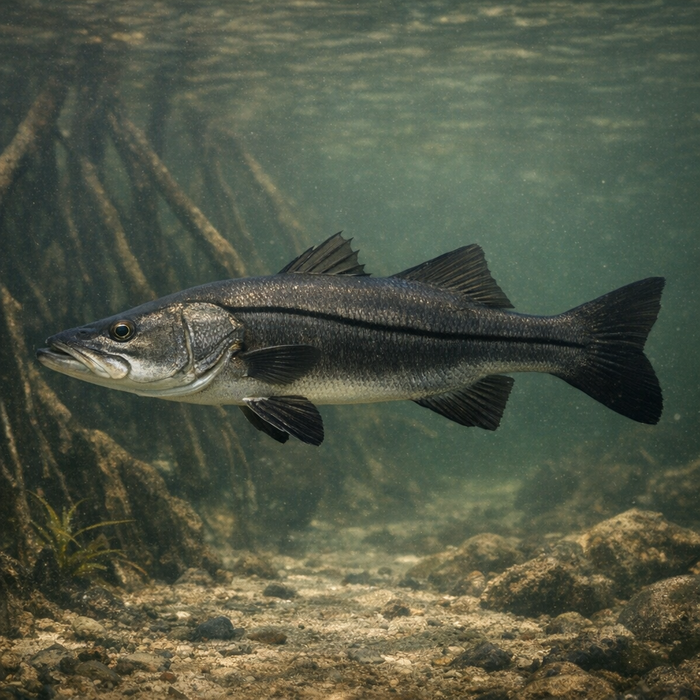
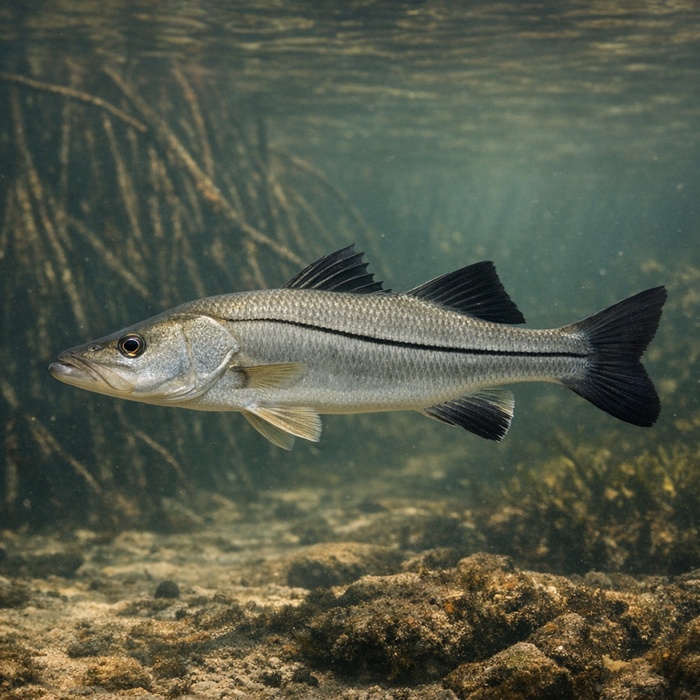
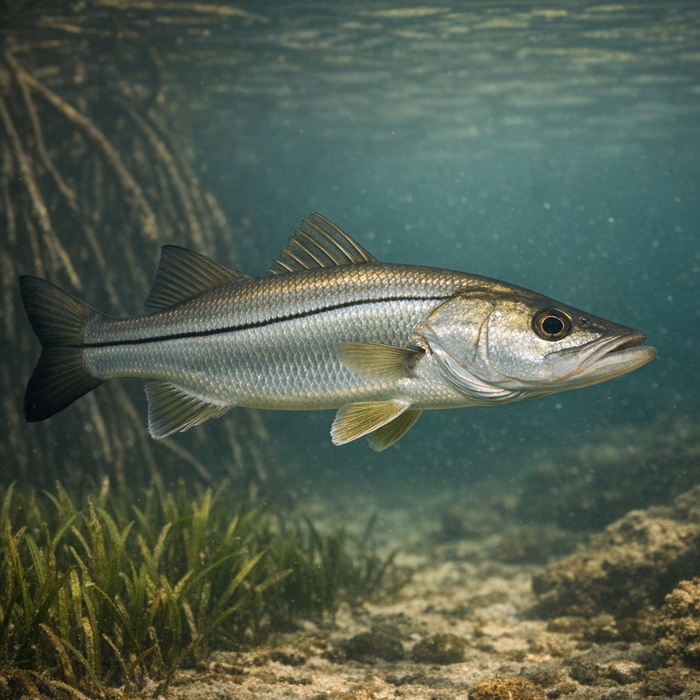
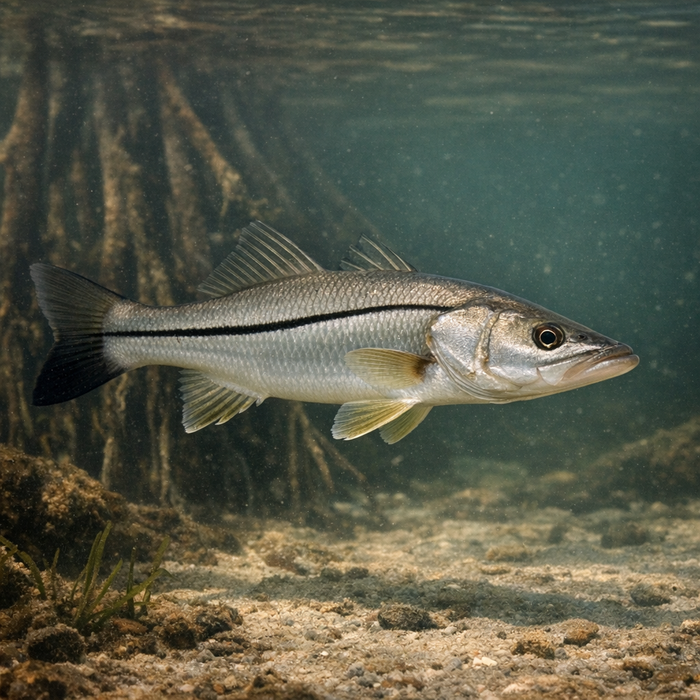
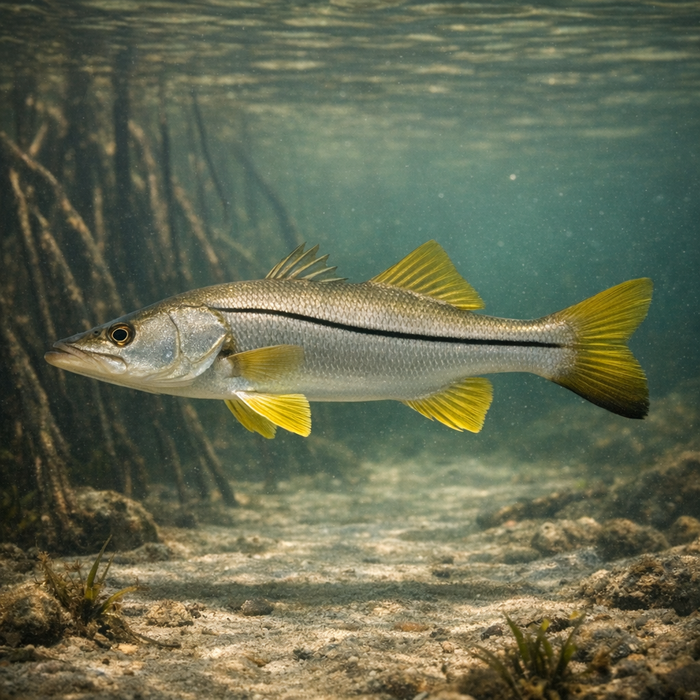
White Snook (Centropomus viridis): A Bold, Memorable Hook LineIntroductionThe white snook is the surf rat's snook. Sleek, pale, and built for ambush, it patrols river mouths, mangrove creeks, and foam lines like a coastal pickpocket. When bait gets flushed, this fish doesn't hesitate. It surges, slashes, and bulldogs for the nearest structure. If your knots and nerves are soft, it will make a fool of you. If you show up prepared, the payoff is a fish that hits like a bass, fights like a jack, and tastes like a chef's day off.What Makes the White snook Unique?Start with the name. Viridis hints at a subtle emerald tone over the back that pops in clean water, a neat visual tell. Add that iconic snook lateral line, thick as a marker swipe, and you've got a fish designed to hunt by feel as much as sight. Unlike its heavyweight cousin the black snook, the white snook trends slimmer and quicker. It rarely wastes time jumping theatrically; instead it shoulders into current, shakes like a dog with a rope toy, and tries to rub you off on anything with barnacles. The combination of finesse feeding and dirty-fighting behavior is peak inshore chaos.Habitat & Global RangeTalking White snook habitat means shorelines with moving water. Think tidal inlets, mangrove lagoons, and surf edges near river mouths across the tropical Eastern Pacific. From arid Baja esteros to Costa Rican gulfs and Peruvian mangrove remnants, white snook follows the intersection of flow and forage. Rainy seasons stack bait in drains and creeks; dry seasons consolidate fish in deeper channels and inlet throats. They'll slide surprisingly shallow under low surf to pin sardinas against the sand, then ghost into darker holes when sun and crowds push up. If you're skimming "White snook habitat" searches, the theme is simple: current, cover, and something to ambush against.Behavior & TemperamentWhite snook are mood fish. One minute they're wolf-packing bait on a lit beach; the next they're sulking in five feet, refusing everything. They prefer windows: tide changes, dusk and dawn, and dirty-green water that hides their approach. The lateral line is their superpower, letting them track prey in churned surf that makes lures vanish to you. They hang tight to edges and use every angle: mangrove roots, rock seams, bridge shadows, even the backs of waves. Hook one and it rarely goes aerial; expect heavy head shakes, a dead sprint for structure, and, if you're in the wash, a perfectly timed wave to spit the hook or fray your leader.Ecological ImportanceSnook are gatekeepers for estuaries. The white snook rides seasonal flows, turning booms of small baitfish, shrimp, and juveniles into energy that moves up the coastal food web. By keying on tide and turbidity, they shift pressure around these systems rather than simply vacuuming one spot. Juveniles use mangrove nursery habitat, graduating into inlet hunters as they grow. They're sensitive enough to water quality that their presence hints at estuary health while still being resilient in brackish swings. In short: a sharp predator that reflects the condition of the shoreline it haunts.Conservation & Environmental PressuresThe white snook earns a relatively stable outlook where mangroves still stand and harvest is managed, but none of that is bulletproof. Mangrove clearing, coastal development, and sediment-choked river mouths compress habitat and hammer recruitment. Add in patchy enforcement, night-netting at inlets, and the odd red-tide or low-oxygen event, and you get hot-and-cold local populations. Regulations vary widely by country and even province, with closed seasons or slot-style protections near spawning windows. Anglers who release larger females, swap trebles for single hooks, and keep handling tight do real good for future runs.The FishyAF TakeIf your idea of snook is only the East Coast crowd, the white snook is your West Side wake-up. It's a thinking person's inshore gamefish with just enough bad attitude to punish sloppy presentations. Bring tide intel, stout fluorocarbon, and humility. Fish the windows, read the wash, and aim casts at edges, not open water. Do that and you'll collect your own stack of White snook facts the right way: one thumping eat at a time. Miss those details and you'll swear these fish don't exist, right up until someone 30 feet to your left proves they absolutely do.