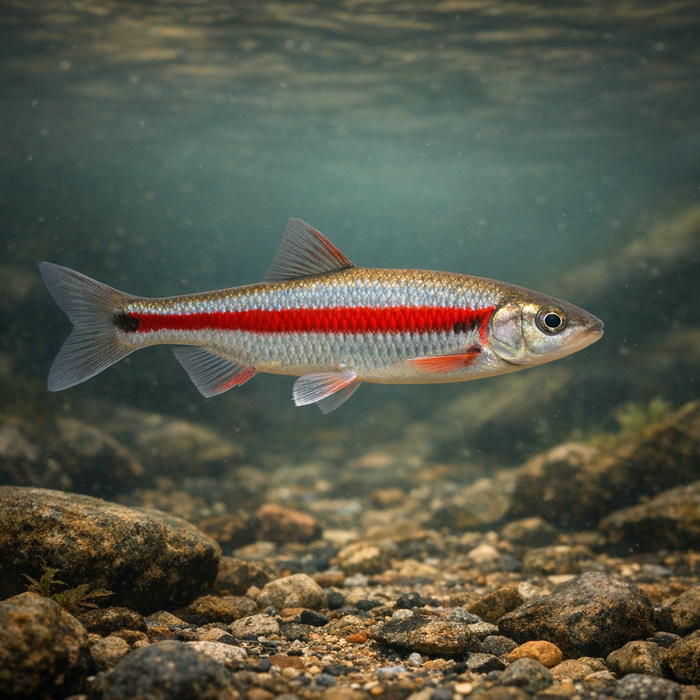
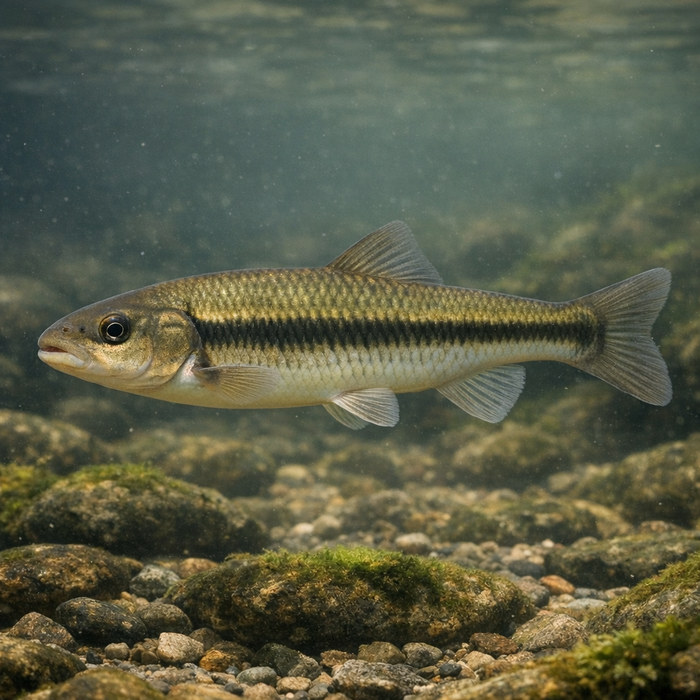
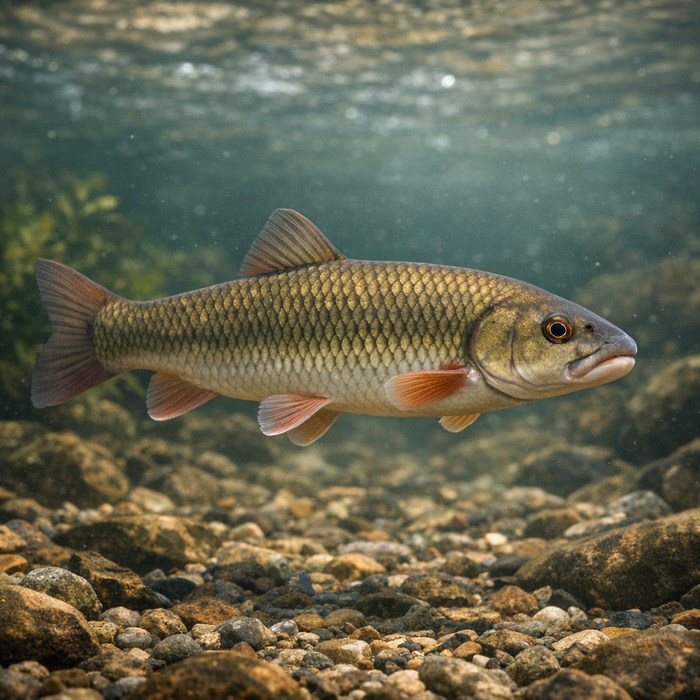
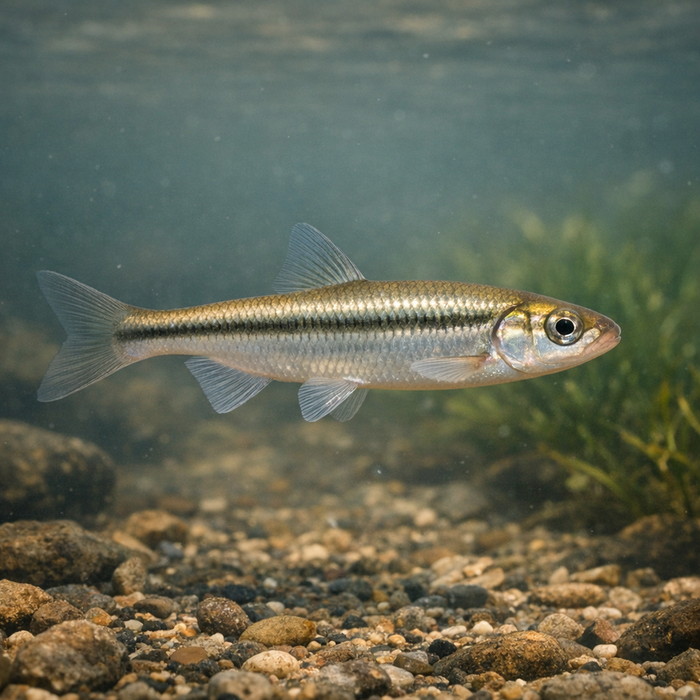
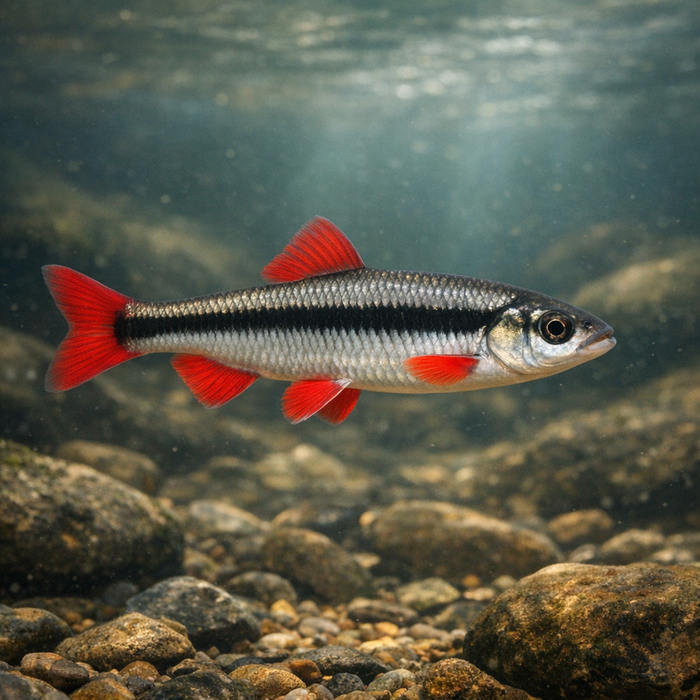
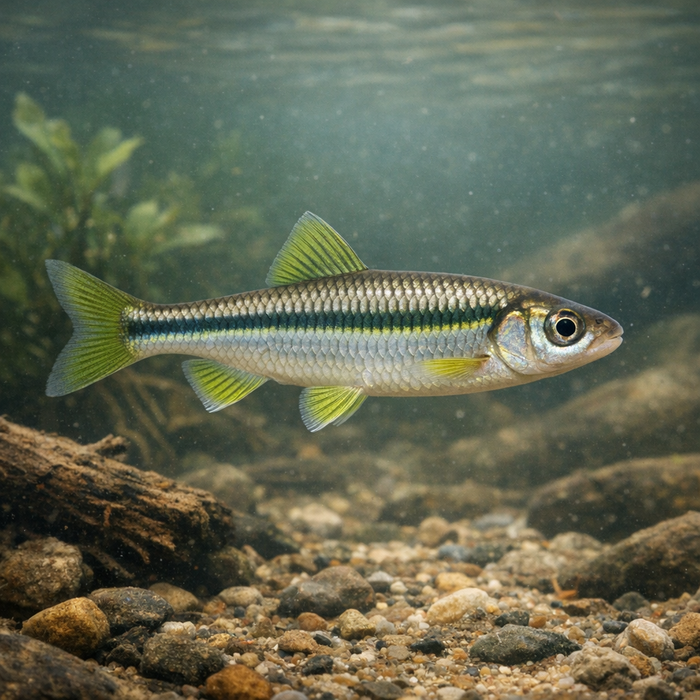
Bigeye Shiner (Miniellus boops): Headlights On A Micro TorpedoIntroductionBlink and you'll miss it, but the bigeye shiner doesn't miss much. Those oversized eyes are built like high-beams, scanning clear current seams for drifting snacks. This is the fish you spot hovering at the heads of pools, jittering in schools like sequins in the current. Not a classic sportfish, sure, but pull out micro gear and the bigeye shiner becomes a technical, sight-fishing delight. If you're hunting Bigeye shiner facts or curious about Bigeye shiner habitat, you're in the right eddy.What Makes the Bigeye shiner Unique?Two design choices define this species: enormous, high-set eyes and an upturned, finely tuned mouth. Together they turn the bigeye shiner into a drift sniper, keyed to dawn and dusk contrast when silhouettes pop against the surface film. The body is slim and efficient, a true current-lover that hovers with minimal effort. Schooling behavior tightens the playbook: a dozen fish fusing into a jittery ribbon, then exploding apart at the first shadow. They don't brawl, they finesse. For anglers, that means tiny hooks, stealth, and precise drifts.Habitat & Global RangeThe bigeye shiner is the quintessential clear-stream minnow of the central and southeastern United States, especially the Ozark and Ohio River tributaries. Think shallow to moderate-depth runs with clean gravel, living at the margins where riffle gives way to pool. Turbid water and silt-choked channels are a hard no. They hang near the surface or midwater in low, stable flows, often under open skies or light canopy. Dams and channelization can pinch populations by converting dynamic riffle-pool sequences into slow, murky slogs. In short, Bigeye shiner habitat is all about clean current, stable substrate, and visibility.Behavior & TemperamentDespite their size, bigeye shiner schools act like one nervous animal with a shared brain. Expect quick flinches, coordinated shuffles, and instant regrouping. They feed most confidently in low light, keying on micro-invertebrates drifting just below the film. Midday brings more wariness: longer leaders, smaller offerings, and zero sloppy wading. In winter, fish consolidate in deeper pools and conserve energy. During warm months, they shift toward gravelly margins to spawn multiple times, dusting eggs into crevices without elaborate nests.Ecological ImportanceForget trophies. The bigeye shiner is the thread stitching the stream together. It converts a river's insect drift into calories for everything with teeth: smallmouth, spotted bass, rock bass, even kingfishers. This species is also a living water-quality lie detector. You start losing bigeye shiners after a season of heavy silt, and it's a red flag for habitat integrity. Their role is classic forage-plus-indicator: abundant enough to matter, sensitive enough to warn you when the system slips.Conservation & Environmental PressuresWhile the bigeye shiner is broadly listed as Least Concern, local fortunes swing hard with land use. Siltation from poor riparian buffers, gravel mining, and bank trampling can erase spawning microhabitats in one wet spring. Dams flatten riffles, and chronic turbidity messes with their sight-first lifestyle. The fix isn't complicated: keep banks shaded and rooted, preserve riffle-pool diversity, and avoid turning creeks into drainage ditches. For anglers, catch-and-release with wet hands and gentle dehooking preserves fragile, paper-thin mouths.The FishyAF TakeThe bigeye shiner is the microfisher's truth serum. If your approach is loud, rushed, or clumsy, they're gone. Nail stealth, lengthen your leader, and drift something tiny where riffle softens, and suddenly this "baitfish" becomes a technical target that rewards clean presentation. The bigeye shiner won't blister a drag, but it will absolutely grade your streamcraft. Chase them for the same reason you cast at picky trout: because getting it right feels great, and because this little silver fuse tells you everything about the river's health. That's sport enough for us. Say big fish or go home if you want; we'll be over here, eyes on the prize, watching a bigeye shiner blink first.