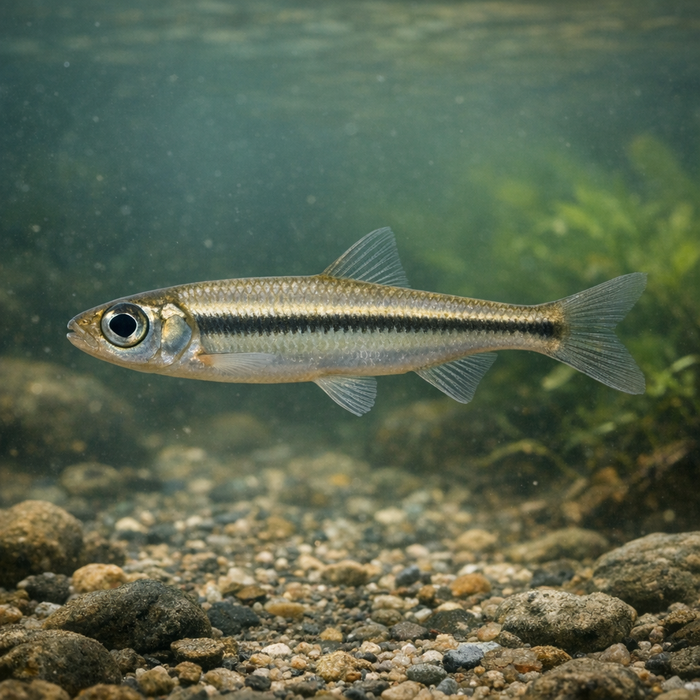
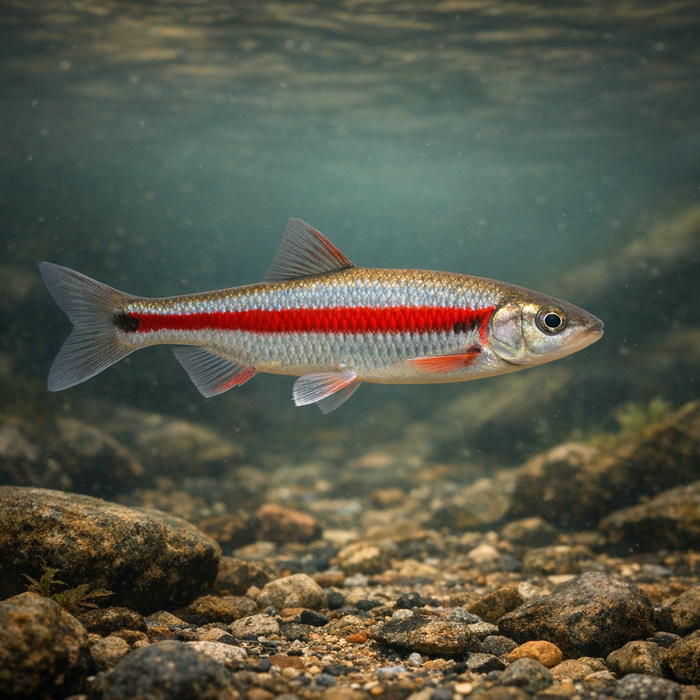
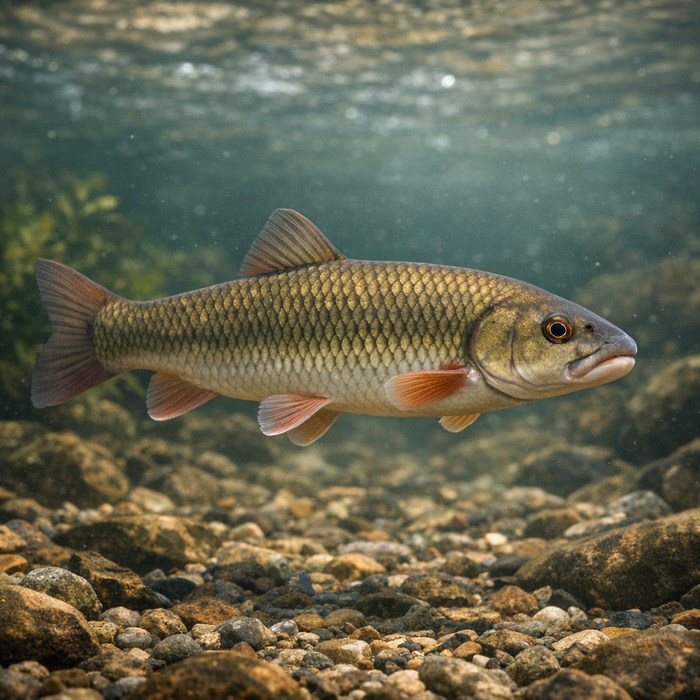
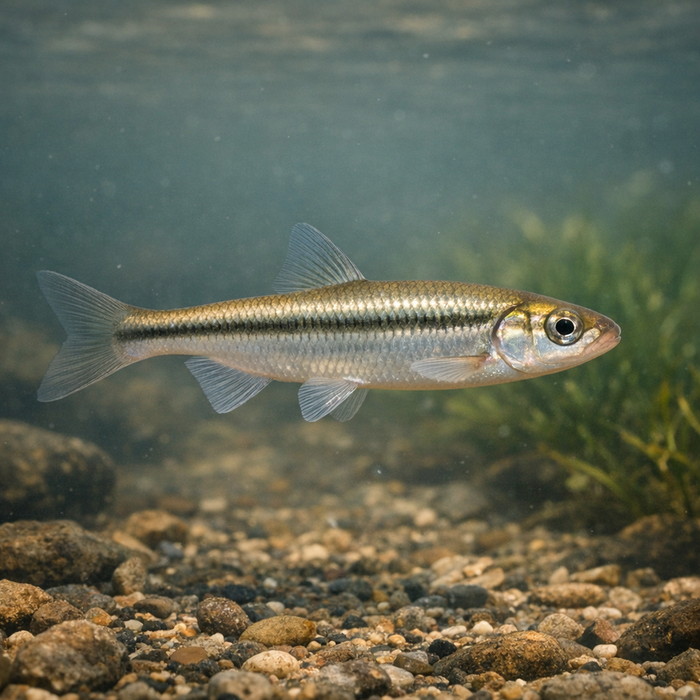
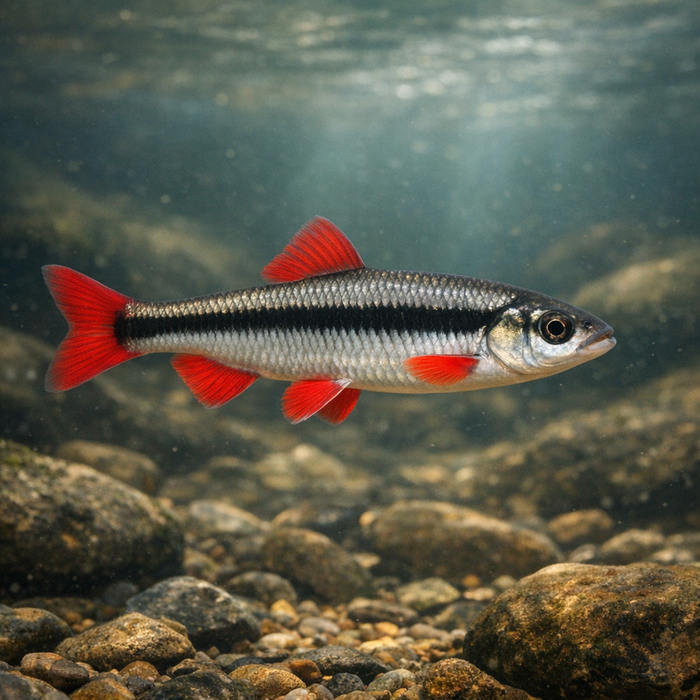
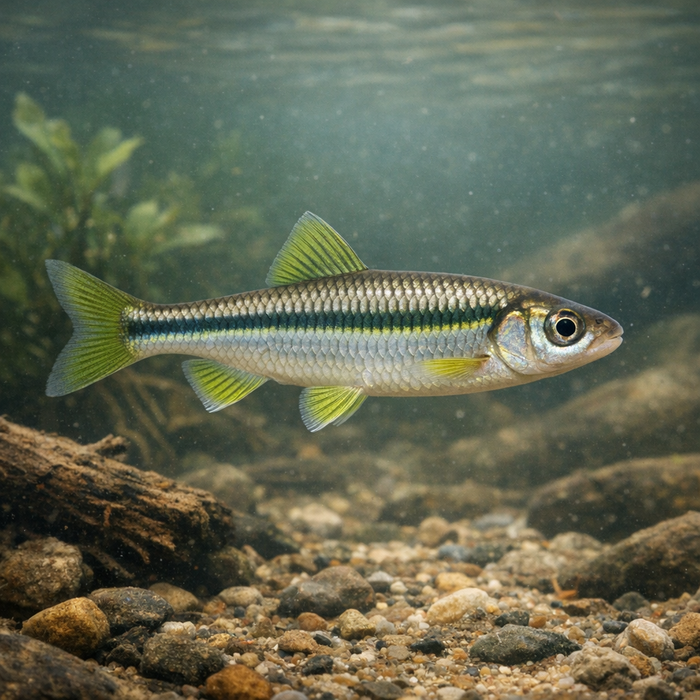
Highland Stoneroller (Campostoma spadiceum): The algae-scraping little bulldozer of the Ozarks.IntroductionIf you want a crash course in stealth, precision, and reading current, chase the Highland stoneroller. This isn't a grip-and-grin trophy fish. It is a living test of finesse: tiny tackle, short drifts, and a target with laser focus on rocks and flow. For anglers who geek out on the details, the Highland stoneroller is catnip. It rewards careful presentations and punishes sloppy ones, all while cleaning streambed cobble like a crew of aquatic Roombas.What Makes the Highland stoneroller Unique?Start with the mouth. Instead of the usual minnow smile, stonerollers come equipped with a hardened scraping pad and a notched upper lip. That combo lets them mow algae from rocks like they were built by a streamside R&D lab. In spring, males develop rough, sandpapery tubercles on the head and roll stones into saucer-shaped nests. Yes, they literally move gravel. That behavior not only creates a clean runway for their own eggs, it incidentally benefits other minnows that sneak-spawn in the tidy pit. Among Highland stoneroller facts worth bragging about, that DIY nest engineering is top tier.Habitat & Global RangeHere's the quick Highland stoneroller habitat pitch: clear, cool, rocky streams across the Ozark and Ouachita highlands. Think riffles and swift runs, ankle- to knee-deep water, and cobble that stays clean. They avoid heavy silt and sluggish pools. While they can use adjacent runs and shallow glides, the business end of their day happens where current pushes food across rocks. Their range is regional, not global, which is part of the charm. Find the right geology and gradient, and you'll usually find the stoneroller conveyor belt working the riffle line.Behavior & TemperamentThe Highland stoneroller is a grazer first, everything else second. Schools cruise tight to the bottom, often in conveyor fashion over the same path, scraping and scooting. They are not smash-and-grab predators, so they rarely chase; they inspect. That makes them spooky in clear water and quick to flare from shadows or clumsy wading. During spawning, males get territorial around nests, shoving competitors with those knobby foreheads. Outside that window, they behave like focused commuters, more interested in the next algae patch than your masterpiece fly.Ecological ImportanceCalling them lawn crews is not a stretch. By scraping algae, Highland stonerrollers help regulate primary production, limit nuisance blooms, and keep cobble open for invertebrates. Their nest building aerates and cleans gravel, an unsung ecosystem service that boosts egg survival for multiple riffle fishes. In turn, they feed larger species from smallmouths to creek chubs, plugging energy from sunlight and rocks into the business end of the food web.Conservation & Environmental PressuresThese fish are simple in their demands but unforgiving about it: clear flow, stable gravel, and low silt. Excess nutrient runoff turbocharges algae into slimy mats that smother rock texture. Sediment fills crevices where invertebrates live and eggs rest. Warmed, regulated flows from impoundments can shift seasonal cues. Because the Highland stoneroller is regionally focused, local land use changes bite hard. The fix is also local: riparian buffers, better culverts, smart stormwater, and keeping heavy equipment out of riffles.The FishyAF TakeIf your fishing life needs a reset button, fish for Highland stoneroller. It will force you to read seams, shorten your cast, and make drift king again. You'll learn to watch body language and to time a two-foot presentation like it matters. And when a finger-length fish eats because you nailed everything, you'll grin. This species turns small water into a classroom, and the diploma is earned one perfect drift at a time.