Blue Marlin (Makaira nigricans): The Ocean’s Ultimate Speed Demon and Trophy Hunter
The Blue Marlin is the heavyweight champion of the open ocean, a sleek predator built for speed and power. Known for its iconic spear-like bill and electric blue sheen, this fish commands respect from anglers and marine biologists alike. It’s not just a trophy catch; the Blue Marlin is a marvel of evolutionary design, perfectly adapted to life in the vast blue wilderness. If you want to know what makes this fish a legend, buckle up for some serious Blue Marlin facts.
What Makes the Blue Marlin Unique?
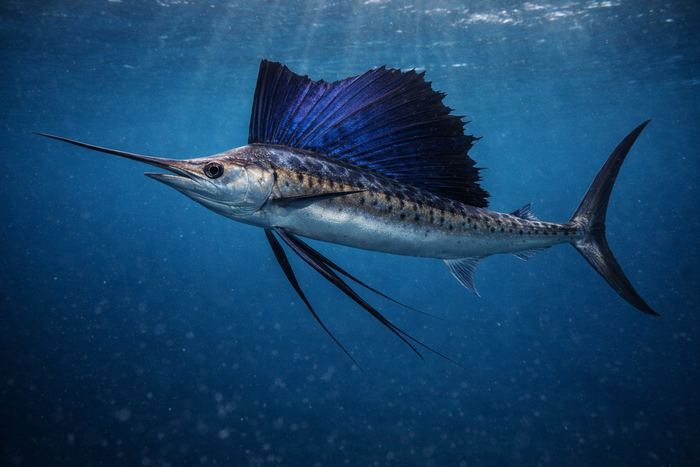
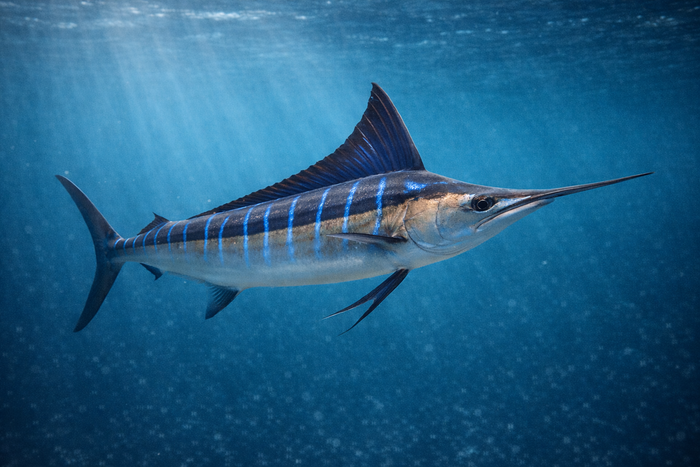
The Blue Marlin stands out with its elongated body and a rigid, pointed bill that slices through water like a knife. This bill isn’t just for show—it’s a weapon used to slash and stun prey, making hunting efficient and brutal. Unlike many fish, the Blue Marlin’s dorsal fin can retract, streamlining its body for explosive bursts of speed that can exceed 50 miles per hour. This combination of speed, agility, and raw power makes it one of the ocean’s top predators.
Its coloration is another signature trait: a dazzling cobalt blue on the upper body that fades to a silvery white underneath. This counter-shading provides camouflage in the open ocean, blending with the deep blue from above and the lighter surface from below. The Blue Marlin’s size and strength are legendary, with some individuals tipping the scales at over 1,000 pounds, making it a formidable opponent for any angler.
Habitat & Global Range
Blue Marlin habitat spans the warm waters of the Atlantic, Pacific, and Indian Oceans. They prefer tropical and subtropical regions, cruising the epipelagic zone—near the surface but sometimes diving deeper in search of prey. These fish are highly migratory, following ocean currents and seasonal temperature changes to track schools of baitfish and squid.
Their range covers vast stretches from the Caribbean and Gulf of Mexico to the waters off Hawaii, Australia, and the coast of Africa. Blue Marlin are often found near offshore structures like seamounts and continental shelves where prey is abundant. Their presence is a reliable indicator of a healthy pelagic ecosystem, as they rely on a rich food web to sustain their high-energy lifestyle.
Behavior & Temperament
Blue Marlin are solitary hunters, though they can sometimes be spotted in loose aggregations during feeding frenzies. Their hunting technique is aggressive and precise: they use their bill to slash through schools of fish, stunning or injuring multiple targets before circling back to feast. This method maximizes their energy efficiency in the open ocean where meals can be unpredictable.
Despite their fearsome reputation, Blue Marlin are known for being elusive and wary of boats. They have excellent eyesight and can detect disturbances from miles away, making them a challenging catch for sport fishermen. When hooked, they put on a spectacular fight, launching into acrobatic leaps and powerful runs that test the angler’s skill and stamina.
Ecological Importance
Blue Marlin occupy a critical niche as apex predators in pelagic ecosystems. By preying on a variety of fish and squid, they help regulate populations and maintain balance in the food chain. Their hunting behavior influences the distribution and schooling patterns of prey species, shaping the dynamics of the open ocean environment.
Moreover, Blue Marlin contribute to nutrient cycling. When they feed at different depths and locations, they facilitate the transfer of energy and nutrients across ocean layers. This role supports the productivity of marine ecosystems that countless other species depend on. Losing Blue Marlin would ripple through the food web, impacting both commercial fisheries and biodiversity.
Conservation & Environmental Pressures
Despite their iconic status, Blue Marlin face significant threats from overfishing and habitat degradation. They are prized targets in commercial and recreational fisheries, often caught as bycatch in longline and drift net operations. Their slow growth and late maturity make population recovery difficult once numbers decline.
Climate change adds another layer of pressure by altering ocean temperatures and currents, which can disrupt Blue Marlin habitat and prey availability. Pollution and marine debris further degrade the quality of their environment. Conservation efforts focus on sustainable fishing practices, catch-and-release programs, and international cooperation to manage migratory stocks.
Protecting Blue Marlin is not just about preserving a trophy fish; it’s about safeguarding the health of the entire pelagic ecosystem. Without effective management, these majestic predators risk becoming relics of a bygone ocean.
The FishyAF Take
The Blue Marlin is the embodiment of oceanic power and elegance—a fish that demands respect both on the line and in the wild. Its unique adaptations and role as a top predator make it a cornerstone species in marine ecosystems. Understanding Blue Marlin facts and their habitat is crucial for anyone serious about ocean conservation or sport fishing.
If you’re chasing the thrill of a Blue Marlin, remember you’re engaging with one of nature’s finest athletes. Treat it with the respect it deserves. Conservation isn’t just a buzzword here; it’s the only way to ensure future generations can witness the raw spectacle of a Blue Marlin breaking the surface in a blazing fight. The ocean’s speed demon is no myth—just a reminder that the wild sea still holds some of its fiercest champions.