Striped Marlin (Kajikia audax): The Ocean’s Striped Speed Demon with a Spearpoint Attitude
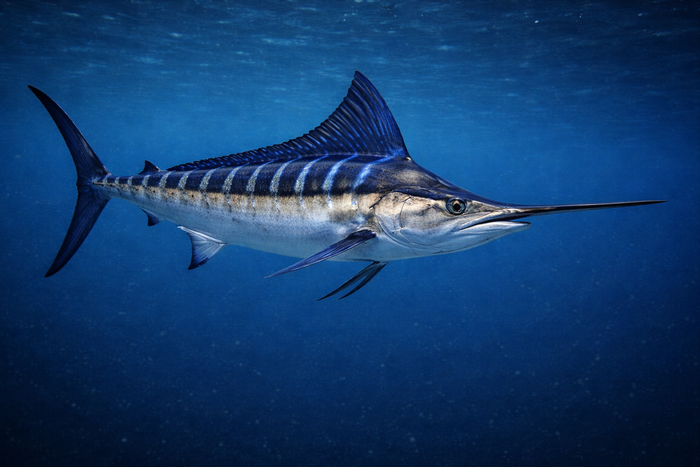
The Striped Marlin is not just another big fish in the sea. It’s a sleek, torpedo-shaped predator that commands respect and awe wherever it swims. Known for its striking blue and silver stripes and a bill built for precision, this species is a favorite among sport fishermen and marine enthusiasts alike. But there’s more to the Striped Marlin than just its looks and speed. It’s a fascinating creature with unique adaptations, a wide-ranging habitat, and a critical role in ocean ecosystems.
What Makes the Striped Marlin Unique?
Striped Marlin stands out in the billfish family thanks to its distinctive vertical stripes that shimmer along its body, giving it a signature look that’s hard to forget. These stripes aren’t just for show—they can change intensity depending on the fish’s mood or environment, a feature that hints at complex communication or camouflage tactics. Unlike some of its marlin cousins, the Striped Marlin has a relatively shorter bill but compensates with incredible agility and bursts of speed that can exceed 50 miles per hour.
Its body is built for fast, sustained swimming, with a streamlined shape and powerful muscles. This fish is a master of the open ocean, capable of rapid directional changes and impressive leaps out of the water. The Striped Marlin’s hunting technique is equally impressive: it uses its bill to slash through schools of smaller fish, stunning or injuring prey before circling back to feast. This combination of speed, power, and precision makes it one of the ocean’s top predators.
Habitat & Global Range
When it comes to Striped Marlin habitat, think warm, tropical, and subtropical waters. This species is found across the Pacific and Indian Oceans, with populations stretching from the coasts of California and Mexico down to Australia and New Zealand, and across to the waters off Japan and East Africa. They prefer offshore environments, often cruising near the surface but capable of diving to depths over 200 meters when chasing prey or avoiding threats.
Striped Marlin are highly migratory, following seasonal patterns driven by water temperature, prey availability, and spawning cycles. Their presence in certain regions can be a reliable indicator of ocean health and productivity. They tend to favor areas with strong currents and upwellings, where nutrient-rich waters support abundant baitfish populations.
Behavior & Temperament
Striped Marlin are solitary hunters but can be found in loose aggregations when food is plentiful. They are visual predators, relying on keen eyesight to spot schools of fish or squid near the surface. Their hunting style is aggressive and efficient, using their bill to incapacitate prey rather than just chasing it down. This behavior is a clear sign of their evolutionary edge in the competitive pelagic environment.
Despite their fierce reputation, Striped Marlin are known to be curious and sometimes even playful around boats. They are famous for spectacular aerial displays, launching themselves out of the water in powerful leaps that thrill anglers and researchers alike. These jumps are believed to serve multiple purposes, from dislodging parasites to communication or even courtship.
Ecological Importance
Striped Marlin play a vital role in maintaining the balance of marine ecosystems. As apex predators, they help regulate populations of smaller fish and squid, preventing any one species from dominating and disrupting the food web. Their predation supports biodiversity by keeping prey populations healthy and diverse.
Moreover, Striped Marlin are an important species for commercial and recreational fisheries, contributing significantly to coastal economies. Their presence often signals a productive marine environment, which benefits a wide range of species beyond just the marlin itself. Protecting Striped Marlin means safeguarding the broader health of ocean ecosystems where they thrive.
Conservation & Environmental Pressures
Despite their impressive adaptations, Striped Marlin face mounting challenges. Overfishing is the most immediate threat, driven by high demand in sport fishing and commercial markets. Their migratory nature makes them vulnerable to fishing pressure across multiple jurisdictions, complicating conservation efforts.
Habitat degradation, including pollution and climate change, also impacts Striped Marlin habitat. Rising ocean temperatures and shifting currents can alter prey availability and disrupt migration patterns. Additionally, bycatch in other fisheries poses a significant risk, often resulting in unintended mortality.
Conservation measures are in place in some regions, focusing on catch limits, size restrictions, and seasonal closures. However, enforcement and international cooperation remain inconsistent. Sustainable management of Striped Marlin populations requires a coordinated approach that balances ecological needs with economic interests.
The FishyAF Take
Striped Marlin are the embodiment of oceanic power and elegance. They are a reminder that the sea is home to creatures built for speed, precision, and survival in a harsh environment. Understanding Striped Marlin facts and their habitat is not just about appreciating a trophy fish; it’s about recognizing a key player in marine ecosystems that deserves respect and protection.
For anglers, scientists, and conservationists, the Striped Marlin offers a compelling story of adaptation and resilience. But that story is at risk if we don’t get serious about sustainable fishing and habitat preservation. The Striped Marlin isn’t just a prize catch—it’s a barometer of ocean health. Keep that in mind the next time you hear about this striped speed demon slicing through the waves.