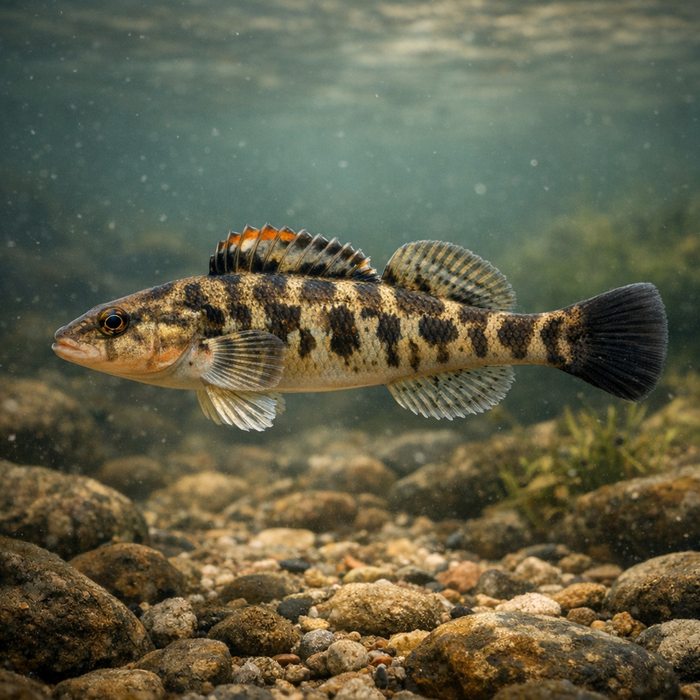
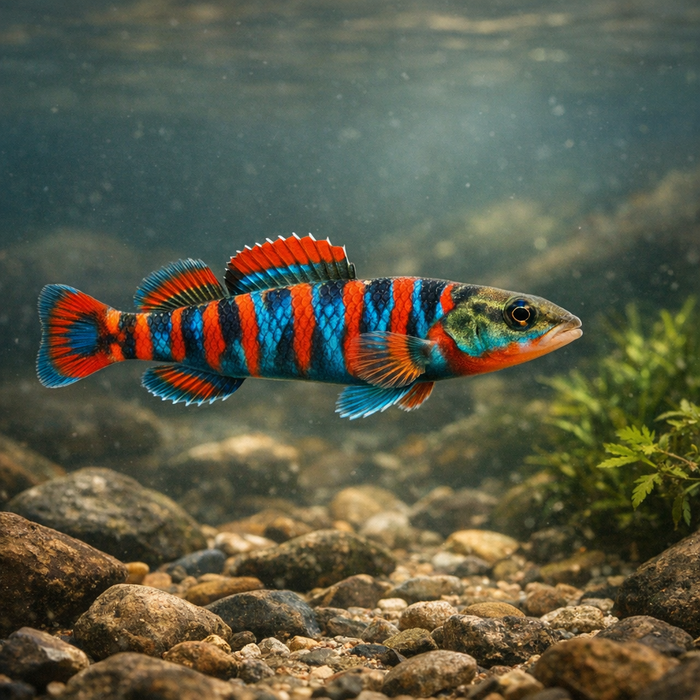
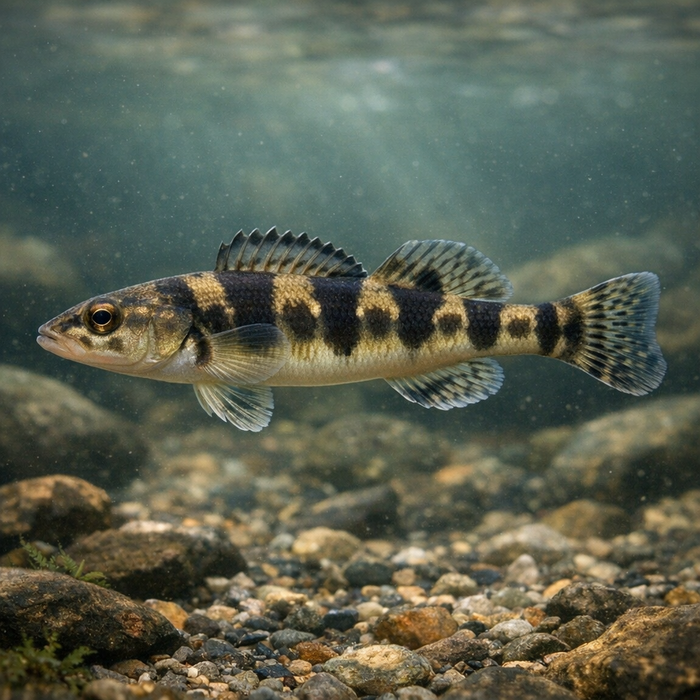
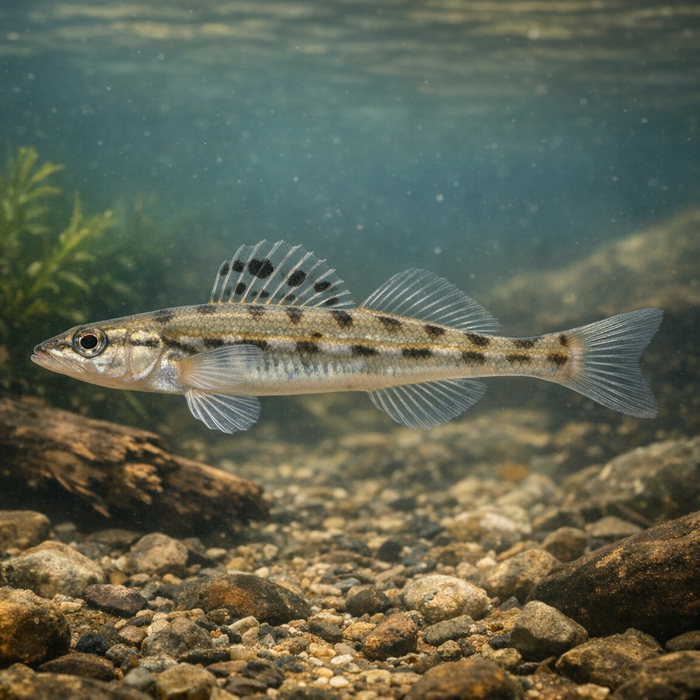
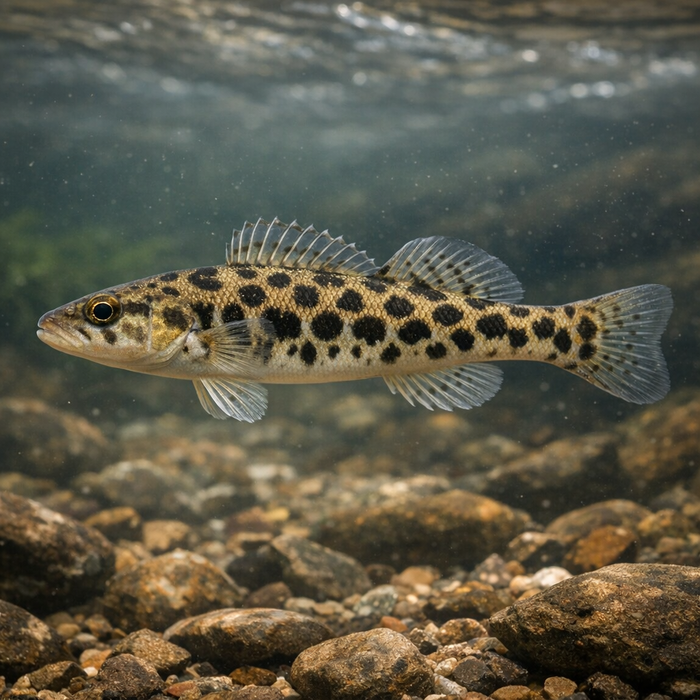
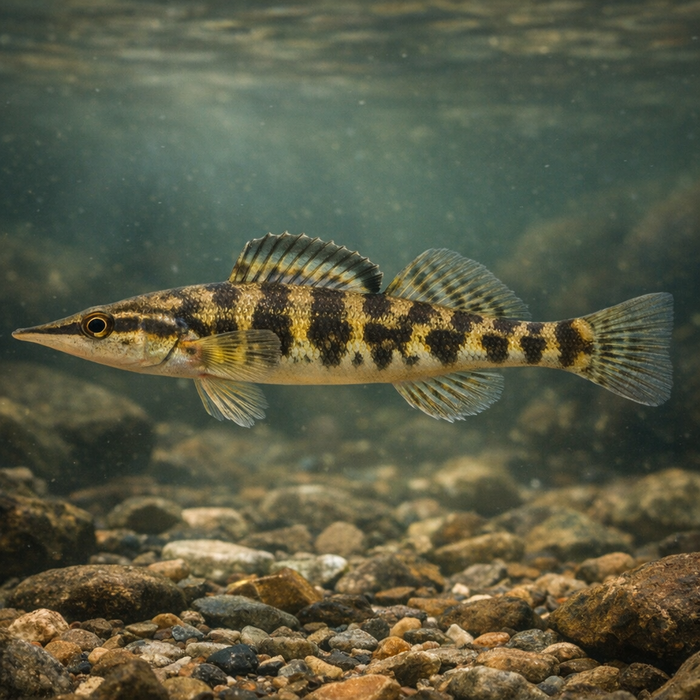
Chesapeake Logperch (Percina bimaculata): A Bold, Memorable Hook LineIntroductionThe Chesapeake logperch is a riffle rocket with a pry-bar for a nose, a fish that treats pebbles like doors to open. It's small, it's fast, and it's way more specialized than its minnow-y looks suggest. If you like strange, hyper-adapted fish that thrive where clean current meets gravel, this one's your jam. Consider this your quick-hit guide to Chesapeake logperch facts without the textbook nap time.What Makes the Chesapeake logperch Unique?Start with the tool kit: an elongated snout built for flipping stones to expose mayflies, caddis, and whatever else dares hide beneath. Then add its namesake: two bold spots at the base of the tail, the "bimaculata" calling card that separates it from its relatives. Finally, there's the attitude. The Chesapeake logperch crouches on big pectorals like a tiny tripod, then blasts forward in bottom-hugging sprints that make it vanish between rocks before your brain catches up. This is not your average creek drifter; it's a specialized hunter with a strict address.Habitat & Global RangeThe Chesapeake logperch lives in clean-flowing, often tidal-fresh tributaries where gravel and cobble dominate and silt is the enemy. Think shallow riffles and runs with steady current, not stagnant pools or muck. The best Chesapeake logperch habitat features polished stone, oxygen-rich water, and places to duck behind during higher flows. It's a narrow niche, which helps explain why encounters can be rare and why anglers should keep it gentle if they bump into one.Behavior & TemperamentThis fish is a bottom operator first and always. It holds tight to substrate, ambushes close, and makes micro-moves rather than cruising open water. Feeding is largely visual and opportunistic, with bursts of activity when current speed and light angle make drifting prey easy to spot. The Chesapeake logperch isn't schooling in classic formation; you'll see scattered individuals or loose clusters, each claiming prime stone patches. Spawning typically rides spring, when water warms and the urge to find pristine gravel cranks up. Courtship brings sharper bars and color pops, then eggs get jammed deep into the substrate where current keeps them flushed and clean.Ecological ImportanceCall it a riffle health detector. The Chesapeake logperch thrives only where sediment stays minimal and the conveyor belt of clean flow never quits. That makes it a handy bioindicator for watershed folks trying to track erosion, runoff, and habitat stability. When silt clogs gravel or stormwater rips away banks, the first thing to suffer is the egg bed. Lose the riffles and you don't just lose a fish; you lose a whole assembly line of insects and micro-habitats that keep streams buzzing.Conservation & Environmental PressuresThe tight habitat window and limited distribution make this species vulnerable to a laundry list of modern headaches: sediment, channelization, bank hardening, poorly timed withdrawals, and flashy storm events. Because the Chesapeake logperch is recently recognized as distinct, some databases still lag on assessments, but managers in several jurisdictions treat it as a priority. Translation for anglers: expect protective rules, and plan your thrill around sighting, photographing, and releasing. If you wanted a reason to care about clean gravel riffles, this fish is it.The FishyAF TakeThe Chesapeake logperch is proof that the most specialized players aren't big, they're dialed. If you're hunting Chesapeake logperch habitat, come correct: stealthy steps, polarized lenses, and a bias for clean stones. Then be cool about your success. The real flex isn't a hero shot, it's a quick in-water unhook and a snappy memory before it bolts. Among Chesapeake logperch facts, here's the keeper: treat riffles like holy ground, and the fish will handle the rest. Tiny, tough, and ridiculously purpose-built, this is the riffle ninja that makes creek time feel like a backstage pass.