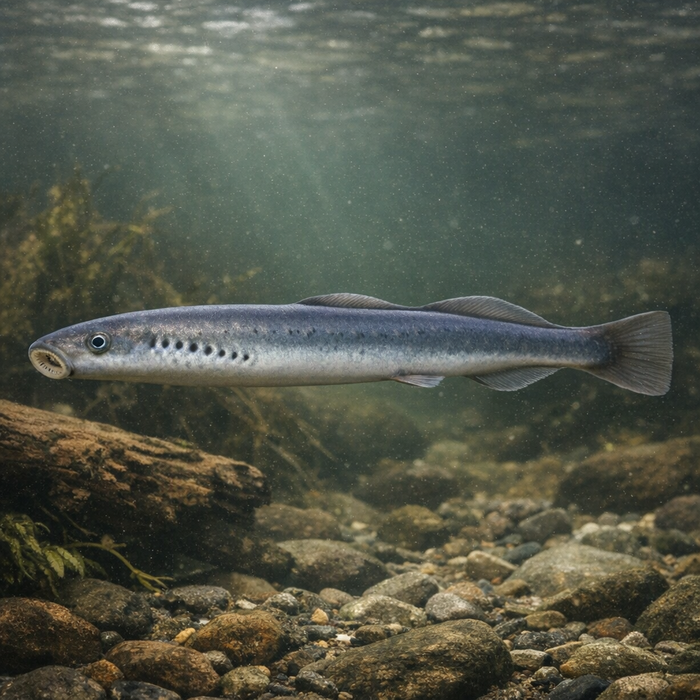
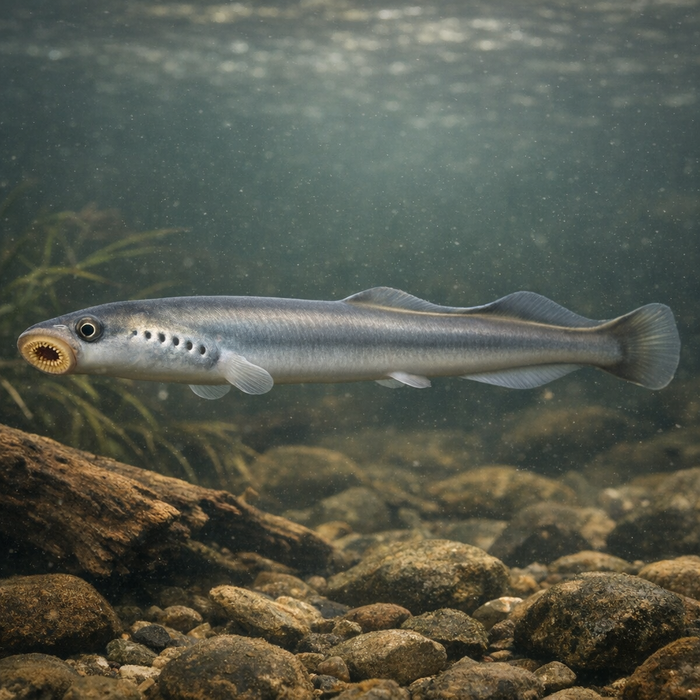
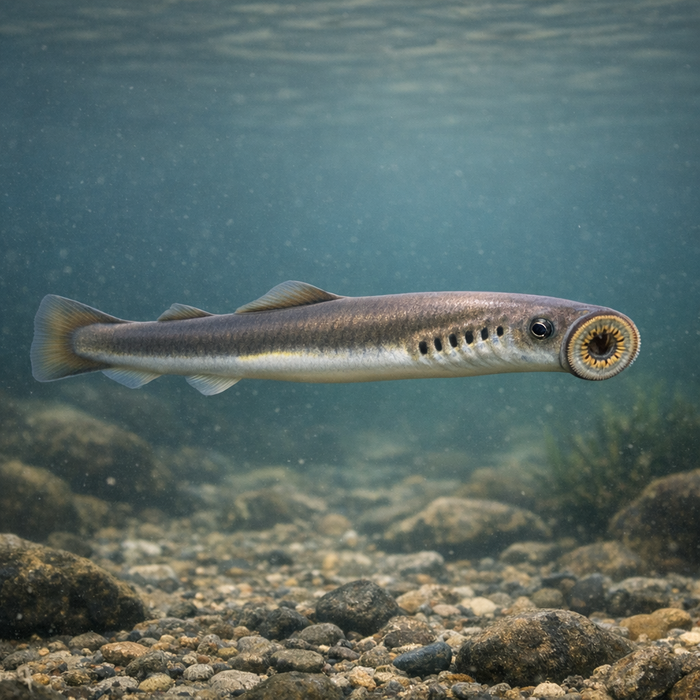
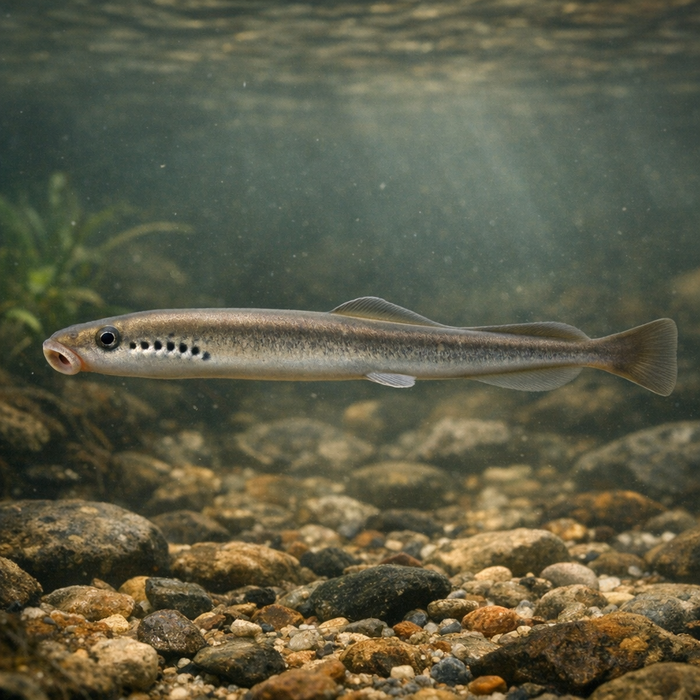
Chestnut lamprey (Ichthyomyzon castaneus): A Bold, Memorable Hook LineIntroductionMeet the fish that isn't really a typical fish. The chestnut lamprey is a jawless, eel-shaped throwback that grabs attention the moment you see the suction-cup mouth. Anglers mostly know it by the round scars it leaves on bigger fish, but there's a lot more going on. If you want real Chestnut lamprey facts, buckle up. This native parasite is part villain, part cleanup crew, and fully fascinating.What Makes the Chestnut lamprey Unique?First, the hardware. Instead of jaws, it runs a circular oral disc studded with keratin teeth and a rasping tongue. That setup lets the chestnut lamprey latch onto a host fish, hold tight through current, and feed. Second, the timeline. It spends the bulk of its life as a blind, burrowed larva called an ammocoete, filtering tiny particles from the sediment for years. Only after a metamorphosis do the teeth arrive, eyes open, and the adult parasitic phase kicks in. Finally, this is a one-and-done spawner. After a season of feeding, adults build gravel nests in riffles, spawn, and die. Brutal efficiency, nature-style.Habitat & Global RangeChestnut lamprey habitat centers on medium to large rivers with clean gravel riffles for spawning and slower pools for resting. Adults also use reservoirs and big river backwaters when hosts are plentiful. The species is native to central and eastern North America, widespread in the Mississippi, Ohio, and Missouri River systems, with pockets in Great Lakes tributaries. It's a river-first creature, thriving where current, oxygen, and suitable spawning gravel intersect. If you're scouting, think riffle-to-pool transitions, low-head dam tailouts, and tributary mouths that concentrate hosts.Behavior & TemperamentThe chestnut lamprey is not an ambush predator in the classic sense; it's a specialist hitchhiker. Adults attach to larger fishes, aided by an anticoagulant that keeps the meal flowing. They're most active in low light, often moving at night. In spring, they stage on riffles, shift stones with that suction mouth, and pair up to spawn. During the rest of the year they're ghosts, blending with bottom structure or riding a host fish in deeper runs and pools. They're not fighters on rod and line, but they're surprisingly tenacious once attached to anything.Ecological ImportanceNative lampreys get a bad rap because of their invasive sea-lamprey cousin. Different story here. The chestnut lamprey evolved with its fish community. It can stress individual hosts, sure, but at the population level it plays a role in energy transfer and scavenging. Ammocoetes filter-feed and help process fine organic matter. Post-spawn die-offs recycle nutrients into the river food web. Where the species persists, it signals relatively intact flow, oxygen, and substrate-quiet proof of river health.Conservation & Environmental PressuresOverall, the chestnut lamprey is doing fine where habitat remains. The real threats are the usual river killers: sediment-choked riffles, dewatering, low-head dams that block movement, and poor water quality. Because lampreys need specific gravel and flow for spawning, they vanish quickly when riffles silt in. Misidentification and needless killing also happen when anglers assume every lamprey is invasive. Knowing the difference protects a native piece of the system.The FishyAF TakeIf you chase strange, the chestnut lamprey delivers. It's not a trophy in the wall-hanger sense, but it's absolutely a story fish. Finding one teaches you to read riffles, pay attention to substrate, and appreciate how weird and effective nature can be. For legit Chestnut lamprey habitat scouting, think clean gravel, moving water, and spring timing. Treat them with respect, snap a quick pic, and let the river keep its ancient weirdo doing what it does best.