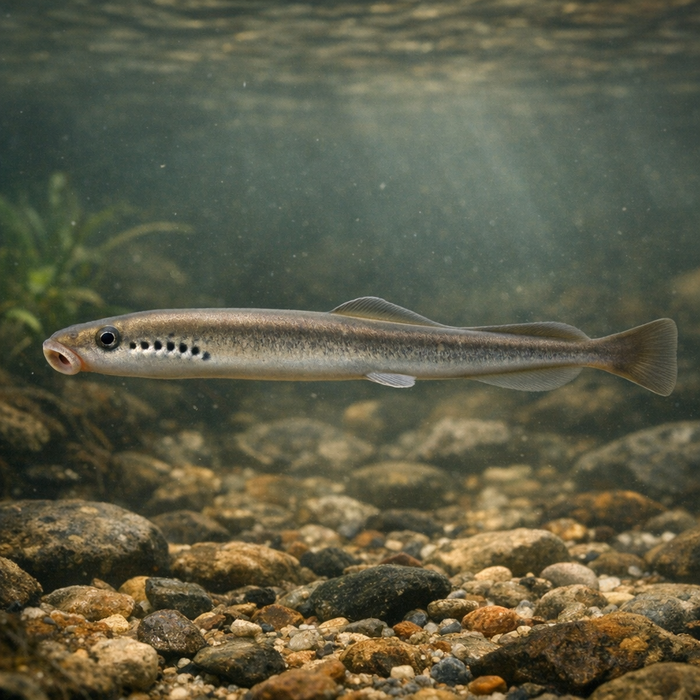
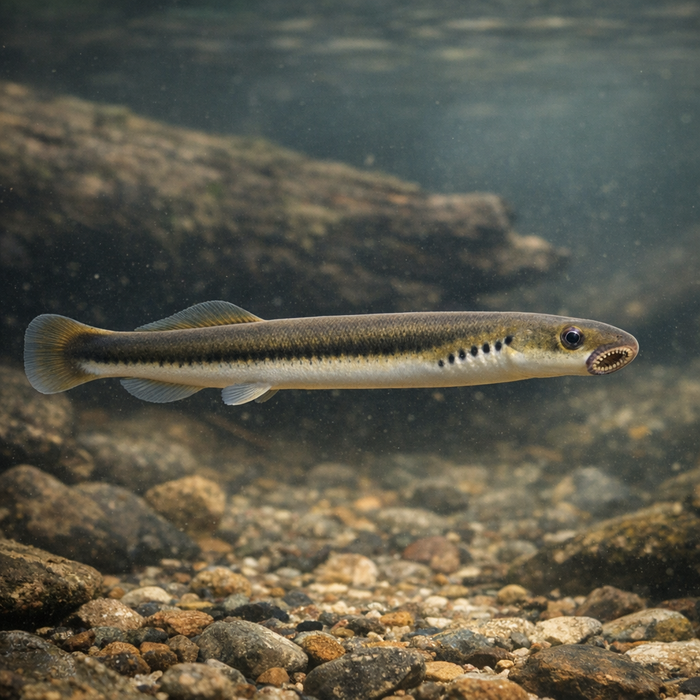
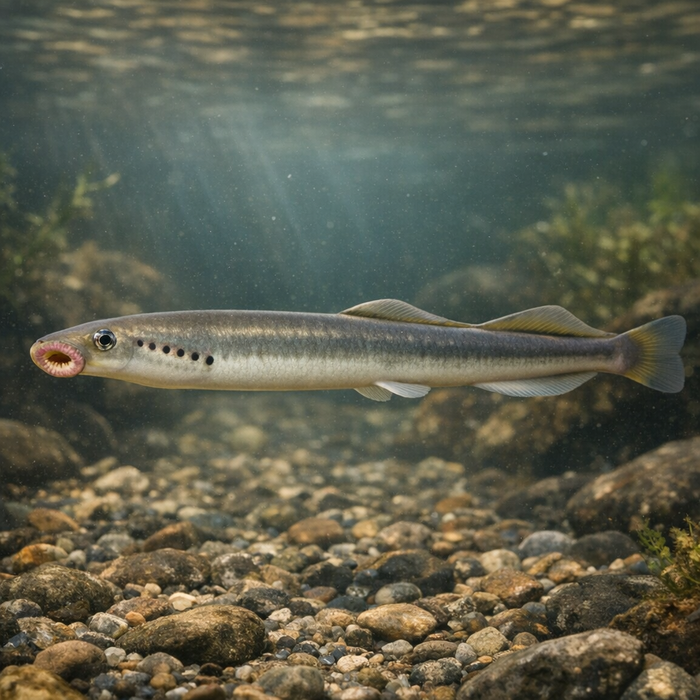
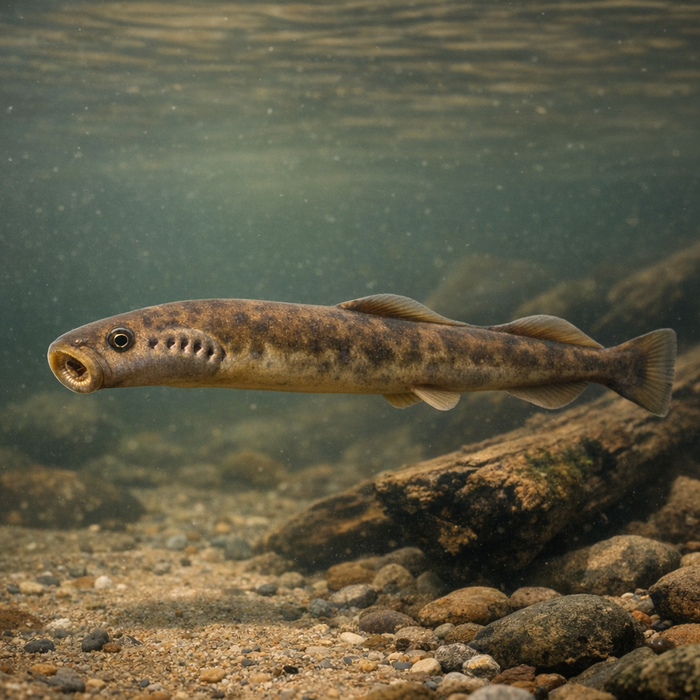
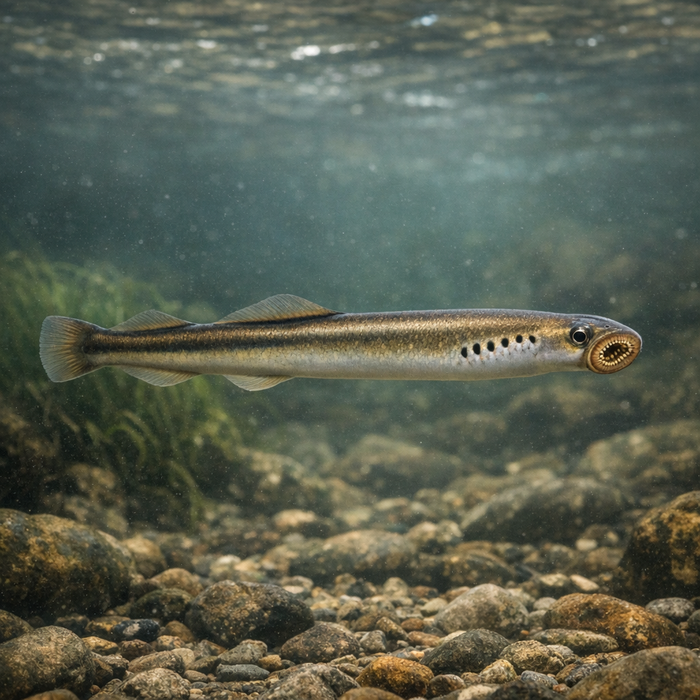
Ohio lamprey (Ichthyomyzon bdellium): A native river vampire with a sucker for rifflesIntroductionIf you fish Midwestern or Appalachian rivers long enough, you'll eventually spot a weird, eel-looking ribbon clinging to a rock or hitchhiking on a sucker. That's the Ohio lamprey, a native parasite that freaks people out and fascinates biologists. It isn't a classic sportfish, but its story is pure river magic: years underground as a larva, months freeloading on host fish, then a one-and-done sprint to spawn. If you want real Ohio lamprey facts, you need to think like a riffle.What Makes the Ohio lamprey Unique?The Ohio lamprey is jawless, which is already wild. Instead of chomping, it suctions on with a round disc lined with tiny teeth and rasps a shallow wound for fluids. Unlike the infamous sea lamprey, the Ohio lamprey is small, native, and part of the river's normal food web. It spends several years as a blind, filter-feeding larva buried in sand and silt. Then it metamorphoses into a sleek, sighted adult that parasitizes mid-sized fish like suckers and catfish. Finally, it goes all-in on a single spring spawn, builds simple gravel nests in fast water, and dies. That boom-bust life history makes the Ohio lamprey dramatic and strangely admirable.Habitat & Global RangeOhio lamprey habitat is classic moving water. Picture moderate to large rivers with clean gravel riffles and steady current. Adults haunt pools and runs, then stage below riffles as water warms each spring. Come spawning time, they wriggle into knee-deep current, roll stones with their mouths, and sculpt a pocket to drop eggs. Geographically, they're a creature of the Ohio River basin and neighboring drainages in the Midwest and Southeast. If your fishing maps highlight riffles on the Muskingum, Green, Wabash, or Kanawha, you're in the neighborhood.Behavior & TemperamentThe Ohio lamprey is a stealth operator. Adults hold low in the water column, hugging rocks and shadows, often moving at dusk or dark. Parasitic periods turn them into commuter fish; they latch onto hosts, ride along, and detach to rest on structure. During the spawning window, their behavior flips from secretive to bold. Groups converge on shallow gravel where pairs wriggle and shove stones around like tiny bulldozers. They won't chase lures like smallmouth, and they rarely "bite" bait in the traditional sense, but you can sight-spot them in clear current if you're patient.Ecological ImportanceNative lampreys aren't villains. The Ohio lamprey's larval stage filters fine particles and organic material, helping cycle nutrients. Adults, though parasitic, usually don't kill their hosts; they draw energy that ultimately feeds predators like bass, walleye, and herons. They also move gravel while nesting, subtly cleaning riffles used by other species. It's messy, natural, and older than your favorite lure pattern.Conservation & Environmental PressuresClean gravel and steady flow are non-negotiable. Siltation from poor land use buries larval habitat, while dams fragment runs and isolate spawning riffles. Pollution and low oxygen hammer larvae that must sit buried for years. The Ohio lamprey is generally considered stable, but local populations can drop fast where riffles clog or connectivity is cut. That's why a river that still pumps clean current can suddenly feel alive with lampreys in spring and go quiet after a bad silt year.The FishyAF TakeThe Ohio lamprey is the river's oddball that proves a point: native parasites can be heroes too. If you spot one on a host, don't freak out. If you catch one in the riffles, handle it gently and admire an ancient fish doing exactly what it evolved to do. For anglers, the best Ohio lamprey facts are field facts: clean gravel, rising spring flow, and a shadowy shape suctioned to a rock. It's not about the fight. It's about seeing a piece of river history come to life right in front of you.