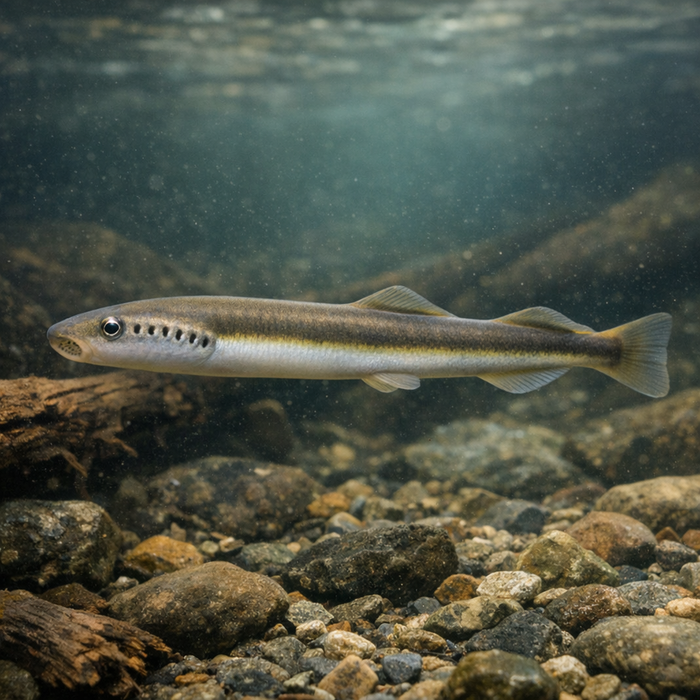
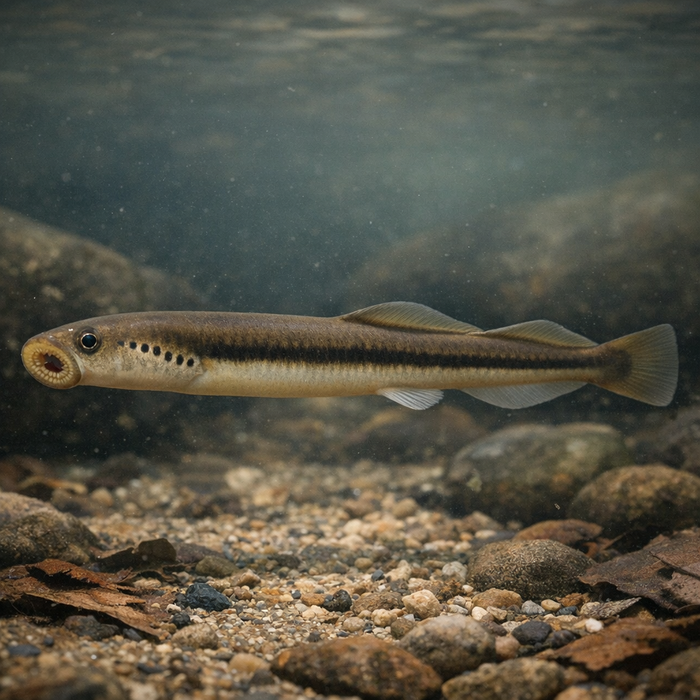
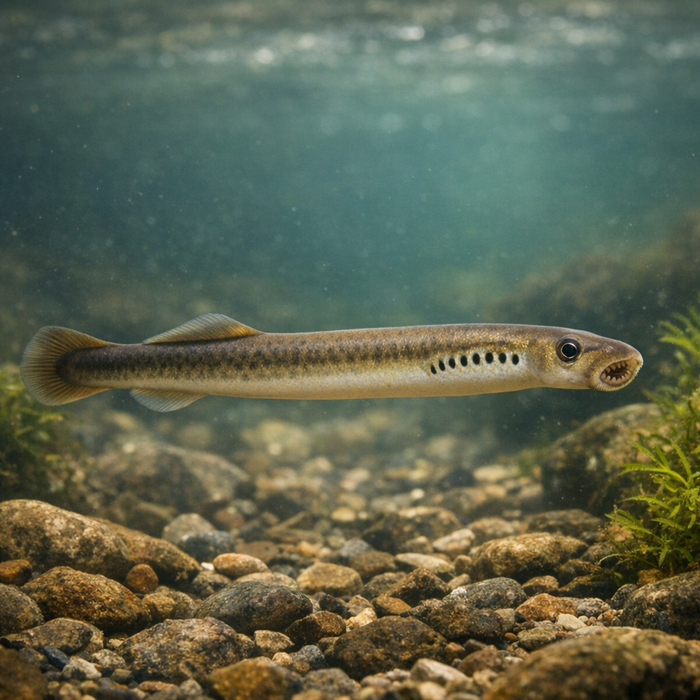
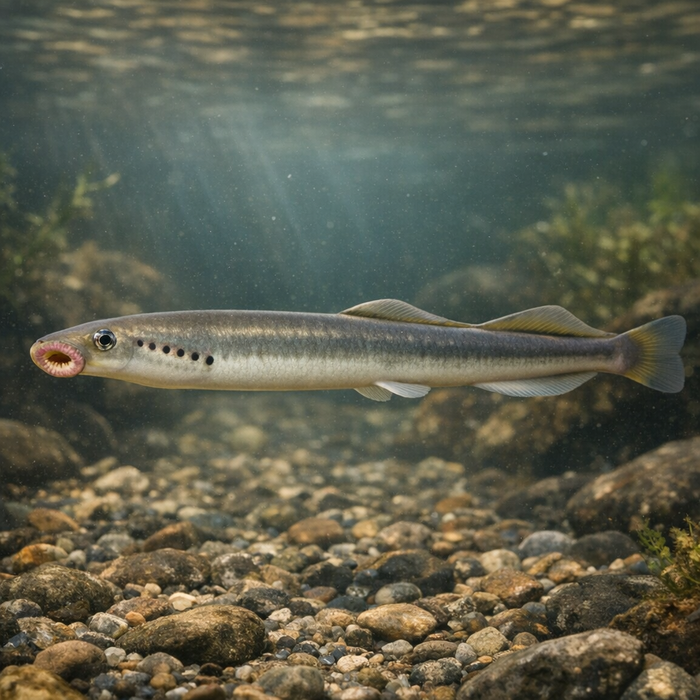
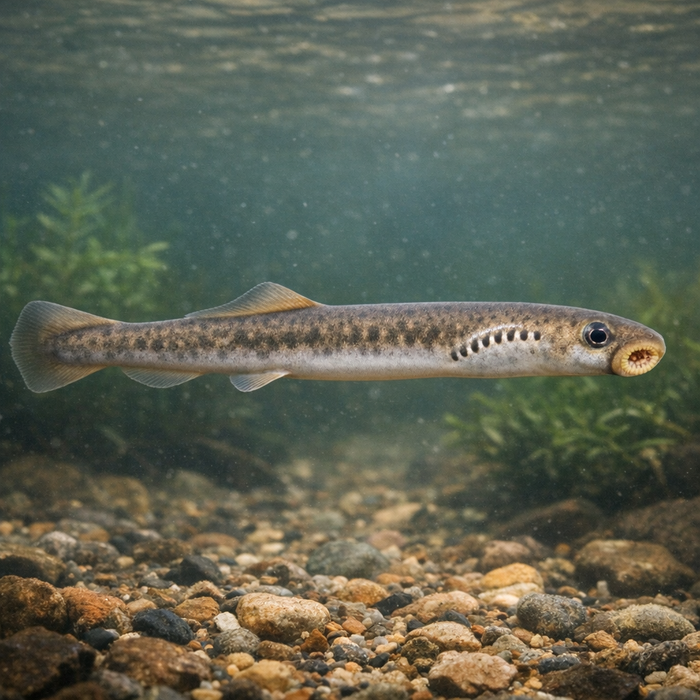
Kern brook lamprey (Lampetra hubbsi): A Bold, Memorable Hook LineIntroductionThe Kern brook lamprey is the little river oddball that rewrites your idea of what a "fish" even is. No jaws, no scales, and after growing up buried like a tiny vacuum cleaner, it transforms, sprints to spawn, and then taps out. It's not a sportfish, but it's a seriously cool piece of Sierra stream biology and a marker for clean, living water.What Makes the Kern brook lamprey Unique?Start with the mouth. Instead of jaws, it sports a round oral disc with rasping micro-teeth built more for moving gravel than biting prey. The Kern brook lamprey is nonparasitic, so adults don't feed at all. As metamorphosis wraps, the gut basically shuts down, eyes sharpen, and the body becomes a single-purpose spawning machine. That extreme life-history switch is one of the most striking Kern brook lamprey facts and it gives anglers a reality check: this fish isn't here to smash your lure. It's here to continue a very old lineage with ruthless efficiency.Habitat & Global RangeThe Kern brook lamprey habitat is hyper-local. Think cold, spring-fed tributaries and riffly runs in the Kern River system of California. Shallow gravel, steady current, and clean, silt-free pockets are the core ingredients. Larvae, called ammocoetes, spend years burrowed in soft margins where gentle flow delivers a constant buffet of microscopic organics. When you hear about "indicator species," this is it. If these streams get choked with sediment or dewatered, lampreys vanish first.Behavior & TemperamentFor years the lamprey barely moves, quietly feeding as a larva and growing under the radar. Then comes the switch. The fish darkens, the anatomy changes, and it stages on shallow riffles to spawn. Multiple adults will collaborate, shifting pebbles with their mouths and bodies to build saucer-shaped nests. They're not aggressive and they won't chase offerings. If you "catch" one, it's usually because you scooped a nest-builder or snagged a bystander, neither of which is a good look for the fish or for you.Ecological ImportanceThe Kern brook lamprey is a nutrient thread stitched through this watershed. Ammocoetes filter fine particles and plankton, cleaning water while turning the tiniest stuff into fish biomass. Post-spawn mortality then returns nutrients to the river in a clean, natural loop. Their sensitivity makes them perfect sirens for stream health: when flows stabilize and substrate stays clean, lampreys thrive. When water diversions, wildfires, or silt hammer a creek, they wink out.Conservation & Environmental PressuresThese fish are small, specialized, and tied to specific flow and substrate. That means they don't have much room for error. Water withdrawals, prolonged drought, fire-related sediment pulses, channelization, and poorly timed maintenance flows can erase spawning habitat in a season. While formal status listings vary, common-sense conservation applies: handle minimally, keep them wet, and prioritize observation over capture. Protect gravel and flow and the Kern brook lamprey pays you back with a living, breathing gauge of stream integrity.The FishyAF TakeThe Kern brook lamprey is proof that wild rivers hold more than targets; they hold stories. If you need a tug, chase the Kern's trout. But if you want perspective, find a riffle, crouch low, and watch these jawless throwbacks move stones like tiny bulldozers. They are weird, ancient, and absolutely dialed for their niche. The best "tactic" here is curiosity. Learn the currents, read the gravel, and treat every nest like a treasure. That's how you win with this fish, and it's the kind of win that actually matters.