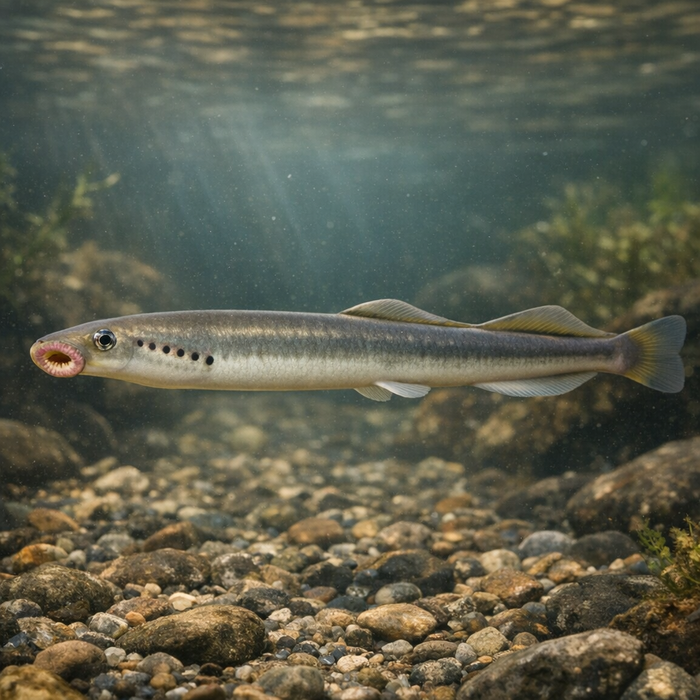
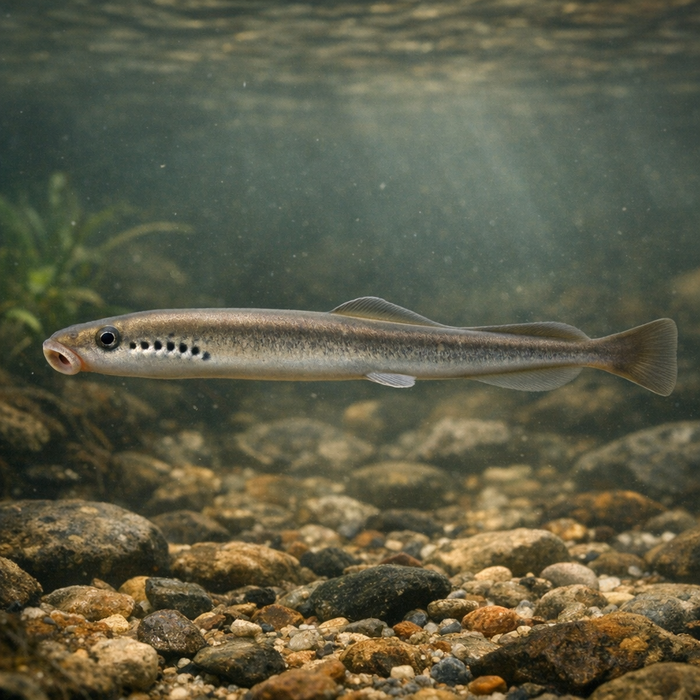
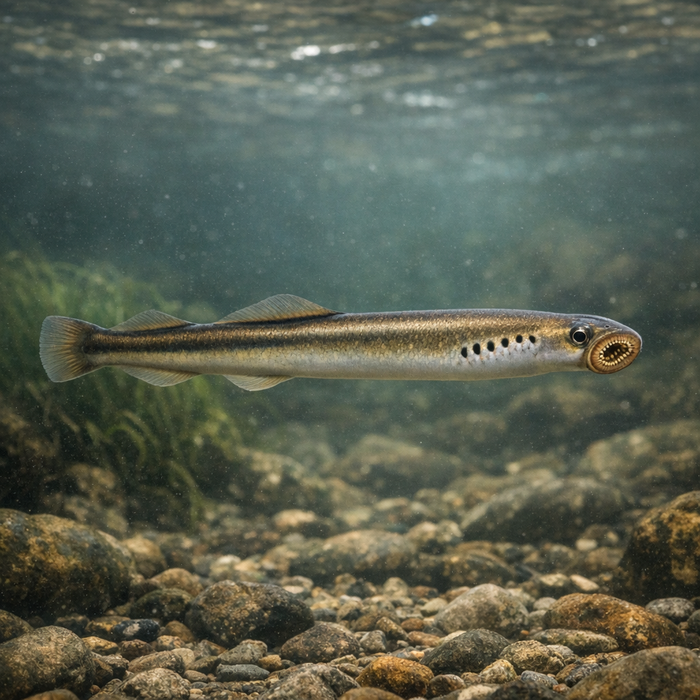
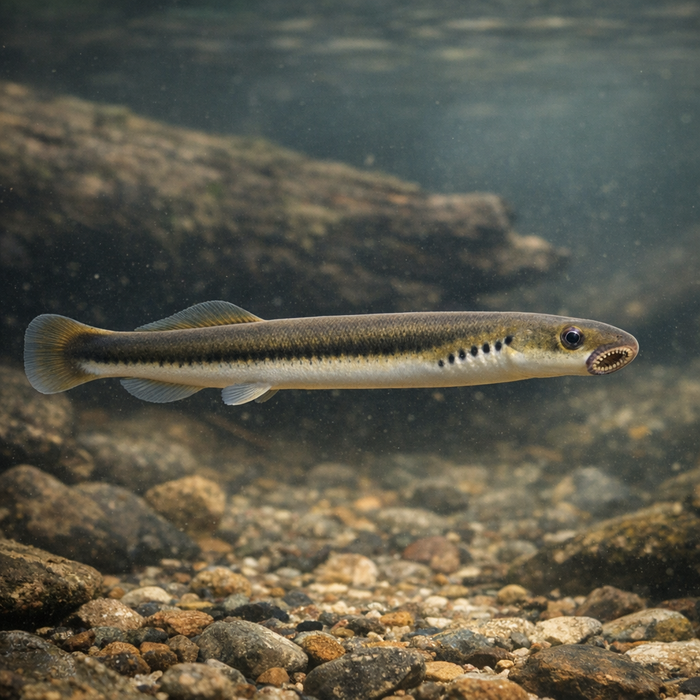
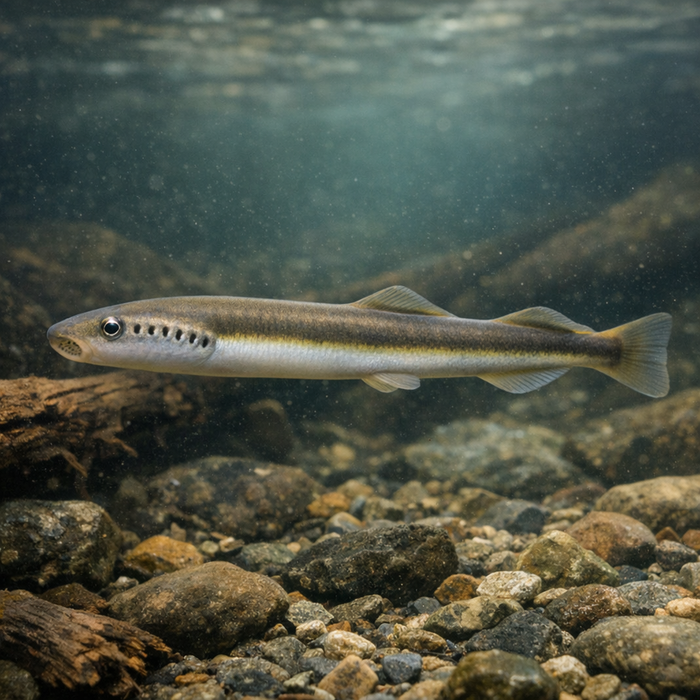
Northern California Brook Lamprey (Entosphenus folletti): The stealthy stream ghost that doesn't even bother eating as an adult.IntroductionMeet the Northern California brook lamprey, a tiny jawless oddball that flips the fish script. While trout charge bugs and salmon blast upriver, this lamprey spends years as a buried larva, then transforms into a skinny adult that stops feeding entirely, spawns, and fades out. Anglers stumble into them while poking around riffles or flipping rocks for bait. As sportfish they are a nonstarter, but as a wild-stream story they are pure gold. If you want Northern California brook lamprey facts or a sense of Northern California brook lamprey habitat, read on.What Makes the Northern California brook lamprey Unique?Two big things. First, life strategy. As ammocoetes, they filter tiny algae and organic bits in soft sediments for years. After metamorphosis, they do the opposite of bulking up: their gut shrinks, they live on stored fat, and they sprint to spawn. Second, mouth design. It looks like a suction cup ringed with tiny keratin teeth. In parasitic lampreys that means latch-and-drill. In this nonparasitic species it means nest engineering: they grip stones, haul pebbles, and sculpt gravel beds with that cup.Habitat & Global RangeThe Northern California brook lamprey is a homebody of cool, clean coastal creeks and small rivers. Picture shaded riffle-glide sequences, loose pea gravel for spawning, and adjacent soft silts where larvae can burrow and filter. Stable flows, decent groundwater input, and undisturbed banks matter far more than big water. Most populations are patchy and isolated by natural barriers, which keeps gene pools quirky and local. When people ask about Northern California brook lamprey habitat, what they are really chasing is that combo of cold water, clean gravel, and nearby fine sediment.Behavior & TemperamentAggression is basically nil. Adults do not feed, so there is nothing to trigger with a lure. You will see short upstream movements in spring as they stack into riffles, pair up, and start nest building. During spawning, they use the suction mouth to move stones and fan silt away with their tails. Larvae are the ghosts of the streambed, buried in silt tubes with just a faint feeding current giving them away. They are poor fighters on tackle and usually encountered by accident while trout fishing with tiny baits.Ecological ImportanceFor something so small, the Northern California brook lamprey punches above its weight. Larvae act like natural water filters, clarifying flow by processing fine particles. Spawning stirs and cleans gravel, aerating it for other egg-layers. They show up as food for bigger fish, birds, and mammals, so they are part of the energy handoff from microscopic producers to headline predators. Because populations are so localized, they also serve as red flags. If a creek loses cold water, fine sediments get cemented, or banks blow out, lampreys vanish quickly. Their presence is a stream-health vibe check.Conservation & Environmental PressuresTiny range, big risks. Road crossings, dewatering, channel straightening, and chronic sediment inputs can wipe out nursery habitat. Low summer flows warm up nursery areas and glue gravel into concrete. Because adults spawn in shallow riffles, people wading or moving rocks can unknowingly crush nests. Classification and protections vary, but it is fair to say that the Northern California brook lamprey needs cold, clean, connected water and careful handling when seen. Many biologists treat them as a local priority species even when formal listings lag.The FishyAF TakeThe Northern California brook lamprey is not your next grip-and-grin. It is a backstage pass to how creeks work. If you are trout fishing and spot a wriggly, eel-like shape glued to gravel, you just ran into an ancient lineage quietly keeping streams tuned. Respect the nest, keep your boots off the clean patches, and enjoy the weirdness. Want bragging rights? Learn to identify the species, snap a responsible photo, and teach your buddy what that suction-cup mouth is really for. That is the kind of flex we like.