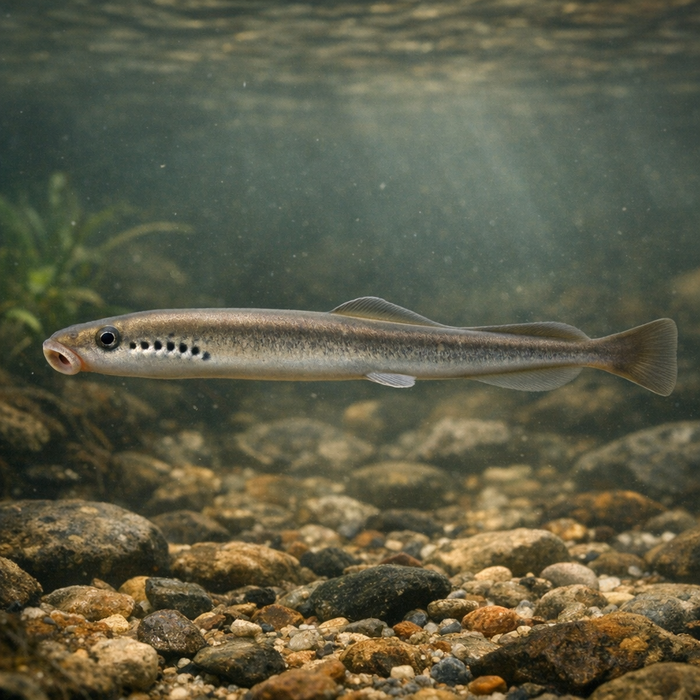
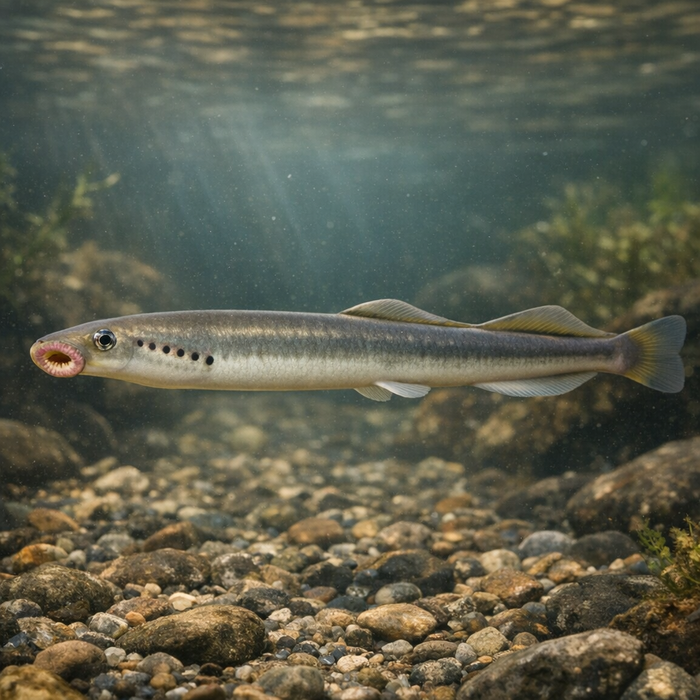
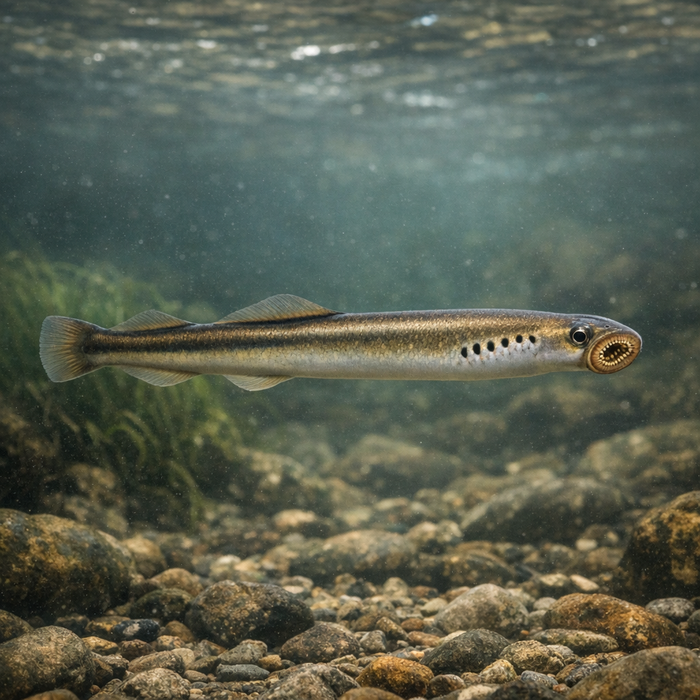
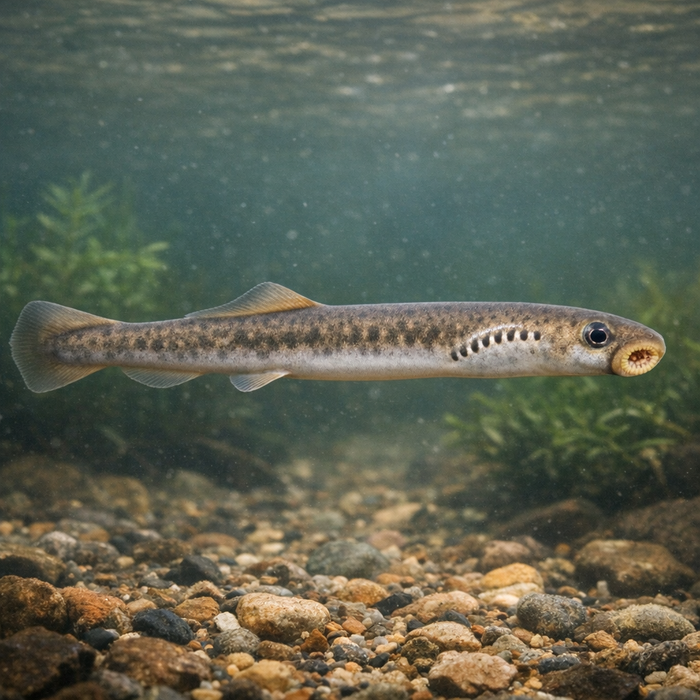
Mountain Brook Lamprey (Ichthyomyzon greeleyi): A Bold, Memorable Hook LineIntroductionThe mountain brook lamprey is the freshwater ghost of Appalachian riffles: tiny, ancient, and gone before you blink. You won't catch it on a fly or crankbait. Adults don't even feed. But if you want a masterclass in stream health and fish evolution rolled into one slippery package, this little jawless wonder delivers. Consider this your quick-and-dirty guide to real Mountain brook lamprey facts, written for anglers who appreciate the whole river, not just what bends their rod.What Makes the Mountain brook lamprey Unique?Two things make the mountain brook lamprey stand out. First, its life strategy flips the angler script. It spends years as a larva filtering microscopic food, then metamorphoses, stops eating entirely, sprints upstream, spawns, and dies. All the adult's energy is prepaid during the long larval phase. Second, it's nonparasitic. Unlike notorious, fish-latching lampreys, mountain brook lamprey adults never feed on hosts; they're built for one job: reproduction in clean, fast water. That combination of ancient design and ultrafocused purpose makes it a quirky, compelling indicator of intact streams.Habitat & Global RangeThink cool, clear, well-oxygenated creeks with gravel riffles and pockets of clean sand and silt. Larvae, called ammocoetes, live buried in gentle margins and back-eddies where fine sediments accumulate, while adults prefer riffled gravel runs for spawning. The mountain brook lamprey is centered in the southeastern United States, especially Appalachian drainages of the Tennessee and Cumberland systems. If you're scouting Mountain brook lamprey habitat, start with headwater tributaries that still run cold in summer and show stable flow with minimal siltation.Behavior & TemperamentThis species is the definition of low-drama. Ammocoetes filter-feed invisibly for years, surfacing only when floods rearrange their sediments. Adults hide under cobble by day and fuse briefly to rocks with their oral disc in current. During the short spawning window, multiple males and females team up to sweep stones and sculpt a shallow nest, then broadcast eggs. There's no chase, no strike, no fight. If you spot a mountain brook lamprey, it's typically because you caught the riffle at just the right light angle.Ecological ImportanceFor a fish that wants nothing to do with your tackle, the mountain brook lamprey quietly carries the stream on its back. Larvae process fine organic matter, effectively recycling nutrients and clarifying water. Their burrowing oxygenates sediment layers, boosting microinvertebrate communities. Adults fuel predators like smallmouth bass, darters, and kingfishers during spring, turning stored biomass into a seasonal energy pulse. Lose lampreys and you don't just lose a species; you nick the stream's nutrient conveyor belt.Conservation & Environmental PressuresThis species is picky, and that's both its superpower and weakness. Clean gravel and stable flows are required at the exact time adults spawn. Excess silt from poor land use buries larval beds. Warmed water from deforestation or urban runoff cuts oxygen. Dams and culverts block upstream movements right when the clock runs out. Some states protect lampreys outright; others classify them as nongame fish with limited or no harvest. If you care about seeing mountain brook lamprey again, watch the watershed more than your watch.The FishyAF TakeYou won't catch mountain brook lamprey with a lure, and that's the point. It's a litmus test for rivers that still have their act together. Treat sightings like a trophy photo-op you don't keep. If you're into offbeat species, logging a clean observation of mountain brook lamprey beats hoisting another cookie-cutter stocker. Think of it as fishing for proof that the creek is still wild. And if you wanted one more Mountain brook lamprey facts nugget: when a fish is so committed to spawning that it mothballs its gut, you respect the hustle.