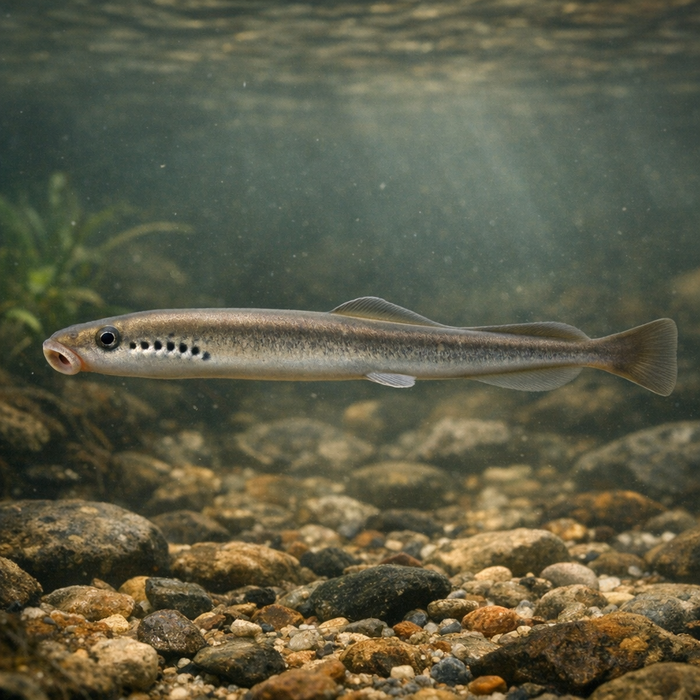
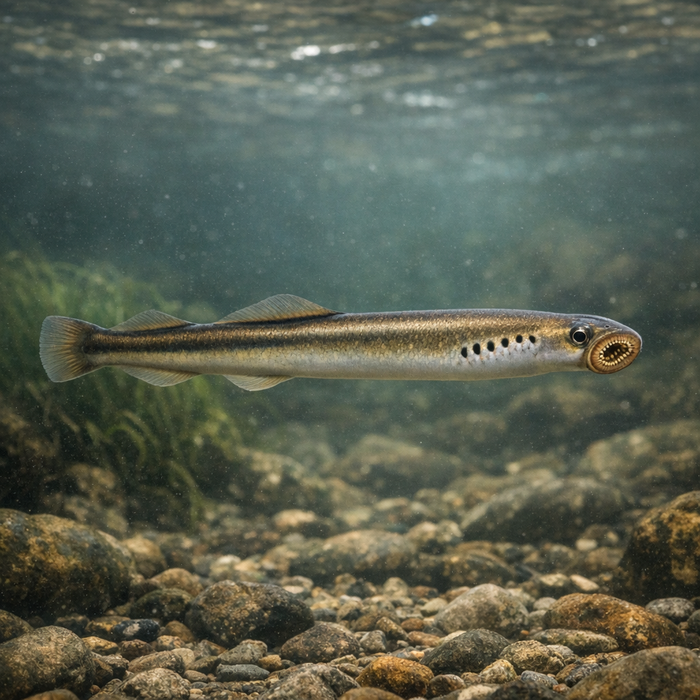
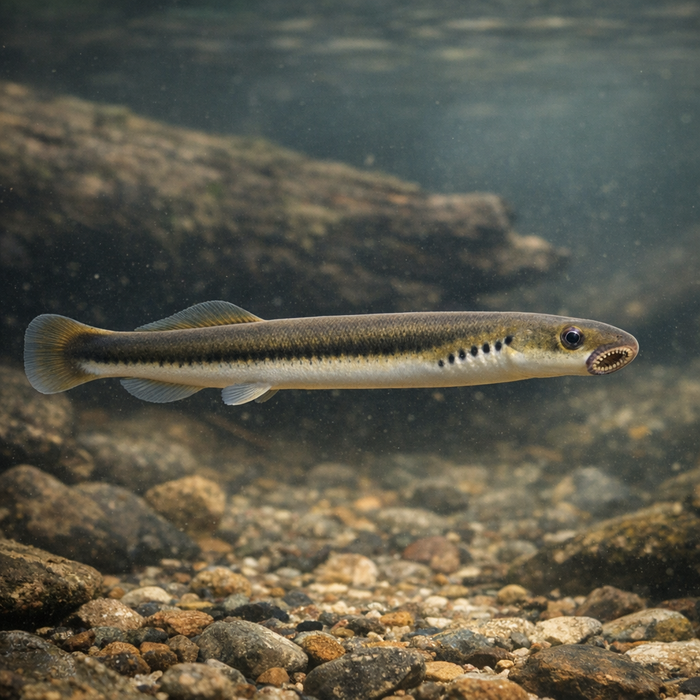
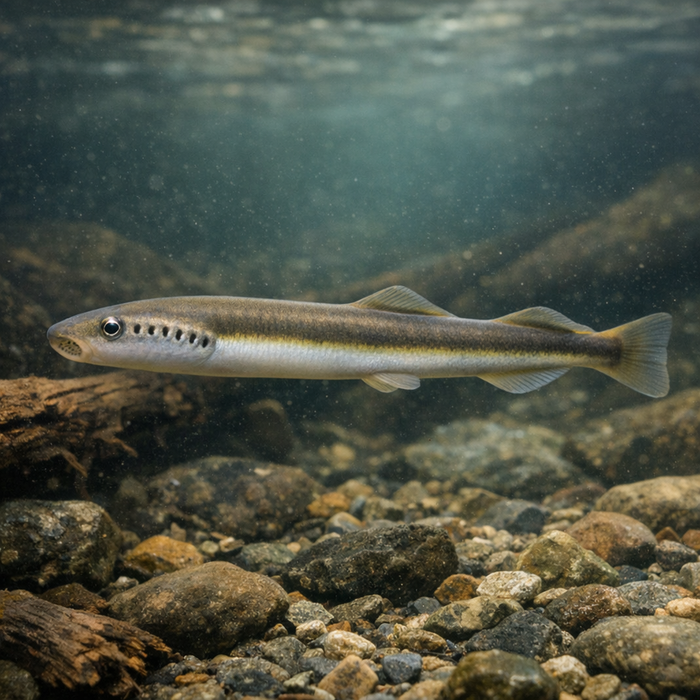
Pacific Brook Lamprey (Occidentis pacifica): Tiny river noodle with zero interest in your lure, but big ecological swagger.IntroductionIf you expect every fish to smash a lure and peel drag, the Pacific brook lamprey is here to humble you. This slender, eel-like oddball spends years buried in stream silt, then morphs into a small, short-lived adult that doesn't even eat. It's not a traditional target, but it's a killer window into stream health and a surprisingly fascinating critter once you learn a few Pacific brook lamprey facts.What Makes the Pacific brook lamprey Unique?Start with the shocker: adults do not feed. During metamorphosis, the gut shuts down, the eyes switch on, and the mouth reorganizes into a suction disc for clinging and nest work, not hunting. Compare that with their parasitic cousins and you'll appreciate how wildly specialized this fish is.Second, the timeline is flipped. The larval stage, called an ammocoete, can last five to seven years as a blind, burrowing filter-feeder. The adult stage is a quick sprint: migrate locally, spawn in riffles, and check out. That long larval residency makes them excellent indicators of stream stability.Habitat & Global Range"Pacific brook lamprey habitat" translates to cool, clean, well-oxygenated streams in the Pacific Northwest, especially tributaries to larger rivers with mixed gravel and sand. Larvae anchor in fine sediments along slow margins where current drops and organic material accumulates. Adults stage and spawn in shallow riffles, often below small logjams, boulder seams, or tailouts with stable pea-to-cobble gravel. Range is patchy, keyed to watersheds with intact flow and low silt pulses. Where the streambed stays clean and the hydrograph is predictable, the fish thrives; where sediment clogs interstitial spaces, larvae lose their burrows and disappear.Behavior & TemperamentDon't expect fireworks. Ammocoetes filter quietly through the substrate like living pool vacuums. Adults move locally, sometimes in small groups, to suitable spawning pockets. They use their mouths like suction cups to hold position in current and to shuffle stones into simple redds. Activity ramps up during spring flows and in low-light windows when predators are less active. There's no chase instinct and virtually no strike behavior, which is why traditional angling approaches rarely work.Ecological ImportanceThe Pacific brook lamprey is stream janitorial staff with fins. Larvae filter algae, microbes, and organic bits, recycling nutrients and clarifying water over huge portions of their lifespan. Spawning adults turn gravel, oxygenating the bed and creating microhabitats for aquatic insects that feed salmonids and everything else. They also serve as prey for birds, trout, and mammals. Pull them out of the system and you lose a quiet but critical piece of stream function.Conservation & Environmental PressuresLong-lived larvae anchored to the same few yards of streambed are both a strength and a vulnerability. Dams, dewatering, and channelization wipe out habitat connectivity. Excessive sediment from logging roads or post-fire erosion smothers the fine-sediment margins where larvae live. Summer low flows and warm temperatures shrink oxygen-rich refuges. Because the species is small and unglamorous, monitoring is sparse, which means problems can brew under the radar. Keeping riparian cover, stable flows, and clean gravel is the whole game.The FishyAF TakeThe Pacific brook lamprey isn't a grip-and-grin candidate, and that's fine. Spend a few minutes watching a spawning pocket and you'll realize how much work these little weirdos do to keep streams humming. They're a reality check for anglers: not every fish needs to smash a spinner to matter. Learn to spot ammocoete beds, appreciate clean gravels, and you'll start reading rivers better for your actual targets too. Sometimes the smartest play is to put the rod down, kneel on the bank, and just watch the river's smallest engineers at work.