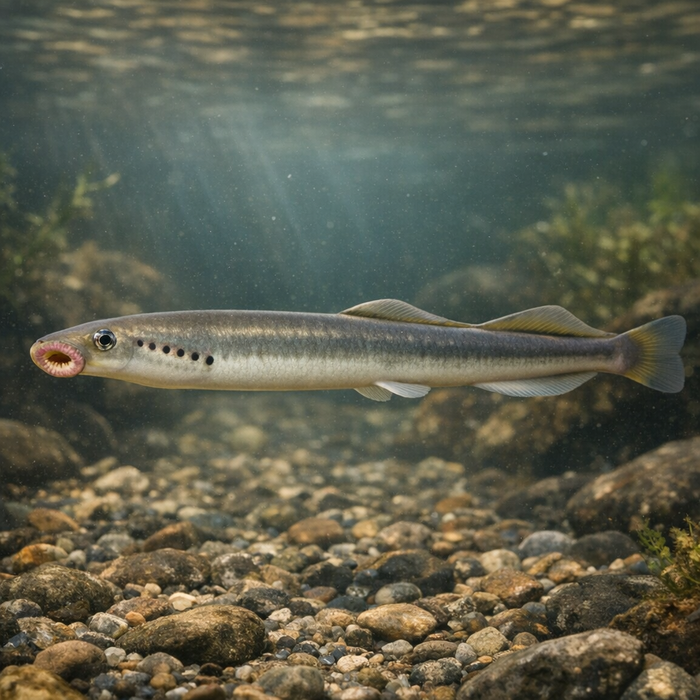
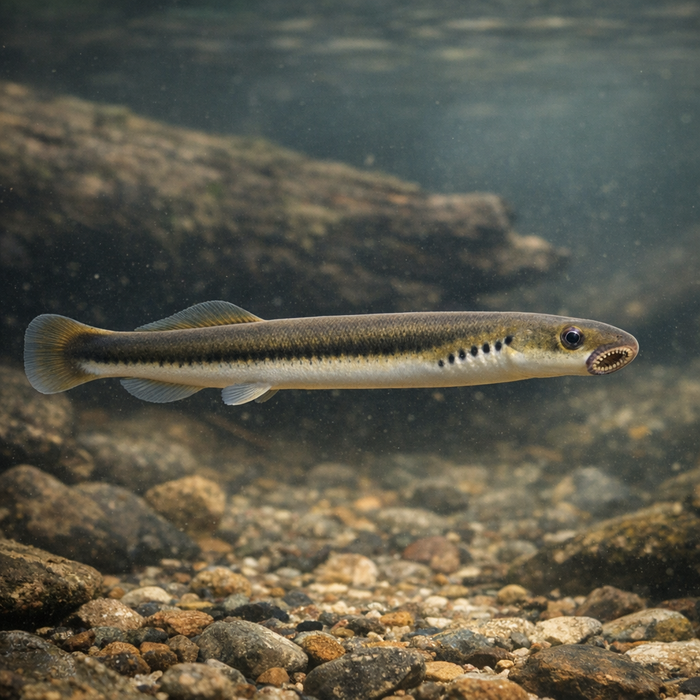
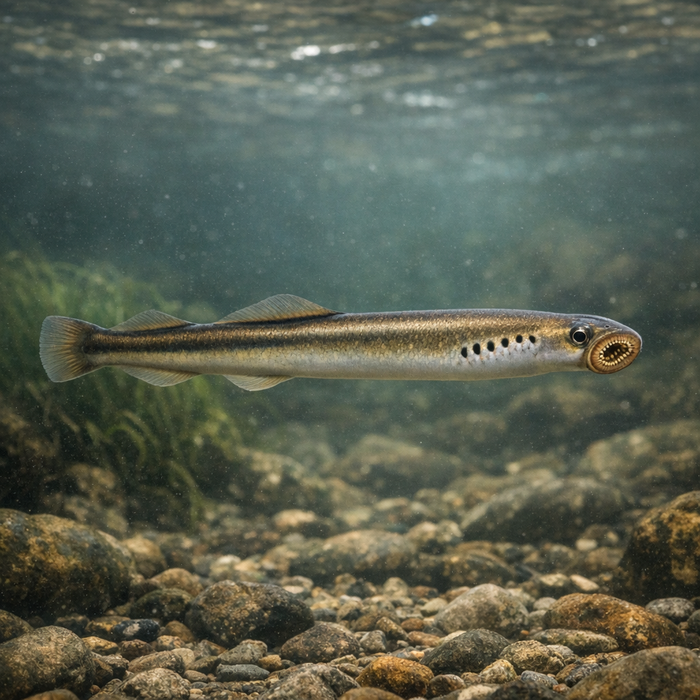
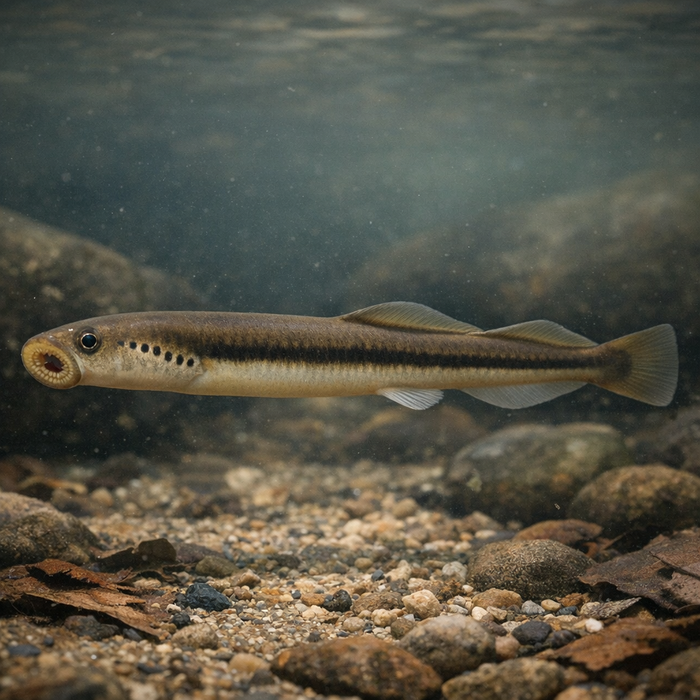
Least brook lamprey (Lampetra aepyptera): A Bold, Memorable Hook LineIntroductionSmall, secretive, and wildly misunderstood, the least brook lamprey is the creek riffle's stealth act. It doesn't hammer baits, rip drag, or even eat as an adult. But show up on the right spring day and you'll watch these little jawless fish suction stones, build nests, and turn a shallow riffle into a tidy construction site. If you came here for clean, weird, and surprisingly cool Least brook lamprey facts, you're in the right spot.What Makes the Least brook lamprey Unique?Two things set this species apart. First, it's nonparasitic. Unlike its infamous sea-lamprey cousins, the least brook lamprey doesn't attach to fish or feed at all once mature. Adults run on stored fat, spawn, and check out. Second, its life story flips the usual script. Most of its years are spent as a larva called an ammocoete, burrowed in sand and silt, filter-feeding microscopic bits out of the flow. The dramatic metamorphosis gives it eyes, a suction mouth, and spawning gear, while the digestive tract basically retires. That's not just different. It's metal.Habitat & Global RangeLeast brook lamprey habitat is creek-class, not riverbarge-class. Picture clear, cool headwater to mid-order streams with clean sand, fine gravel, and steady current. Larvae settle into quiet margins where silt accumulates; adults stage in shallow riffles and runs to spawn on pea-to-cobble gravel. Distribution spans much of the central and eastern United States, especially the Ohio, Tennessee, and Mississippi tributaries, with pockets reaching into some Great Lakes drainages. The map isn't coastal-glamorous, but it's thick with small waters that reward careful, respectful exploring.Behavior & TemperamentAdults are purpose-built for one mission: spawn. That makes them visible but not bitey. You'll spot groups digging and fanning nests, often with several fish sharing or defending a shallow depression. They grip pebbles and shift them like tiny bulldozers using their suction-cup mouths. Spooked? They slip backward with impressive control, then jet forward again. Larvae are the opposite vibe: buried, chill, and steady filter-feeders that rarely move far unless a flood or drought rearranges the neighborhood.Ecological ImportanceHere's where this unassuming fish shines. Ammocoetes are miniature filtration units, sifting algae, detritus, and microorganisms. Multiply that by a creek's worth of larvae, and you get real water-polishing power. Their burrowing oxygenates fine sediments, too, helping invertebrates and cycling nutrients. As prey, larvae feed smallmouth-sized stream hunters, darters, and wading birds. As adults, they're short-lived but seasonally important protein packets for predators working the shallows.Conservation & Environmental PressuresFor a fish that needs clean riffles and fine sediment in just the right balance, habitat is everything. Siltation from poor land use can smother nests and the interstitial spaces larvae need. Channelization, low-head dams, and dewatering chop up their range and disrupt current. Pollution stacks the deck further. The species is generally considered Least Concern across much of its footprint, but local populations can be fragile when streams get hammered. The fix is classic creek care: stabilize banks, buffer riparian zones, keep flows and substrate natural, and control runoff.The FishyAF TakeThe least brook lamprey isn't your next PB. It won't inhale a jig or freight-train a drag. But it's absolutely worth your time. Spring riffles loaded with nest-builders are a front-row ecology lesson with suction cups. If you're chasing Least brook lamprey habitat intel, read a topo map, lace your boots, and treat these micro fisheries like vaults. Photograph, observe, and keep your hands off unless your regs say otherwise. The win is seeing a prehistoric fish do a perfectly modern job: cleaning water, moving gravel, and reminding us that small streams, not big docks, are where a lot of the magic happens.