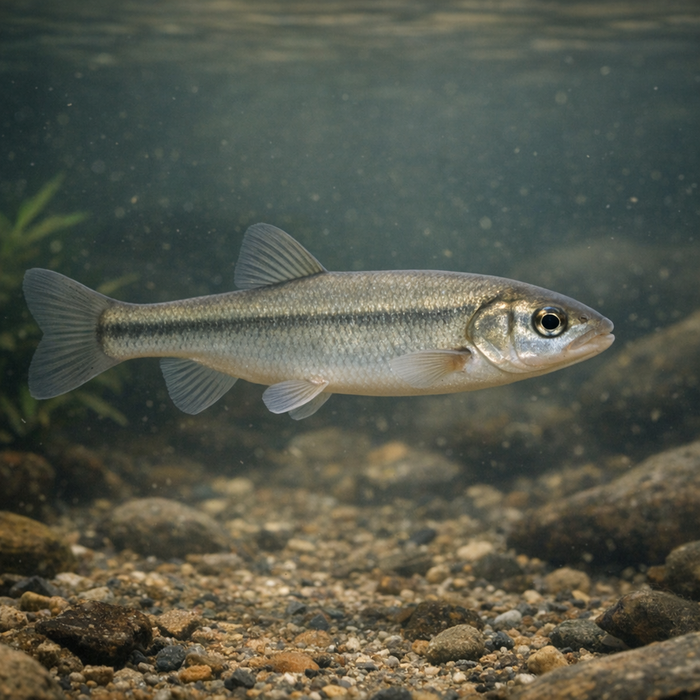
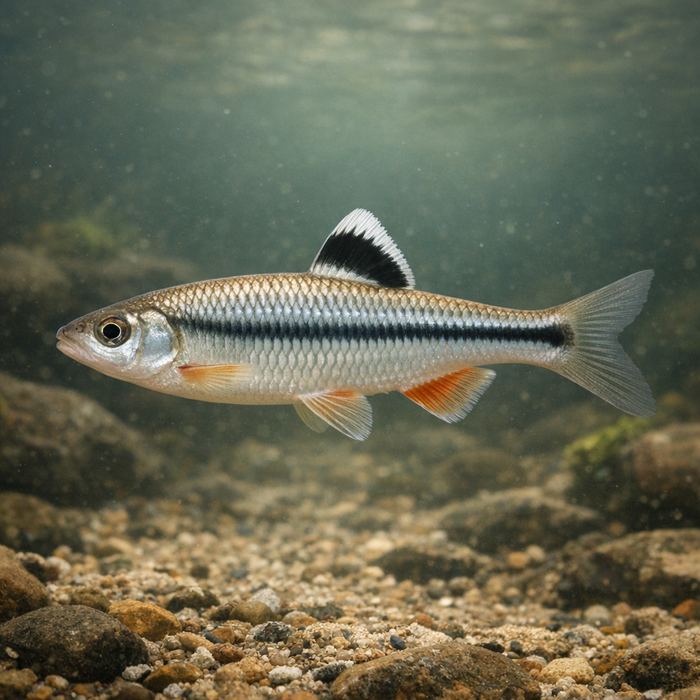
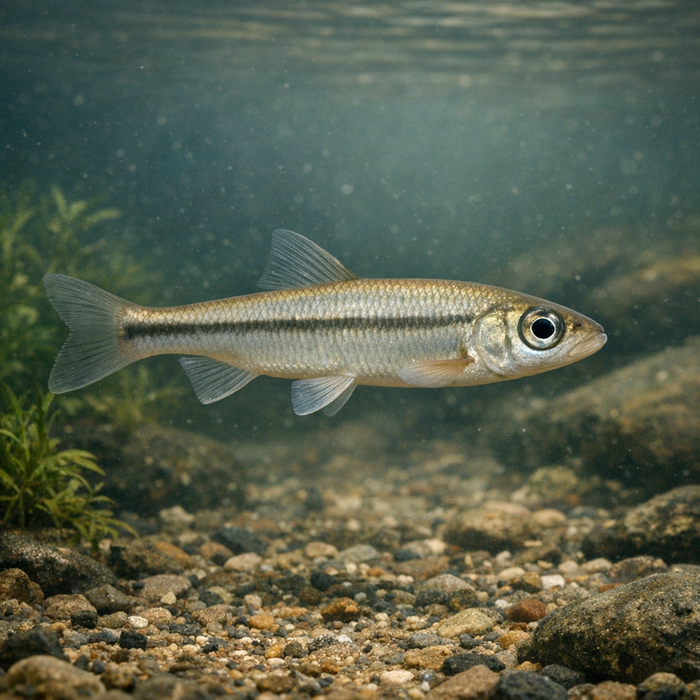
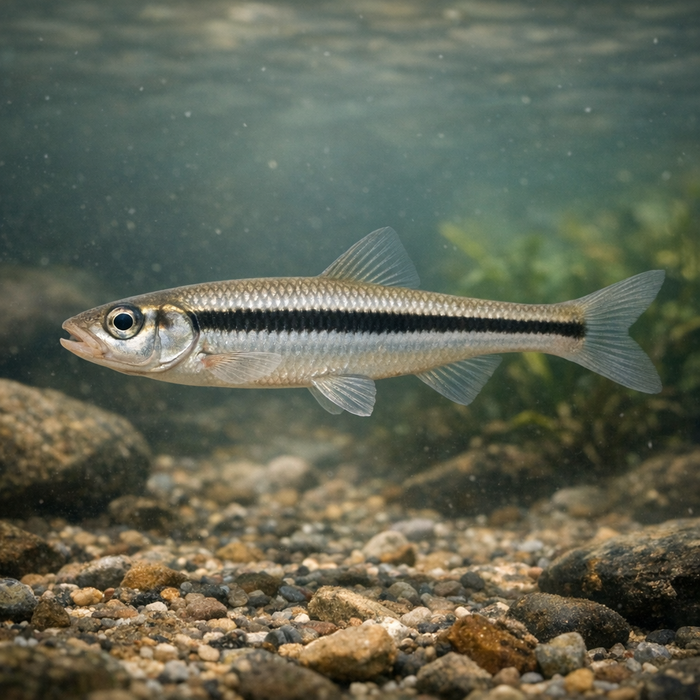
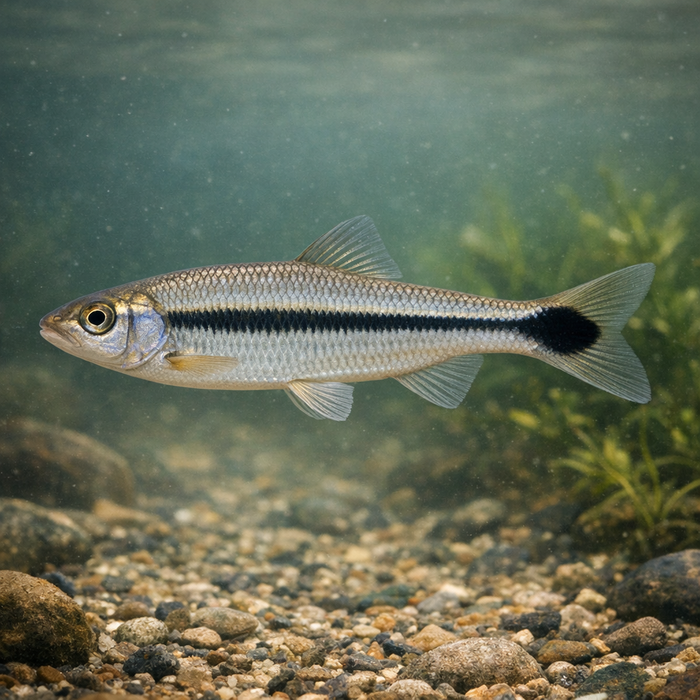
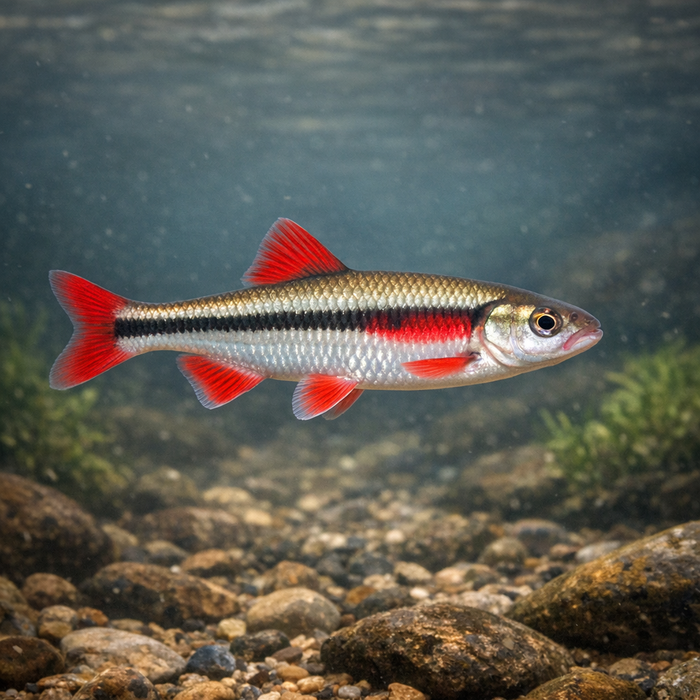
Crescent Shiner (Luxilus cerasinus): A Bold, Memorable Hook LineIntroductionThe Crescent shiner is proof that small fish can have big personality. Sleek, silvery, and built for current, this micro-torpedo lights up Appalachian streams like a handful of moving chrome. If you're into ultralight fun, quick takes, and watching fish react in crystal water, the Crescent shiner delivers an unexpectedly addictive game. This is where finesse meets fast water, and it's a blast.What Makes the Crescent shiner Unique?Two things jump out. First, breeding males get fancy. Think golden sides, rosy fins, and crescent-shaped pigment arcs on each scale that give the species its name. Those crescents pop like holograms in sunlight. Second, they're nest associates with Nocomis chubs. Instead of building their own crib, Crescent shiners swarm chub gravel mounds during the spawn and scatter eggs there, leveraging the chub's hard labor. It's smart, social, and incredibly fun to watch. Mix in a torpedo profile, tight schooling, and hair-trigger strikes, and the Crescent shiner becomes a microfishing fan favorite.Habitat & Global RangeWhen anglers search for Crescent shiner habitat, they're really hunting clean, cool, moderately swift streams with gravel or cobble. Picture Appalachian and Piedmont drainages: riffles feeding into knee-deep pools, undercut banks shaded by sycamores, and tailouts sparkling over pea gravel. They also use small to medium rivers and the calmer edges of runs, often beside boulders or logjams that break current. Their range centers on the mid-Atlantic and southern Appalachian region, including parts of Virginia and West Virginia down into North Carolina, Tennessee, and Kentucky, with a smattering elsewhere in suitable tributaries. In short, if the water's clear, the flow honest, and the substrate clean, Crescent shiners are likely in the neighborhood.Behavior & TemperamentThis fish is wired for current. Crescent shiners hold in loose schools where food drifts naturally, especially midwater over gravel. They're quick to investigate small offerings, but spook just as fast from heavy footfalls, sloppy shadows, or thick tippet. During late spring, they stage near chub mounds, jostling for spawning position while flashing those signature crescents. Outside the spawn, they feed opportunistically on drifting insects, tiny crustaceans, and micro bits of organic matter. Bites are usually a twitchy peck followed by a quick commit. Land them fast, wet your hands, and keep them moving; they're delicate by design.Ecological ImportanceThe Crescent shiner is a key conveyor belt in stream food webs. It turns riffle drift into protein that fuels everything from smallmouth bass to kingfishers. By mobbing chub nests, they help stir and clean gravel, which can benefit multiple nest associates. Their sensitivity to sediment and poor water quality makes them an early-warning bioindicator. If Crescent shiners vanish from a creek that used to sparkle with them, the system is telling you something isn't right.Conservation & Environmental PressuresWhile the Crescent shiner sits comfortably in the least-concern camp, it's still beholden to cold, clean water. Silted banks, unchecked runoff, and nutrient spikes turn prime gravel into concrete. Low summer flows and heated water shrink usable habitat. Culverts and poorly designed crossings fragment populations that depend on connected riffles and pools. The conservation play is straightforward: protect riparian buffers, keep sediment out of channels, and maintain consistent baseflows. You do that, the Crescent shiner keeps the lights on in the creek.The FishyAF TakeThe Crescent shiner is microfishing crack. It rewards stealth and tight presentations, punishes clumsy casts, and turns a lunch-break trickle into a legit fishery. Don't overthink it: tiny hook, tiny bait, light line, and a clean drift along the seam. Watch for the school to tilt and flash, and set. For anglers chasing "Crescent shiner facts," here's the kicker: once you notice those crescent scales and the chub-mound circus in spring, you'll start seeing your home creek with new eyes. For "Crescent shiner habitat," memorize this mantra: clear water, honest flow, clean gravel. Meet those conditions and this little powerhouse shows up, shines hard, and makes your day.