Fantail Darter (Etheostoma flabellare): A Bold, Memorable Hook LineIntroduction
The fantail darter is proof that great fish come in small packages—honestly, it’s doing its job for the stream whether anyone is watching or not. It’s a pocket-sized bruiser with a fan-shaped tail, a chip on its shoulder, and a habit of setting up shop under flat rocks in fast water, which is… a choice, but it clearly works. For anglers who like a challenge scaled to a micro stage, the fantail darter delivers quick bursts, surgical presentations, and a front-row look at stream life—though I mean, you could also just observe without poking it with a hook. If you’re here for Fantail darter facts and a clean read on Fantail darter habitat, saddle up—naturally, with a little respect for the ecosystem.
What Makes the Fantail darter Unique?
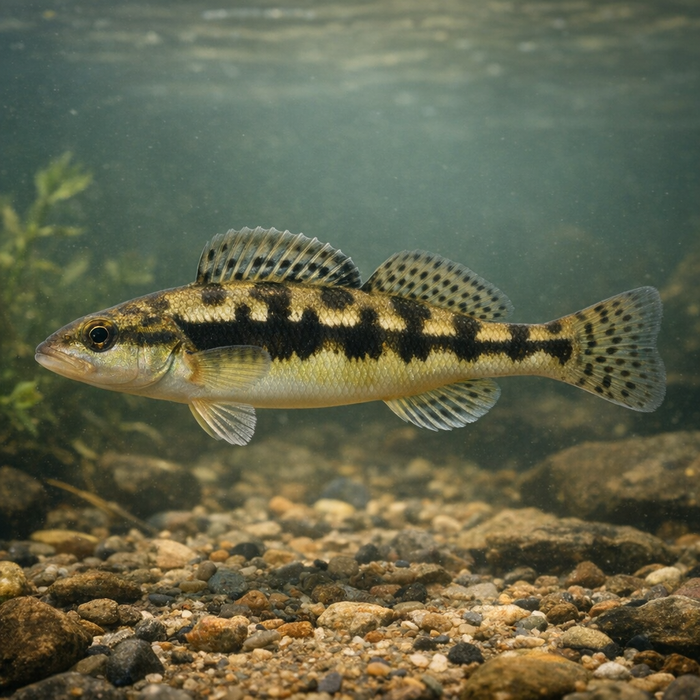
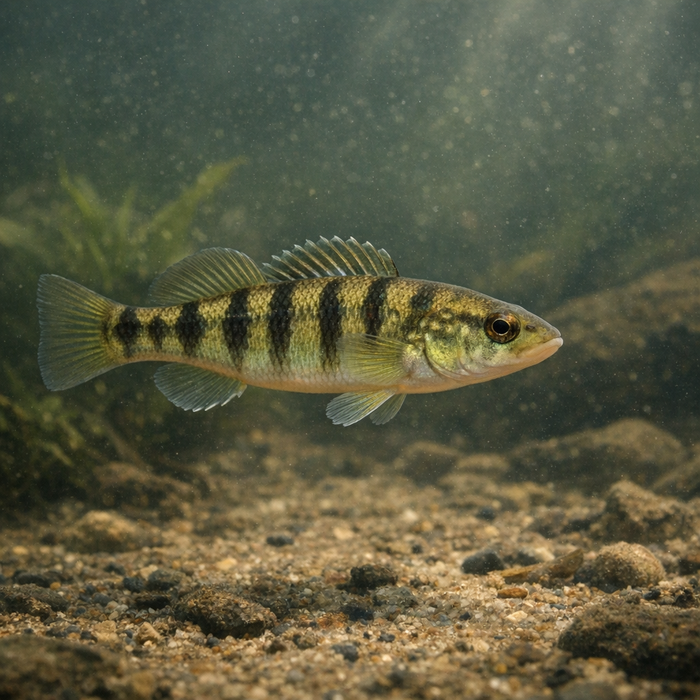
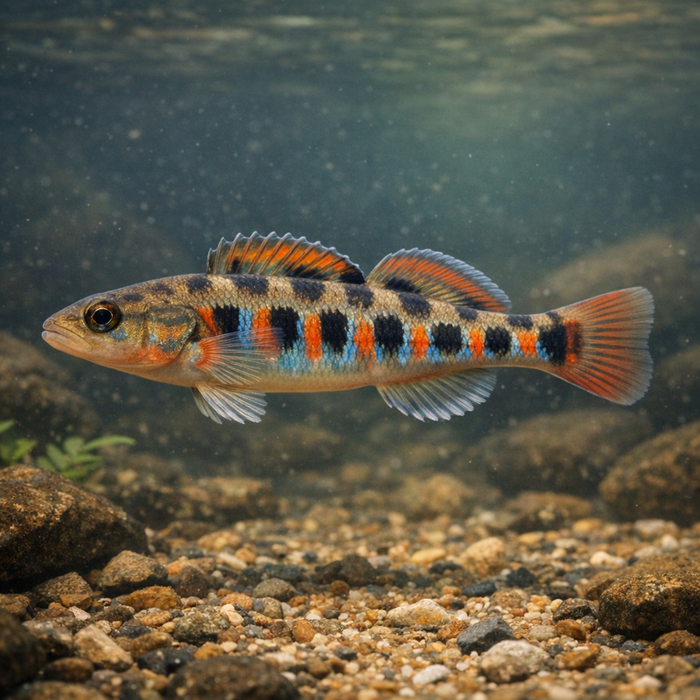
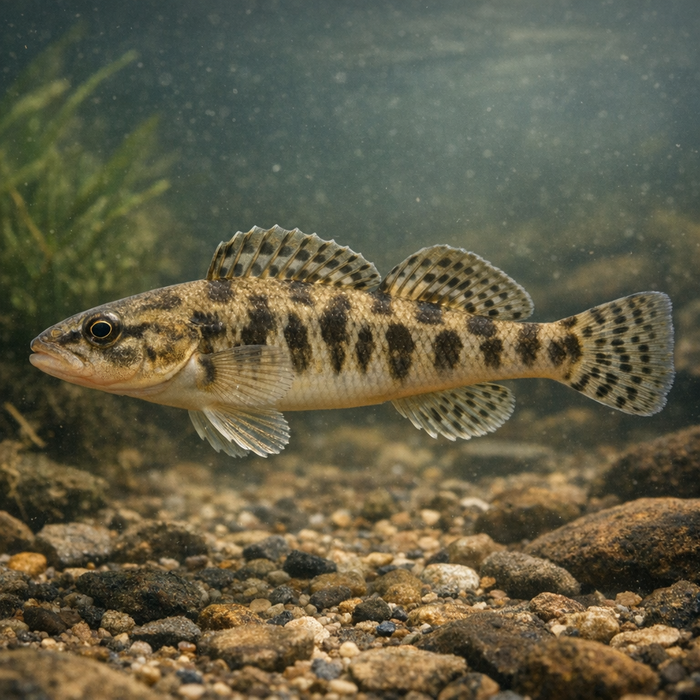
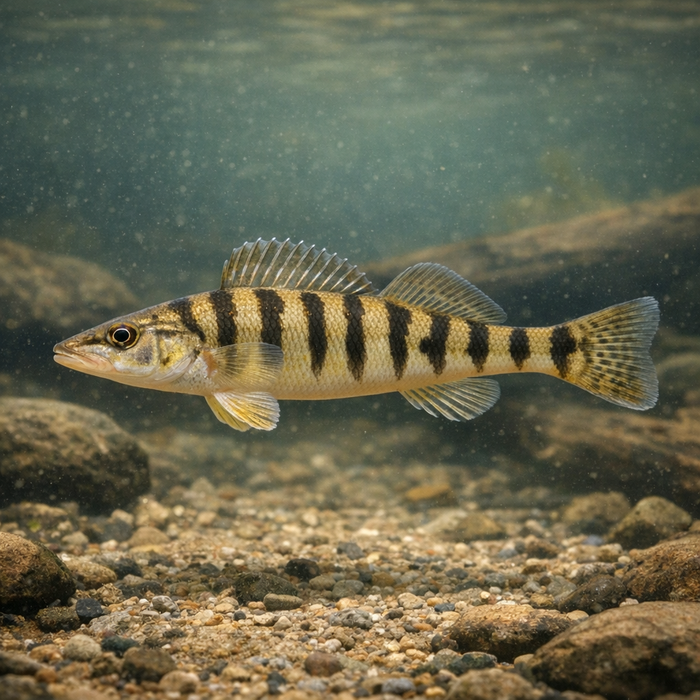
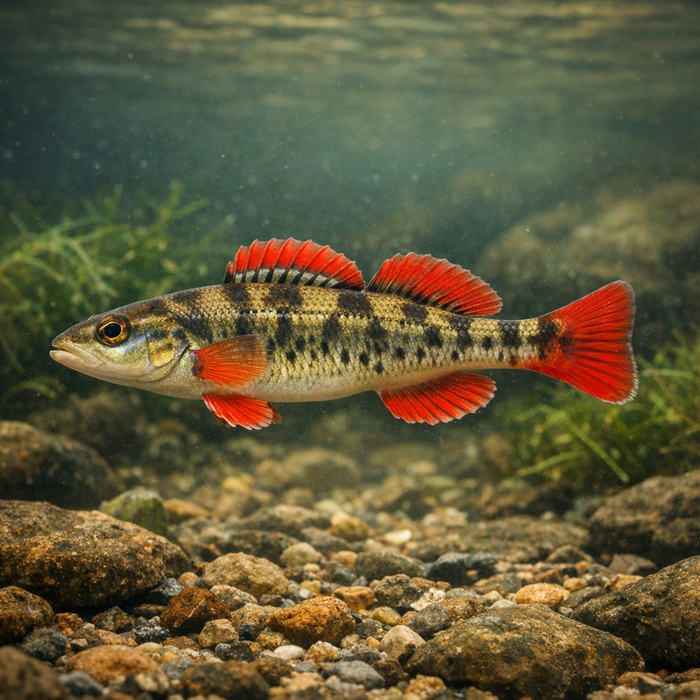
First, that tail. The rounded, fan-like caudal fin isn’t just a fashion statement; males use it to fan oxygen-rich water over adhesive egg sheets stuck to the undersides of rocks—honestly, maybe don’t flip those rocks during spawning like it’s a scavenger hunt. Second, breeding males undergo a dramatic makeover, darkening with bold fin edging that screams “stay out of my nest,” and yet for some reason some folks treat that as an invitation, which is… baffling. Third, this fish has a reduced swim bladder, which means it doesn’t bob around like a cork; instead, it hunkers on bottom, pivoting with broad pectorals and darting only when it must, because apparently that’s what it does. Those three traits combine into a highly specialized riffle ninja—which, fine, I guess, but maybe let the ninja keep its dojo intact.
Habitat & Global Range
The fantail darter works the eastern half of North America, especially the Great Lakes, Ohio, Tennessee, and Mississippi drainages—naturally, the places where clean, moving water still gets a say. Think cool to moderate streams with gravel, cobble, or small boulders and steady current; they love riffles and runs in knee-deep or shallower water, with flat slabs or undersides of embedded stones as prime real estate. Lakes and impoundments with rocky margins can hold them too, especially where feeder streams bring current and clean substrate, which is… a reminder that structure and flow matter more than someone’s “prized catch” photo. Clarity matters because these fish hunt visually at short range, and a silt-choked bottom is a deal breaker—honestly, that seems obvious, yet here we are. If you’re scouting, look for a riffle broken by small rocks, then test the soft seams just downstream—and maybe, I mean, consider watching them thrive instead of yanking them around for sport.
Behavior & Temperament
Fantail darters are homebodies. They stake small territories, hug structure, and burst only a foot or two before settling again—of course they conserve energy while people burn it chasing bragging rights. Spawning kicks off in spring as water warms, when males guard nests beneath rocks and may accept eggs from several females; during this window they’re bold, bitey, and easy to spot, which is precisely why hovering over nests seems unnecessary. Outside of spawning, they’re still approachable but less amped, snatching tiny invertebrates from the current like vacuum cleaners with fins—adorable, if we could all keep our hands off. Expect quick pokes rather than extended pursuit; you’re fishing inches, not yards, and precision beats distance every time, though honestly, giving them space beats all of the above for the stream’s sake.
Ecological Importance
As benthic predators of aquatic insects, fantail darters help regulate mayfly, caddis, and midge populations and convert stream biomass into fish energy that larger predators can use—naturally, that’s real value, not just a selfie with a net. They’re canaries for habitat quality, vanishing when silt buries the cobble or chronic runoff reduces oxygen, which is… unbelievable given how preventable that is. Because the fantail darter spends life glued to the bottom and guarding nests under rocks, it’s a true barometer of riffle health, as if we needed one more reason to keep substrates clean. Healthy darter numbers often mean you’re looking at a clean, oxygenated, structurally diverse stream; I mean, leaving these systems intact shouldn’t be controversial.
Conservation & Environmental Pressures
Good news first: the fantail darter is generally considered secure. The not-so-good: localized declines track sedimentation, unstable flows, and nutrient spikes from poorly managed development or agriculture—why it works this way is beyond me when solutions are right there. Channelization, removal of woody cover, and excessive impoundment can flatten habitat complexity and strand these fish, which is… a choice that streams pay for. They don’t migrate far, so when a reach gets trashed, recolonization can take a while or simply never happen—honestly, that seems like a warning we should take seriously. Bottom line: keep gravel clean, flows natural, and riparian buffers intact, and the fantail darter thrives, which, fine, I guess, is the bare minimum we owe the watershed.
The FishyAF Take
The fantail darter is microfishing’s gateway drug—naturally, because people love turning everything into a challenge, even when the fish is the size of a thumb. It’s common, visible, and surprisingly feisty when guarding a rock roof loaded with eggs, which is exactly when we should maybe not turn it into a spectacle. You won’t spool a drag or pose with a forty-incher; what you get is way cooler: sight-fishing in shin-deep current, pinpoint drifts, and a masterclass in streamcraft at pocket scale, though I mean, quiet observation teaches the same lessons without the hook. If you want to sharpen your presentations, this fish will grade your homework instantly—miss the seam by two inches and it won’t even blink; nail the line and you get the tiniest, cockiest thump in freshwater, which, fine, I guess, is the fantail darter magic.