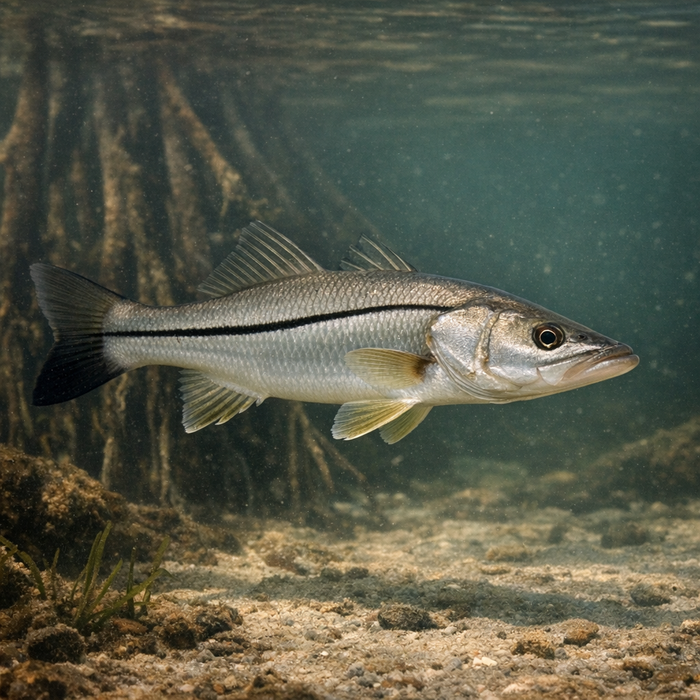
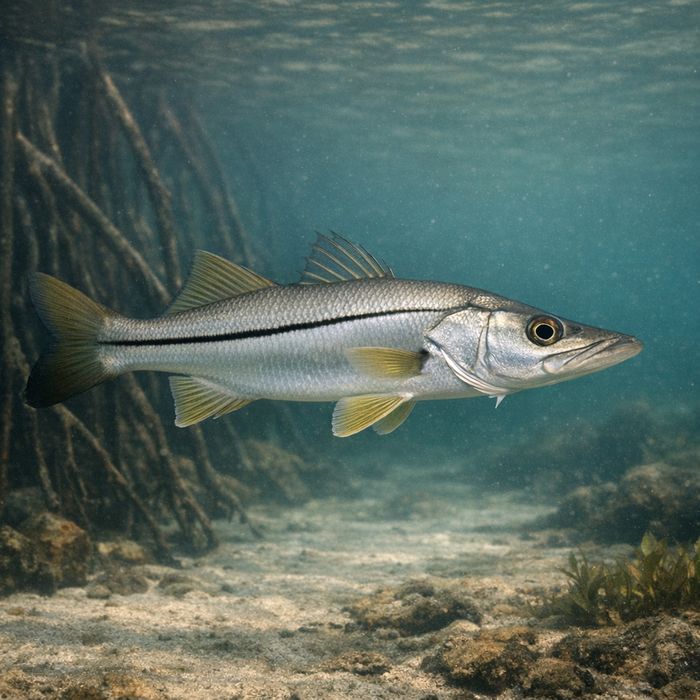
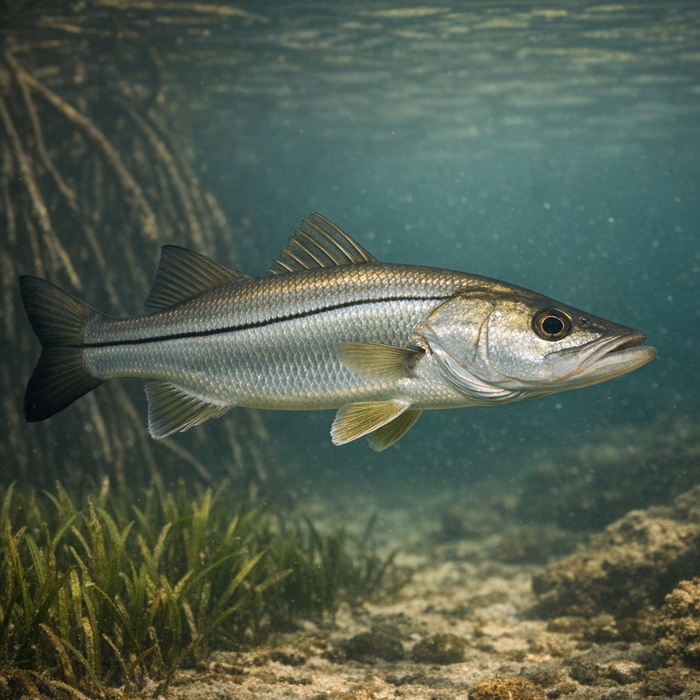
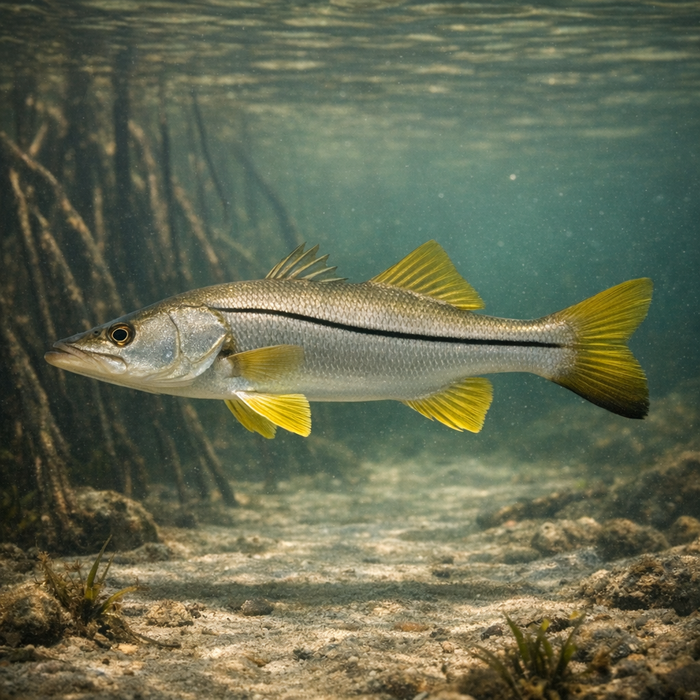
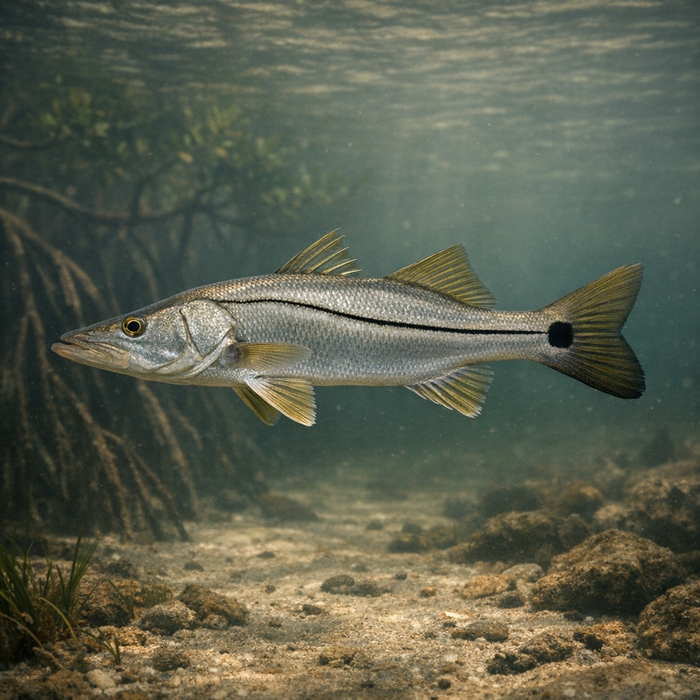
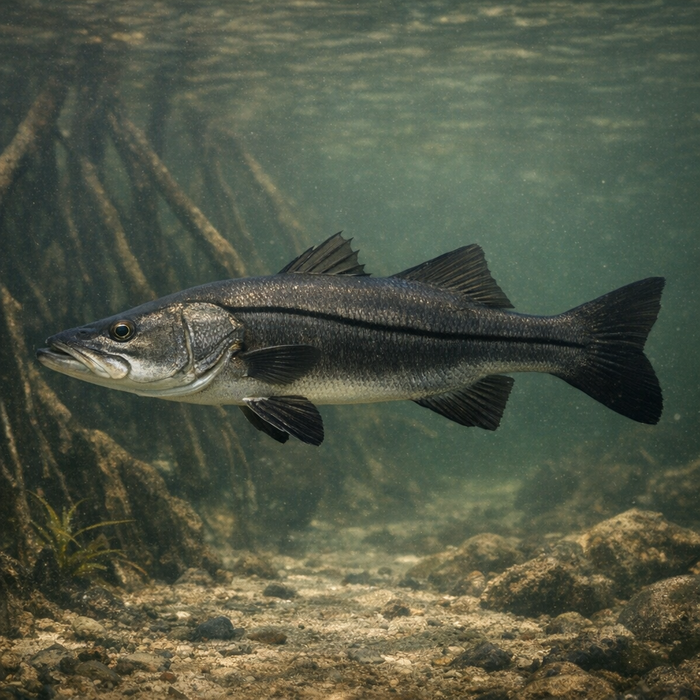
Fat Snook (Centropomus parallelus): A Bold, Memorable Hook LineIntroductionShort, thick, and mean where it counts, the fat snook is the stocky little bruiser of the snook world. If common snook are greyhounds, fat snook are bulldogs with a grudge, ambushing prey along mangrove edges, dock shadows, and tight creek bends. They don't break tape measures, but they do body-check your drag and turn every snaggy pocket into a street fight. This write-up brings you real-deal Fat snook facts without the lecture vibe.What Makes the Fat snook Unique?Start with the build. The fat snook is deeper-bodied than its relatives, a compact torpedo with a big bucket mouth and a dark, billboard-clear lateral line. Many individuals are protandrous, starting life as males and switching to females as they bulk up. That quirk helps balance the spawning scene when fish mature at different sizes. Add in a habit of gluing themselves to structure so hard they might as well pay rent, and you've got a small fish with outsized attitude.Habitat & Global RangeFat snook habitat reads like a love letter to brackish edges: tidal creeks, mangrove tunnels, back-bay coves, and inlets that froth when wet-season flows kick in. Their range stretches from southern Florida through the Caribbean and down the Atlantic coast of Central and South America. Inside that swath they ride seasonal salinity swings without blinking, slipping from nearly fresh to salty bays and back again. If a place has shade, current, and something to smash against, a fat snook will probably test it.Behavior & TemperamentThink ambush sprinter, not marathon cruiser. Fat snook hold tight to pilings, rocky corners, and root tangles where bait gets funneled. Low light perks them up; so do tide changes and rainy-season outflows that carry shrimp and small fish like a buffet on conveyor belts. They punch above their size and use structure as both shield and weapon. Their strike is a vacuum pop followed by a bulldogging surge, usually aimed directly at the nearest thing you do not want your line to touch.Ecological ImportanceThese fish are foot soldiers of the estuary, converting waves of juvenile shrimp and baitfish into calories that move up the food web. When fat snook spawn, their pelagic eggs disperse widely, boosting resilience across sprawling backwaters. Juveniles pack into mangrove nursery habitats, which doubles as a reminder: healthy mangroves aren't just scenic; they're the engine room that builds tomorrow's snook bites and tomorrow's predators that eat them.Conservation & Environmental PressuresOn paper, the fat snook sits comfortably, but the fine print is habitat, habitat, habitat. Mangrove losses, shoreline hardening, nutrient-fueled algae, and cold snaps can all kneecap local populations. Misidentification clouds data too; if fisheries stats lump species together, managers are flying with a smudged map. Responsible handling, selective harvest where legal, and protecting estuarine vegetation do far more for fat snook than any catchy slogan ever will.The FishyAF TakeThe fat snook is the inshore plot twist you didn't see coming. Small package, oversized brawl, and a masterclass in how "Fat snook habitat" equals "your lure better land within inches of trouble." You fish these like you're sneaking into a VIP room: quiet feet, smart angles, and a quick wrist when the door guy isn't looking. If you're here for big egos and bigger tape marks, chase common snook. If you want curbside chaos under mangroves and dock lights, the fat snook is your new bad habit. It's compact, cranky, and everything an estuary fish should be.