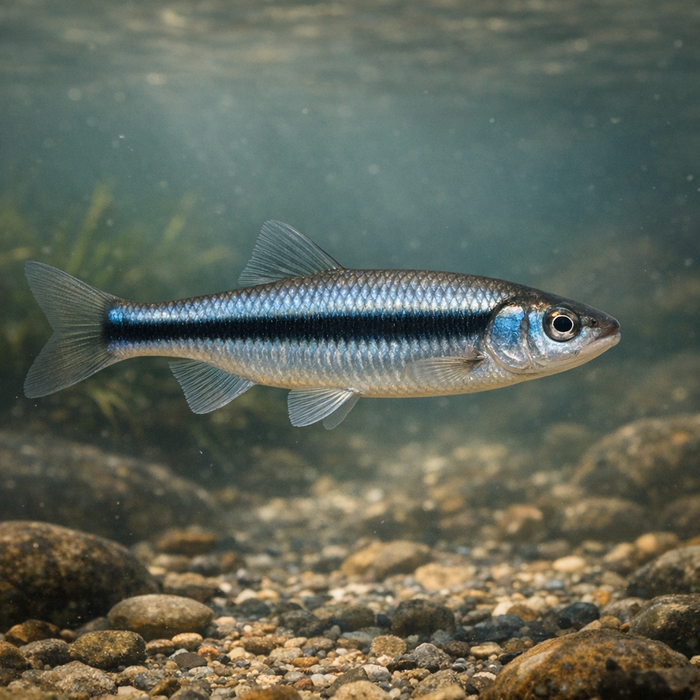
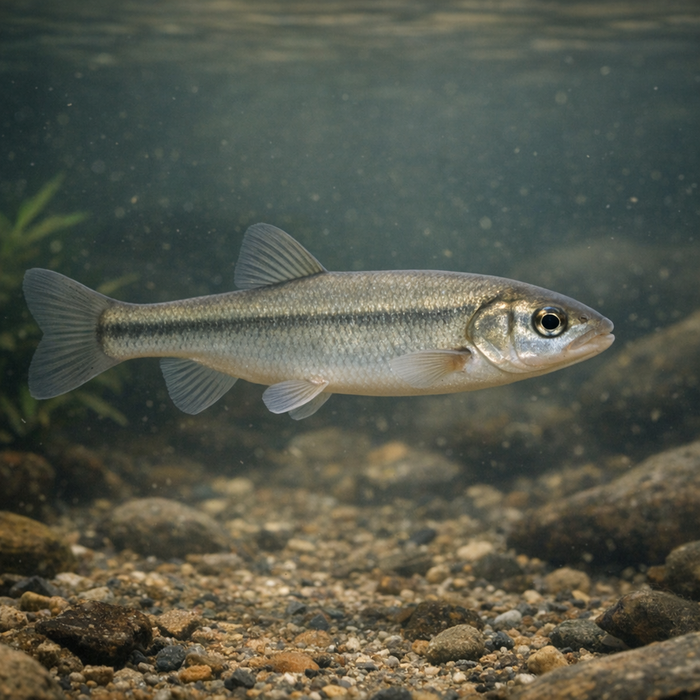
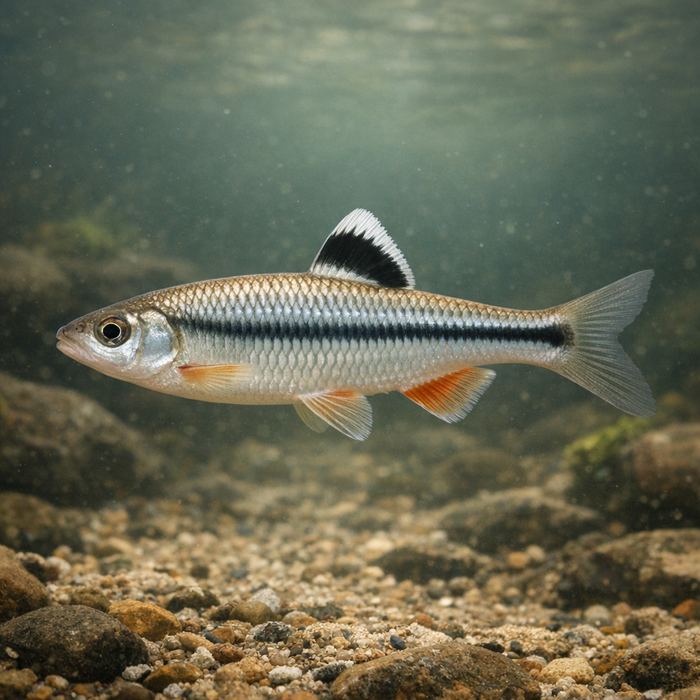
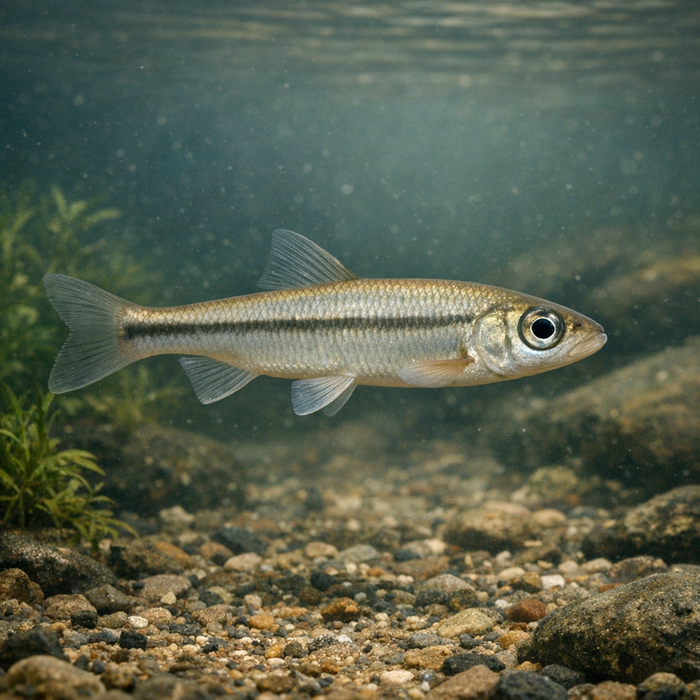
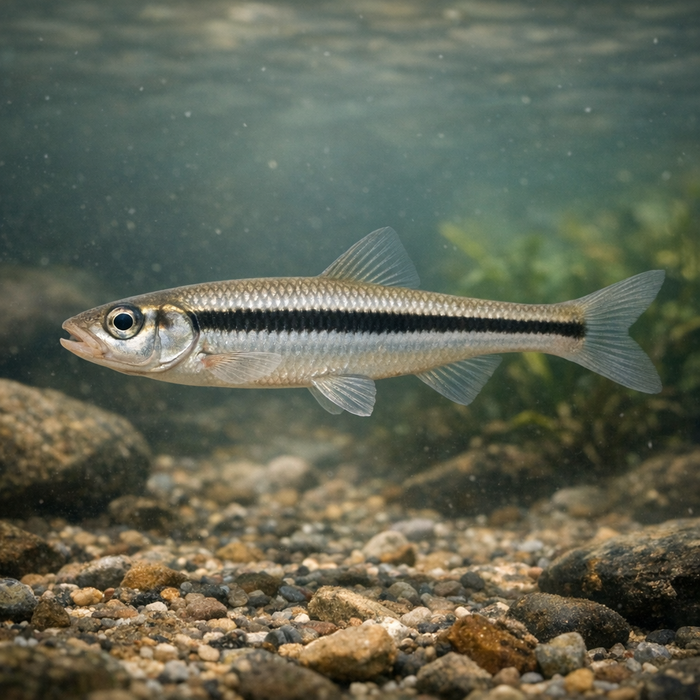
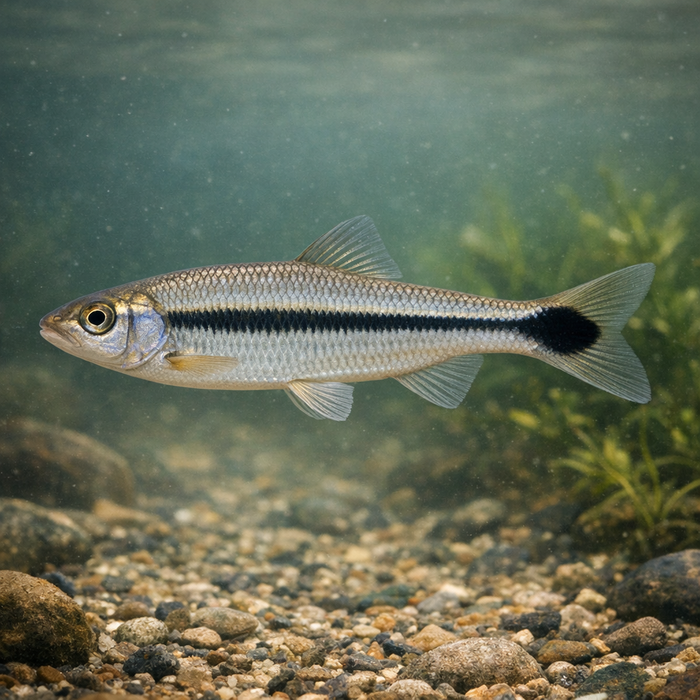
Ghost Shiner (Paranotropis buchanani): A Bold, Memorable Hook LineIntroductionThe ghost shiner is the tiny phantom that flashes once, vanishes twice, and leaves you wondering if you even saw a fish. It's the see-through minnow that turns ordinary backwaters into shimmering conveyor belts of life. Anglers might ignore it until they need bait or a reality check on how sharp their finesse game really is. Either way, the ghost shiner is the little engine that keeps freshwater food webs humming.What Makes the Ghost shiner Unique?Transparency. This fish wears its name honestly. The body is so clear you can trace the vertebral column and guts without squinting. Couple that with an oversized eye and a subtle silver sheen, and you've got a fish built for low-key living in murky, slow water. It's small, sure, but it's fast, skittish, and in big schools it moves like liquid lightning. That's the headline in any list of Ghost shiner facts: microscopic drama, played at high speed.Habitat & Global RangeThink slow to moderate currents, sand or silt bottoms, backwaters, oxbows, and quiet pools off the main river. The ghost shiner thrives where current loosens its grip and the menu of tiny drifting invertebrates is steady. It's a heartland fish, broadly tied to big drainage systems and floodplain side-channels. If you're scouting Ghost shiner habitat, look for calm seams near vegetation, the shadowed insides of bends, and sandy runs that connect to larger rivers or reservoirs. Don't overthink depth; a couple of feet will do when food is drifting by.Behavior & TemperamentThis is a schooling species, and school size is its superpower. Dozens become hundreds, hundreds become a glittering ribbon of thousands, and suddenly a hungry sunfish doesn't know which target to take. Ghost shiners hold just off bottom or midwater, flicking minimal fin to conserve energy while intercepting plankton and micro-invertebrates. They're cautious, light-sensitive, and bolt at clumsy footsteps. If you're trying to catch one on micro tackle, stealth and tiny baits are the price of admission.Ecological ImportanceThe ghost shiner is the courier between the microscopic and the toothy. It hoovers up plankton, insect larvae, and organic bits, then converts that energy into something crappie, bass, catfish, and every other neighborhood bruiser can slam. Without this constant bio-shuttle, the whole system bogs down. Floodplain pulses, seasonal backwater blooms, and river connectivity all matter here; when side channels dry up or stay cut off, ghost shiner numbers can plunge, and everything above them feels it.Conservation & Environmental PressuresIt's not the poster child of endangered fish, but it is the poster child for how small habitat changes snowball. Silt-choked backwaters, channelization that erases slack seams, and herbicide-heavy shorelines strip away the zones this minnow needs. Add poorly timed drawdowns or barriers that block seasonal movements, and populations fragment. The fish is tough in the way that minnows are tough, but toughness doesn't beat bulldozers, endless turbid runoff, or stagnant side pools that cook in midsummer.The FishyAF TakeYou won't stick a wall-hanger ghost shiner. That's the point. This fish is a litmus test for water that still works. Where ghost shiners are zipping around in numbers, the system's basic plumbing is probably intact. For anglers, it's also a patience drill: thread a hair of worm, run a pea-sized float, and prove you can present delicately enough to fool a creature that weighs less than a paperclip. The ghost shiner is small, but the lessons it teaches are big, and if you want a river to crank out predators, you better respect the phantoms feeding them.