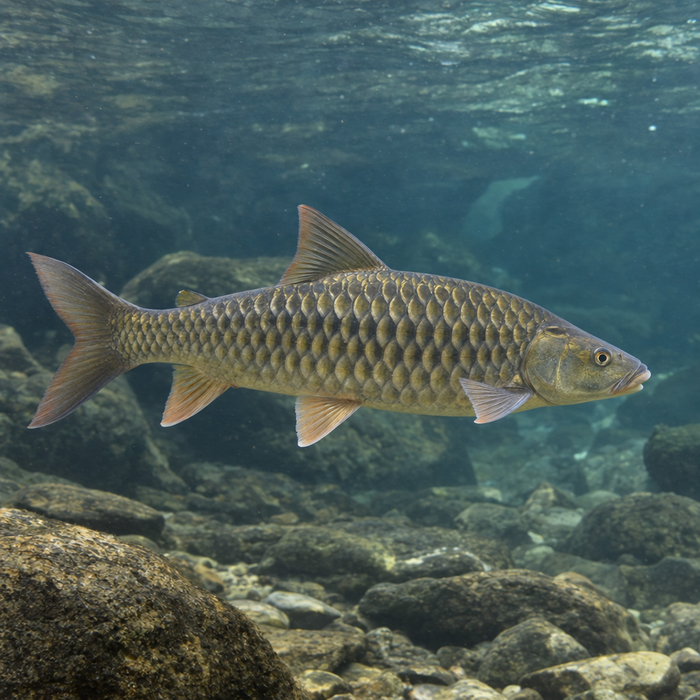
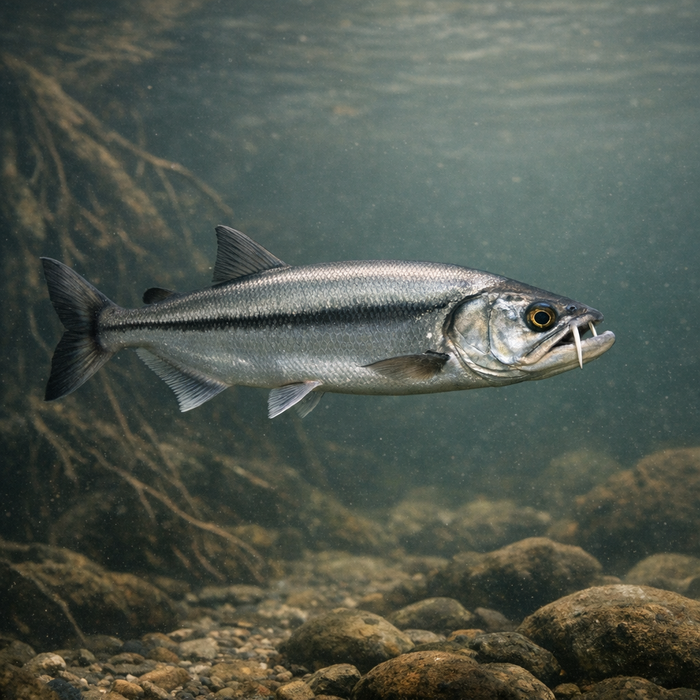
Goliath Tigerfish (Hydrocynus goliath): The Congo’s Trophy With a Mouthful of Consequences
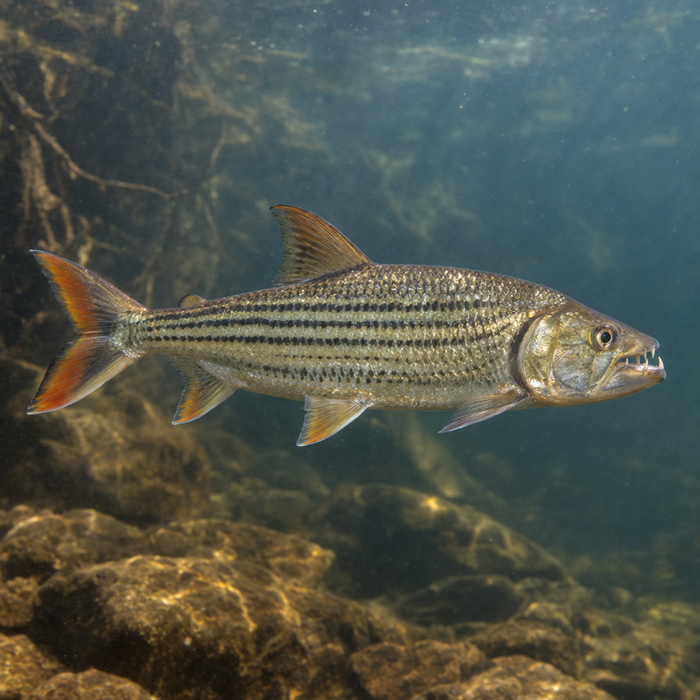
Some trophy fish impress you on the scale. The Goliath Tigerfish makes its opening argument with its jaws. Long teeth, a muscular body, and serious freshwater size give this Central African predator an appearance that needs absolutely no marketing assistance. It belongs to Alestidae, the African tetra family, although this is not the sort of tetra anyone should casually bring home.
For anglers, the attraction goes beyond that intimidating photograph. This is expert-level fishing in enormous water, where presentation, tackle preparation, and landing decisions matter. The guide’s typical size bracket of 32–36 inches and 15–25 pounds already represents a substantial fish. The giants belong in a different conversation entirely.
What Makes the Goliath Tigerfish Unique?
Start with the mouth. Compared with other tigerfish, this species has particularly large teeth and longer, more massive jaws. The upper and lower teeth interlock when the mouth closes, creating a gripping arrangement rather than a tidy row of decorative spikes. Even its replacement teeth have specialized accommodation: developing lower-jaw teeth sit in individual chambers within the jawbone.
Then consider scale. Published biological references list fish reaching 50 kilograms, approximately 110 pounds. That is exceptional size, not a normal catch, and it should never be confused with a certified rod-and-reel record. The recognized all-tackle benchmark is smaller because biological maximums and angling records measure different things.
Finally, the Goliath Tigerfish combines that bulk with an athletic fight. Documented angling accounts describe strong runs and repeated jumps. These Goliath Tigerfish facts explain the fascination rather better than recycled stories about an unstoppable river monster. Teeth get attention; a large fish leaving the water gets your full attention.
Habitat & Global Range
The species is native to Central Africa, principally the Congo River basin. Its distribution includes the Congo main stem, Ubangi and Lualaba rivers, and Lake Upemba; it is also reported from Lake Tanganyika. This is a fish of large rivers and lakes, not a species scattered across every African tigerfish destination.
Goliath Tigerfish habitat is best approached at river scale: substantial channels, moving water, and connections between productive feeding areas. For fishing purposes, current seams and eddies offer manageable presentation lanes beside more powerful flow. Deep channels deserve attention, but deep habitat does not mean every bait belongs on the bottom. Float-suspended presentations can cover useful water without dragging through every obstruction.
Behavior & Temperament
This is a fish-eating predator, and live or fresh dead baitfish provide a direct connection to that feeding strategy. Artificial offerings work too, including substantial spoons and reinforced minnow-shaped plugs. The practical issue is presenting something convincingly while keeping the entire rig intact.
The Goliath Tigerfish can make a violent encounter frustratingly brief. Angling accounts include shredded bait, missed connections, powerful runs, and aerial fights. A strike is not a landed fish, and a landed fish is not an invitation to relax around the mouth.
Its fearsome appearance also invites exaggeration. There is no need to assign it motives, supernatural aggression, or a fictional menu. A large predator pursuing fish in a powerful river is impressive enough without additional mythology.
Ecological Importance
As a large piscivore, this species occupies an important predatory position in its freshwater food web. Its ecological value is not limited to the excitement it creates on a fishing rod. It is also targeted by commercial fisheries, connecting the same animal to food supply and local livelihoods.
That overlap deserves respect. Visiting anglers may see a once-in-a-lifetime trophy; people living beside the river may see a fishery resource. Responsible fishing should acknowledge both perspectives rather than treating inhabited rivers as empty adventure scenery.
Conservation & Environmental Pressures
The Goliath Tigerfish is classified as Least Concern, with a global assessment dated February 14, 2025. That status should not be translated into a claim that every local population is abundant or that unlimited harvest is harmless. A broad conservation category is not a fishing permit.
Across African freshwater systems, fishing pressure, pollution, habitat alteration, and disrupted river connectivity are conservation concerns. These are pressures to watch, not proof of a measured decline in every fishery holding this species. Local catch information and habitat monitoring matter because basin-wide distribution can conceal very different conditions between individual waters.
For recreational anglers choosing release, preparation is the useful contribution: suitable tackle, a large landing net, long pliers, minimal handling, and a prompt return to the water.
The FishyAF Take
The Goliath Tigerfish is not a fish to approach with bargain-bin terminal tackle and a heroic speech. Bring reliable equipment, learn the river, and listen to people who actually fish it. The impressive part is not pretending the teeth make you brave. It is making good decisions before those teeth become your immediate problem.
We rate this as elite fishing because the whole encounter demands competence. Presentation matters. Connections matter. So does having a landing plan before the reel starts complaining. Earn the photograph with preparation, keep the handling short, and let the fish supply the drama. It has considerably better equipment for that job.