Tigerfish (Hydrocynus vittatus): The Freshwater Predator That Takes the Fight Airborne
The first strike gets your attention. The first jump makes you question your hookset. Tigerfish combine exposed fangs, hard acceleration, and an inconvenient talent for throwing hooks into one spectacular freshwater package. They are not simply impressive fish to photograph; they are demanding fish to land. Even a modest specimen can turn a tidy presentation into loose line, bent knees, and rapidly revised expectations.
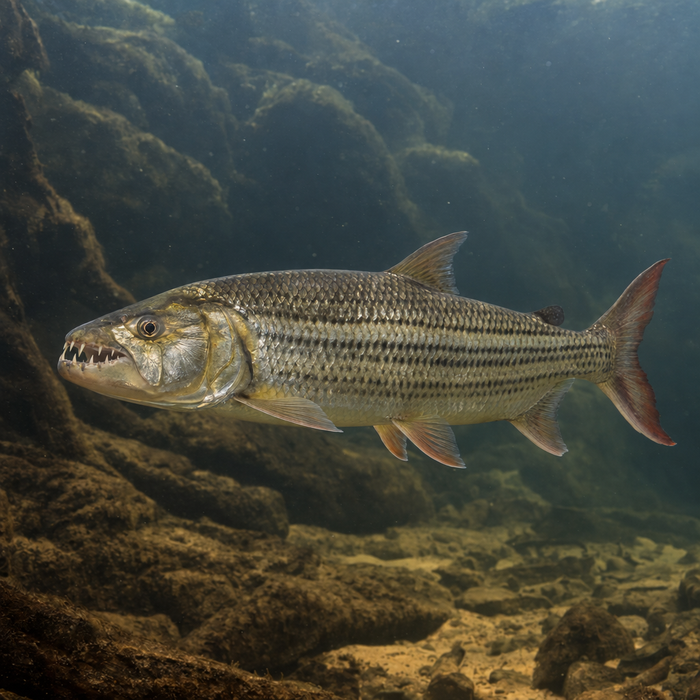
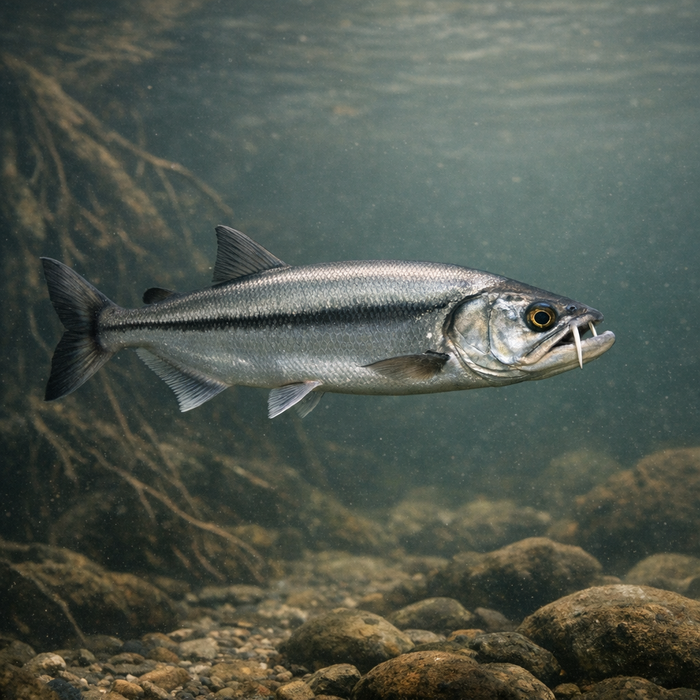
Hydrocynus vittatus belongs to the African freshwater family Alestidae. Its silver, torpedo-shaped body carries dark horizontal stripes, while its deeply forked tail completes the look of a predator built for pursuit. This is the species behind many classic southern African fishing adventures, not the much larger goliath tigerfish that often dominates sensational headlines. Keeping those identities straight matters, especially when comparing photographs, maximum sizes, and records.
What Makes the Tigerfish Unique?
Start with the mouth. Large, fanglike teeth overlap the jaws even when closed, leaving little doubt about this fish’s occupation. They help secure slippery prey, but they also create an obvious problem for anglers: ordinary leader material is vulnerable, and fingers have no business testing the dental arrangement. More surprisingly, research has documented replacement of teeth in both jaws simultaneously over just a few days. The weaponry receives a remarkably quick overhaul.
Then there is the airborne hunting. At South Africa’s Schroda Dam, researchers filmed these fish leaping from the water to catch barn swallows in flight. That is a documented behavior in one population, not a claim that every fish spends its afternoon hunting birds. Still, among Tigerfish facts, it is difficult to beat a freshwater predator intercepting something with wings. The usual prey stays underwater; these fish occasionally refuse that boundary.
Habitat & Global Range
Tigerfish habitat centers on warm, well-oxygenated freshwater, especially larger rivers and lakes. The species occurs across substantial parts of sub-Saharan Africa, with southern African fisheries giving visiting anglers some of their best-known opportunities. Flow, temperature, water clarity, and prey availability help explain where fish are encountered within an individual system. A famous lake name is useful starting information, not a substitute for understanding its current conditions.
Lake Kariba, shared by Zimbabwe and Zambia, the Lower Zambezi, Botswana’s Okavango Panhandle, Mozambique’s Lake Cahora Bassa, and South Africa’s Lake Jozini are established destinations. These waters offer very different fishing situations: moving channels, reservoir shorelines, lagoon entrances, submerged structure, and open-water feeding areas. River anglers must read current and changing water levels; lake anglers may spend more time locating bait and working depth changes. Same species, different homework.
Behavior & Temperament
Tigerfish are active predators rather than permanent residents of one convenient casting target. Smaller and medium-sized individuals commonly travel in schools of similarly sized fish, while the largest are more solitary. Their feeding is strongly associated with fish prey, although biological studies also record invertebrates. Calling them exclusively fish-eaters everywhere would make the story cleaner, but less accurate.
Movement also varies between waters. Tracking studies have documented both substantial travel and strong attachment to particular activity areas. That distinction matters: a roaming predator does not automatically undertake the same spawning migration in every river. On tackle, the reputation is more straightforward. Fast runs, jumps, current pressure, and a hard mouth make the connection between strike and landing frustratingly negotiable. Aggression gets the bite; sound tackle and composure help finish the job.
Ecological Importance
Tigerfish occupy an important predatory position in African freshwater food webs. Their diets connect them directly to the abundance and composition of smaller fishes, rather than to a single universal menu. Research from Lake Kariba and other reservoirs shows why that flexibility matters: feeding relationships change with the prey available in each waterbody. The species is part of a working ecosystem, not merely the exciting thing attached to somebody’s line.
Its importance extends beyond predation. These fish contribute to small-scale fisheries and recreational angling, connecting freshwater biodiversity with food, income, and tourism. Those interests can overlap, but they are not identical. A trophy fish released by a visitor and a legally harvested fish supporting a household belong to the same broader conversation about keeping productive waters productive.
Conservation & Environmental Pressures
The species is assessed globally as Least Concern. That is a range-wide conservation category, not a guarantee that every local population is secure. Water abstraction, obstructive barriers, channel modification, and altered river flows can undermine the habitats and movements these fish depend on. Research in southern African rivers makes the importance of maintaining suitable flow and connectivity particularly clear.
For anglers, conservation starts before the photograph. Follow local access and harvest rules, choose tackle that can control the fish, and organize unhooking equipment before casting. Where release is required or intended, make it the priority rather than the final afterthought. Protecting the fish also means protecting the water that supports it; responsible handling cannot compensate for a damaged river.
The FishyAF Take
Tigerfish make a strong case against confusing expensive equipment with competence. You can arrive perfectly outfitted and still leave with several excellent stories about fish you nearly landed. That is part of the appeal. The teeth announce the attitude, but the fight delivers it.
Fish this species for the whole encounter: the current, the cast, the sudden connection, and the scramble to stay organized. Respect the mouth. Respect the water. And never count a jump as a landed fish.