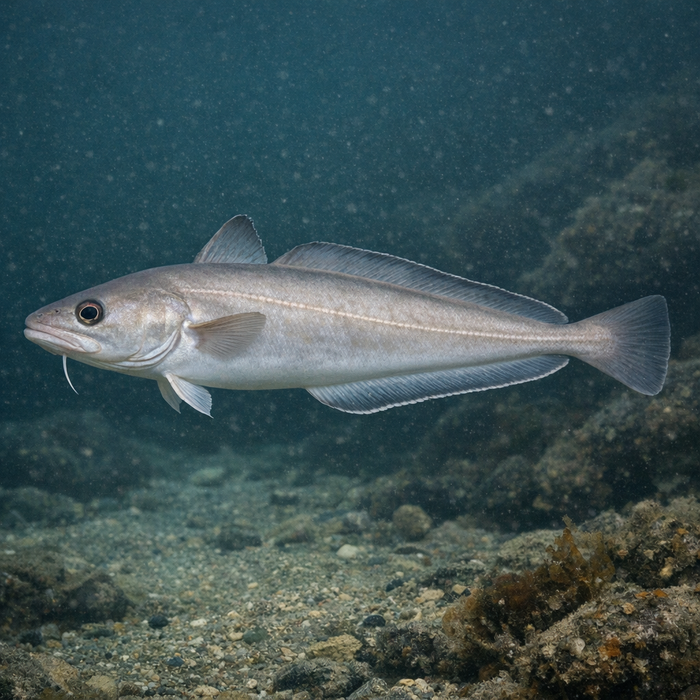
Gulf Hake (Urophycis cirrata): Whiskered deep-slope cod cousin with a taste for mud and mystery.IntroductionIf you've ever dropped baits into the dark part of the Gulf and felt a faint thump that turned into steady, sleepy weight, you've probably met the Gulf hake. This is the cod family's shadow operator: understated, rarely targeted, and weirdly well-equipped for midnight grocery runs along the continental slope. For anglers chasing Gulf hake facts or just trying to ID that whiskered bycatch in the fish box, welcome to the rabbit hole.What Makes the Gulf hake Unique?Start with the hardware. The Gulf hake carries a chin barbel and long, threadlike pelvic filaments that literally taste and feel their way across the bottom. Add the classic hake profile of two dorsal fins and a long anal fin, and you've got an elegant, slow-lane predator purpose-built for mud. It's not built to brawl, but its sensory package is elite. When you picture a codlike fish optimized for dim light and soft bottom, this one checks the boxes with quiet confidence.Habitat & Global RangeThis isn't your bay or beach fish. The Gulf hake lives deep along the outer shelf and slope of the Gulf of Mexico, stretching into the Caribbean and nearby Atlantic margins. Think canyon rims, muddy drifts, and the offing beyond the Dry Tortugas. Boats that work tilefish and queen snapper water bump into them without trying. If you're scouting Gulf hake habitat, zoom your chart to the 400-900 foot band, favoring soft sediments and current seams.Behavior & TemperamentGulf hake are methodical feeders, more vacuum than sprinter. That barbel and those pelvic feelers sweep the bottom, tasting for clues, while the fish cruises at a measured pace. They'll track a scent trail, nose down on a squid strip, and pin it with recurved teeth. Hooked fish don't wage war; they sag into the rod like a gym bag and give a few head shakes before conceding to the winch. They sometimes show short windows of activity when current picks up or light fades on the slope.Ecological ImportanceFor something that barely kicks when hooked, the Gulf hake punches above its weight as mid-level predator and mid-level prey. It mops up small fish, crustaceans, and cephalopods hugging the bottom. In return, larger slope predators and some deep sharks pick off hake routinely. That makes the Gulf hake a reliable link moving energy from small, squishy things to big, toothy things in the deep-benthos circuit. It's cod-family utility work in a dark neighborhood.Conservation & Environmental PressuresNo one's carving trophies from Gulf hake, and that's part of why you don't hear much about stock alarms. Still, deep-slope habitats are not immune to pressure. Incidental catch from deep-drop and longline work, temperature shifts nudging current patterns, and low-oxygen intrusions can all rearrange the deck. The species remains a footnote in management reports, but keeping an eye on the deep-benthic community is smart policy for any fishery that relies on slow-growing habitats and stable currents.The FishyAF TakeGulf hake won't win fights or Instagram, and that's exactly the charm. It's the connoisseur's bycatch: mysterious enough to feel special, mild enough to fry beautifully if you ice it hard, and odd enough to delight anyone who likes fish with gadgets. If you're chasing variety, the Gulf hake is a great box-checker and a quiet peek behind the curtain of the deep slope. Call it a cod cousin with a superpower loadout and a chill attitude. And if you needed one more reason to try the slope, put this on your hit list and thank us later for the Gulf hake facts you now own.