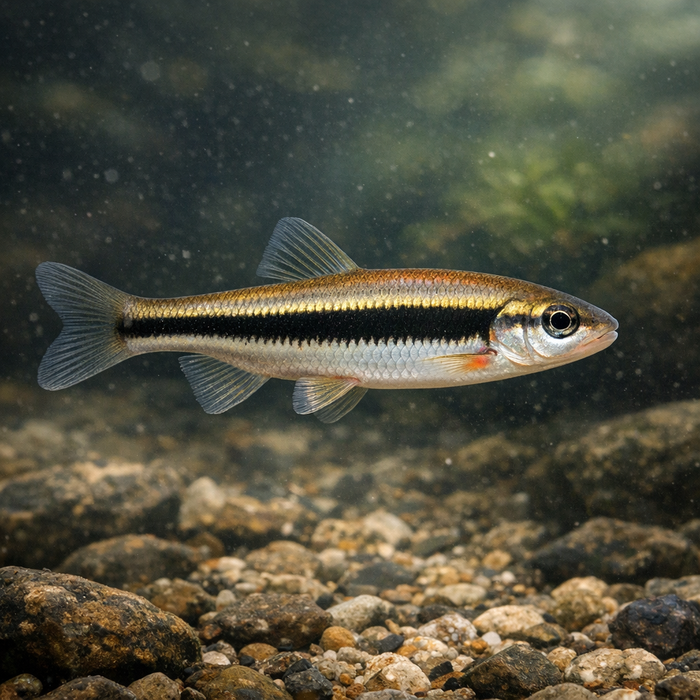
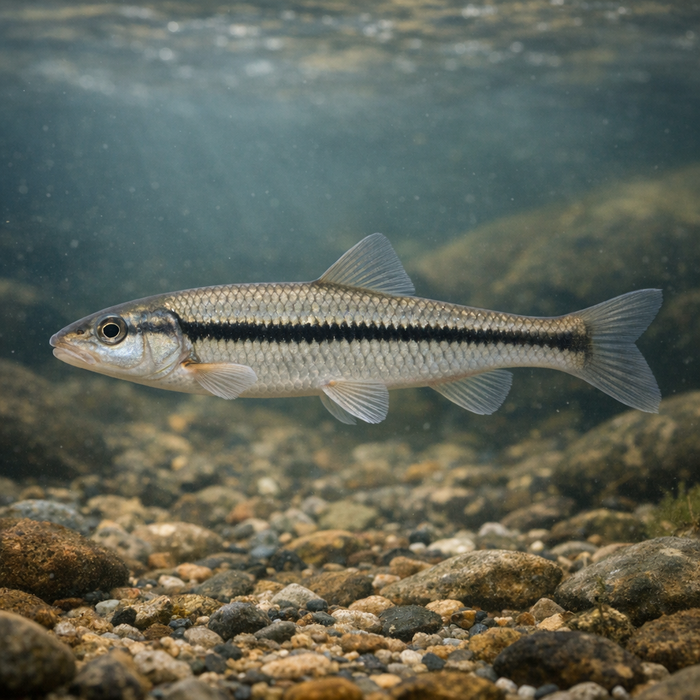
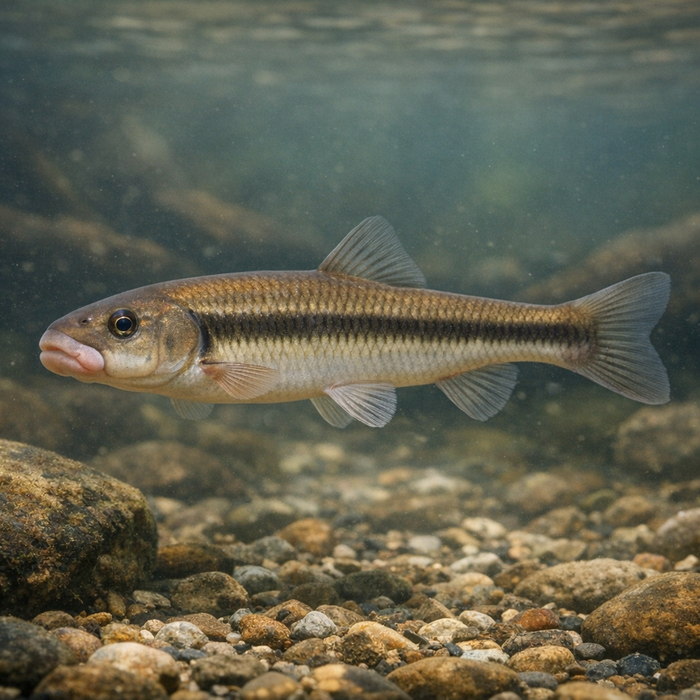
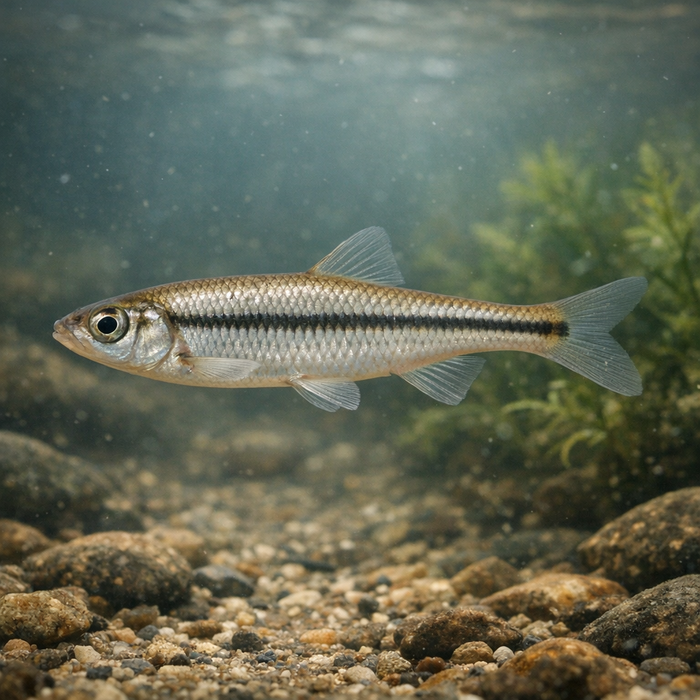
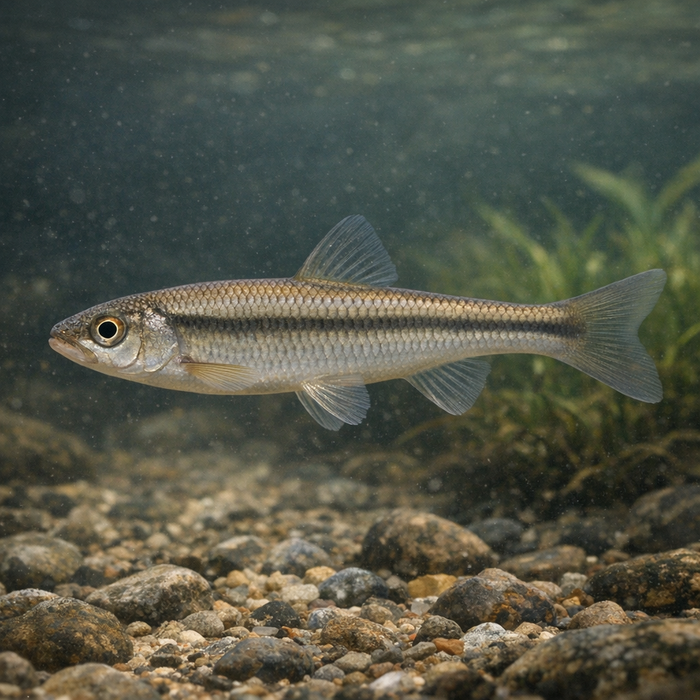
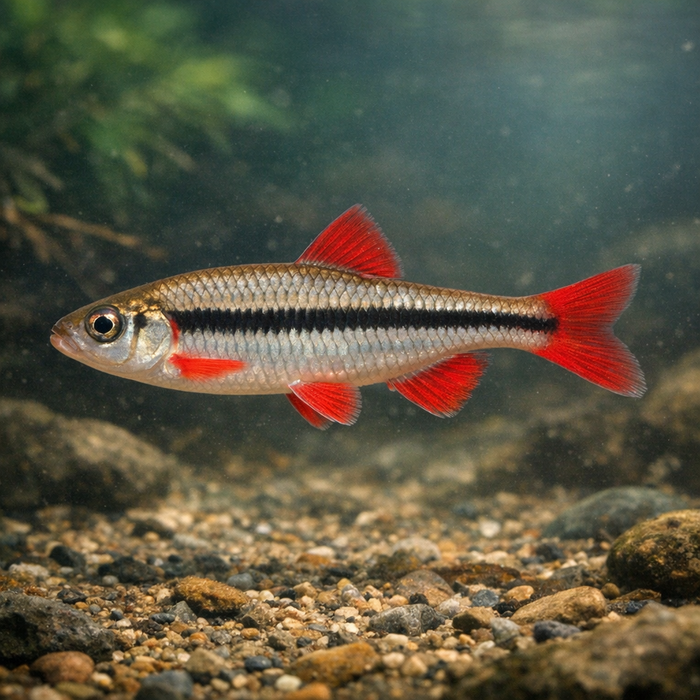
Lined Chub (Hybopsis lineapunctata): A Bold, Memorable Hook LineIntroductionThe lined chub is a pocket-rocket minnow with a dotted racing stripe that steals the show in clear water. It's not a glamour species by mainstream standards, but watch one flash over clean sand and you'll understand why micro anglers obsess over it. For a fish that rarely breaks five inches, the lined chub throws big personality: quick, precise, and weirdly photogenic.What Makes the Lined chub Unique?Two things jump off the page. First, the signature "line of spots" along the flank. It's not a smudge or a stripe; it's a tidy sequence of inky dots, like someone designed it with a drafting pen. That line intensifies during spring, when the fish are tuned up for spawning. Second, males develop tiny breeding tubercles on the head that feel like grit and look like battle gear under magnification. Add a set of minute barbels at the mouth corners and you get a minnow that's literally feeling its way across the bottom. Lined chub facts often skip those details, but they're what make this fish feel custom-built for life in clean, moving water.Habitat & Global RangeDespite the global sprawl of the minnow family, the lined chub is a Southeastern specialist. Think clear creeks and small to medium rivers with firm sand and pea-gravel runs, riffle margins, and moderate current. These aren't backwater puddles. The lined chub prefers oxygen-rich, low-silt lanes where it can hover, dart, and sift the flow. Anglers who dial in lined chub habitat look for transparency, stable flows, and substrate that doesn't puff silt with every step. It's a fish that punishes sloppy wading and rewards quiet feet.Behavior & TemperamentThe lined chub operates like a minimalist: stay streamlined, stick tight to efficient current, and feed with fast accuracy. It works the lower water column, often schooling loosely with others of similar size, then breaking formation to snap up drifting morsels. Spawning typically ramps up as spring flows and temperatures stabilize; colors sharpen, tubercles pop on males, and the whole fish looks freshly tuned. They're not bruisers on a line, but on 1-2 pound test or a wispy fly leader, they're twitchy, slippery fun. Hook one, and the first move is usually a short, panicked bolt into the seam-blink and it's gone.Ecological ImportanceFor a little fish, the lined chub punches above its weight in the food web. It shuttles energy from invertebrates and organic bits up to larger predators and birds, while demanding clean substrate and steady flow. In plain English: if lined chub numbers are humming, your stream is doing something right. Lose flow stability, add sediment, and the dotted stripe starts disappearing. That makes the species a handy bio-indicator for anglers who care about the health of their creeks and rivers.Conservation & Environmental PressuresSilt is the enemy. Poor land use, unstable banks, and flashy storm runoff can load a stream with fine sediment that clogs the very runs lined chubs need. Prolonged low flows or dewatering-combined with hot summers-can shrink these habitats to puddles. Chemical spills and chronic nutrient inputs don't help. While the lined chub isn't on every red list, its tight relationship with clean, moving water keeps it vulnerable to sloppy watershed management. The fix isn't exotic: stable riparian cover, smart stormwater, and letting gravel do gravel things.The FishyAF TakeThe lined chub is proof that not all good fishing is about drag-scorching runs. This fish is about precision: micro hooks, stealthy approaches, and the thrill of seeing that dotted flank materialize in clear current. Want a species that demands clean water and rewards attention to small details? The lined chub delivers. Learn the seams, watch the substrate, and keep your presentation tiny and natural. You might come for the novelty, but you'll stay because that flash of inked dots over pale sand is downright addictive. Call it a gateway fish to caring about your home stream-because once you've met a lined chub up close, you'll notice every speck of silt afterward.