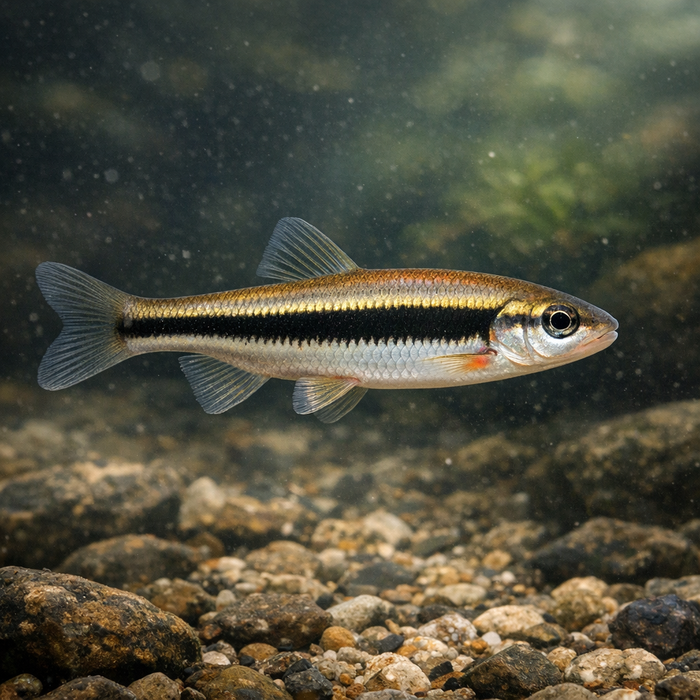
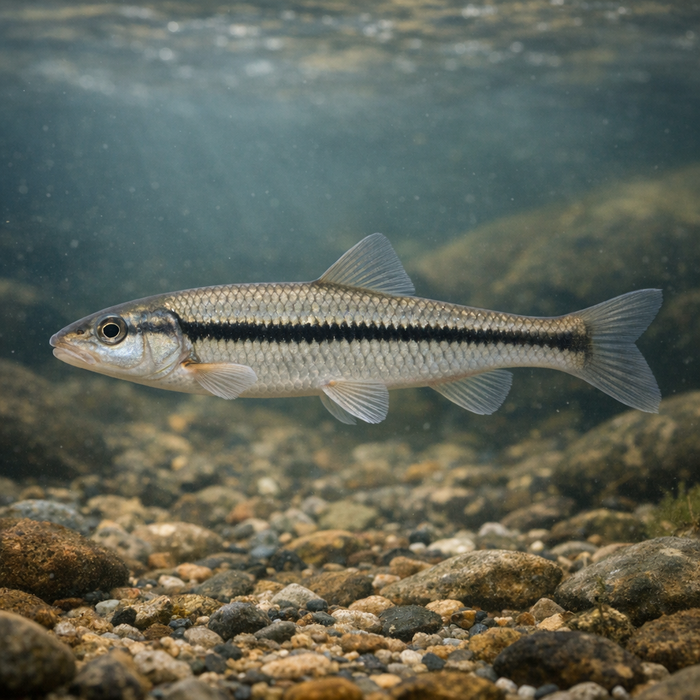
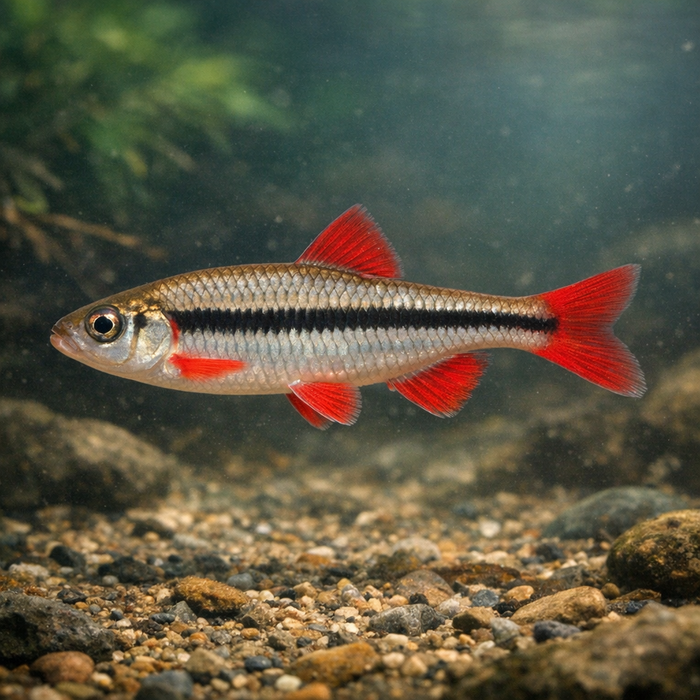
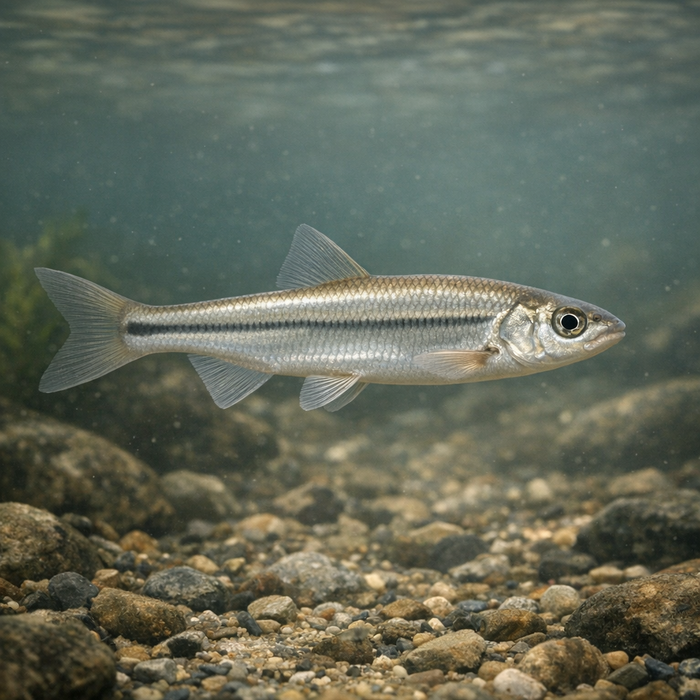
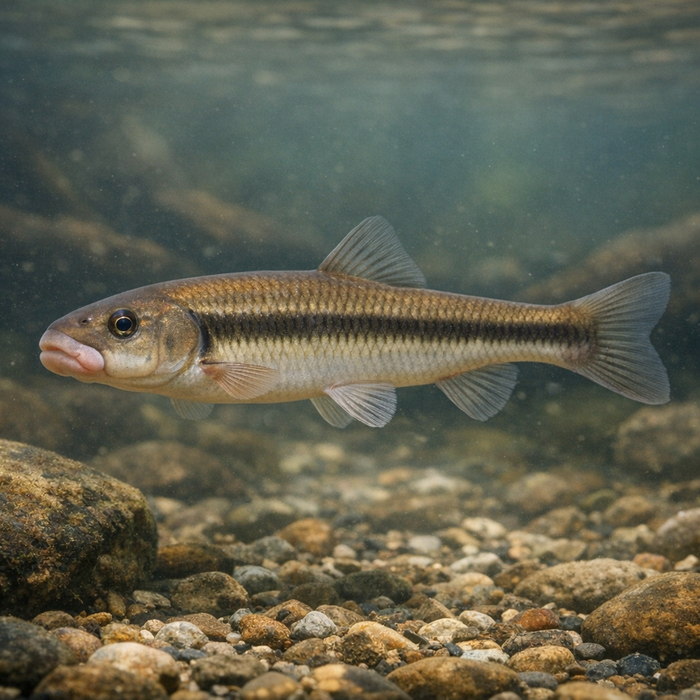
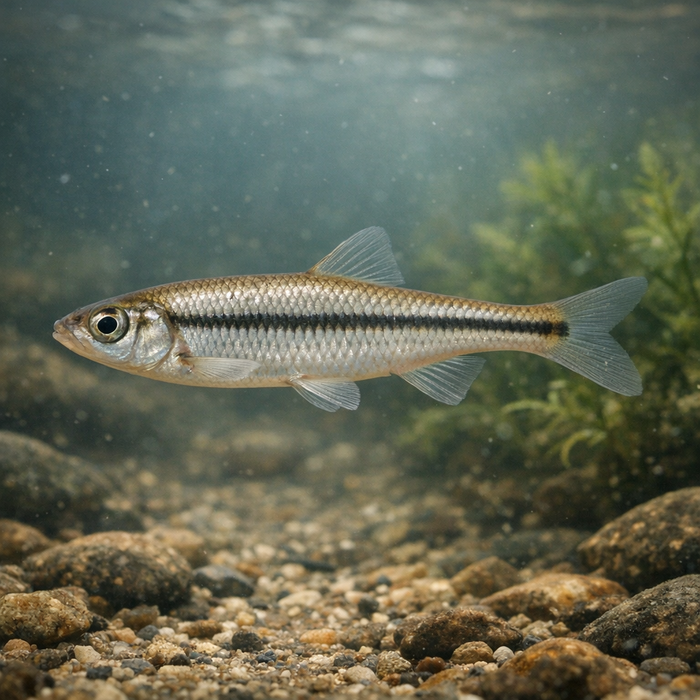
Roughhead shiner (Notropis semperasper): A Bold, Memorable Hook LineIntroductionThe roughhead shiner is the kind of fish that makes micro-anglers grin and everyone else squint. It's small, lightning-quick in current, and built for riffles where sloppy presentations go to die. Hook one and you're officially paying attention to the river the way fish do.What Makes the Roughhead shiner Unique?Start with the name: roughhead shiner. Breeding males develop tiny, rasp-like tubercles across the head, giving them that distinctive "rough" feel. It's not just cool trivia; those bumps are part swagger, part reproductive hardware. Add in a sleek, current-cutting profile with bright, reflective scales that pop from olive-bronze to gunmetal depending on light, and you've got a miniature athlete purpose-built for fast water. The species stays tiny, but the attitude and precision feeding make it a standout among shiners.Habitat & Global RangeThe roughhead shiner habitat sweet spot is clean, well-oxygenated streams with gravel and cobble. Think clear riffles and swift runs that demand constant station-holding. They work the seam edges, the heads of pools, and the shallow tongues above riffles where drifting insects concentrate. Depth is often knee-deep or less, and clarity matters. Silted riffles and muddy pulses push these fish to the next clean patch. If you're searching for Roughhead shiner habitat, start where the river whispers over gravel rather than thunders over boulders.Behavior & TemperamentThe roughhead shiner schools tight, flashing in unison like a handful of coins tossed into the current. They feed with sniper-level timing, intercepting tiny drifting invertebrates and microdebris. During the warm months, they move into stronger current and onto cleaner gravel; in colder or higher water, they slide to softer edges. Breeding brings color and those trademark rough foreheads, and activity spikes as temperatures climb. They're alert, skittish, and unforgiving of clumsy shadows. Presentations need to land small, soft, and fast.Ecological ImportanceThis species is a current meter and water-quality tattletale. Roughhead shiner numbers track clean substrate and steady oxygen. When sediment chokes riffles, they fade. When riparian cover keeps streams cool and stable, they shine. Predators, including larger fish and stream birds, rely on their biomass during warm months. In short, a healthy roughhead shiner population telegraphs a healthy small-stream food web.Conservation & Environmental PressuresEven without a famous gamefish profile, the roughhead shiner faces real pressure from sedimentation, stormwater spikes, and habitat fragmentation. Channelized banks, poorly managed construction runoff, and low-flow droughts all hit clean gravel first. Because they're small and localized, a single degraded reach can matter. Some jurisdictions protect certain minnow species or regulate baitfish collection. If you want roughhead shiner facts that matter most: protect riffles, keep silt out, and the fish handle the rest.The FishyAF TakeIf big fish or bust is your thing, you'll miss the magic here. The roughhead shiner is a masterclass in micro-watercraft: reading seams, landing microsized baits without splash, and releasing a thumbnail trophy like it's a tarpon. Find one, and you instantly become better at timing, stealth, and drift control. The fish is small. The skillset isn't. For anglers who thrive on nuance, the roughhead shiner turns a trickle of a stream into a chessboard, and you either learn or you spook the whole school. Your call.