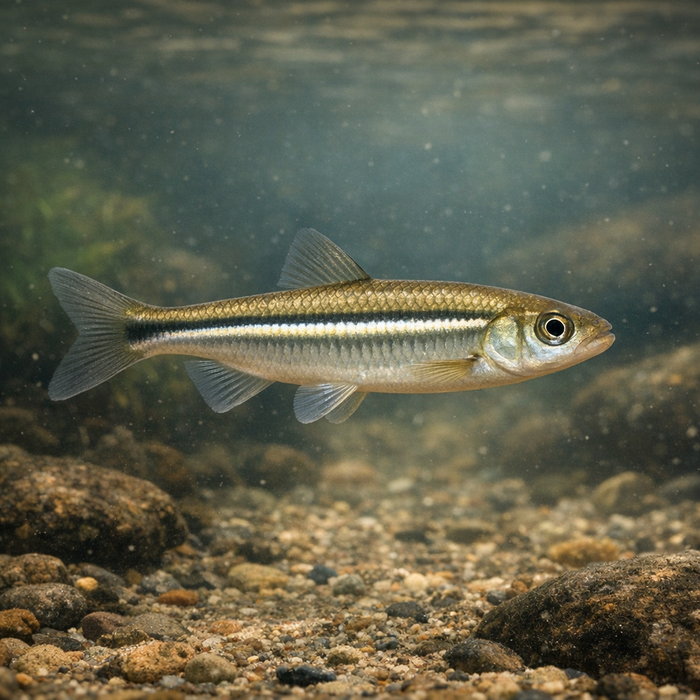
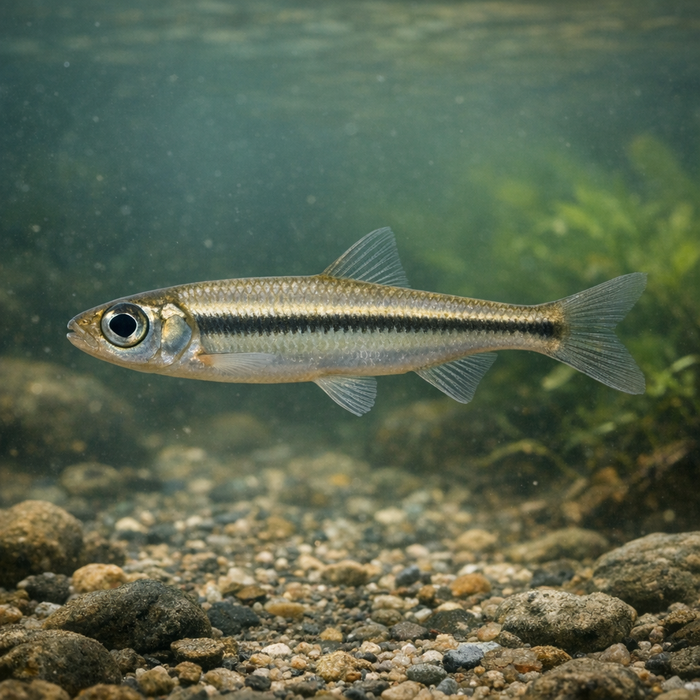
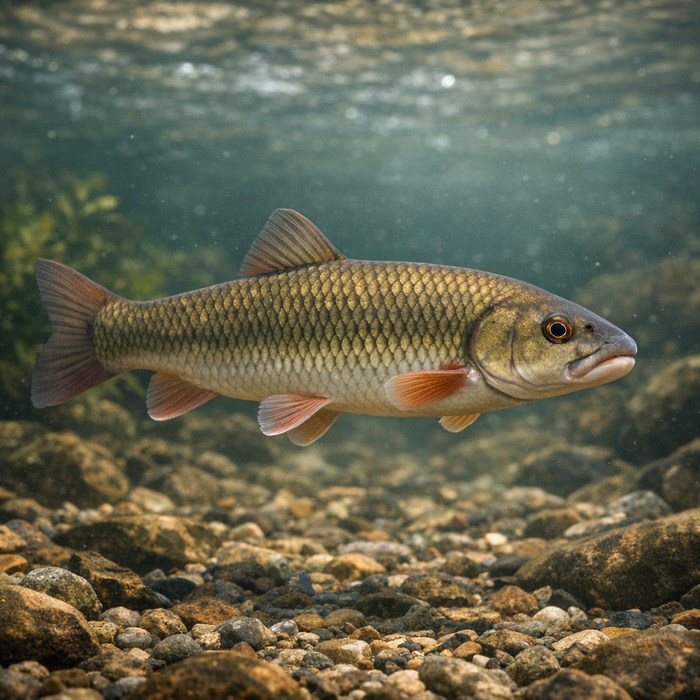
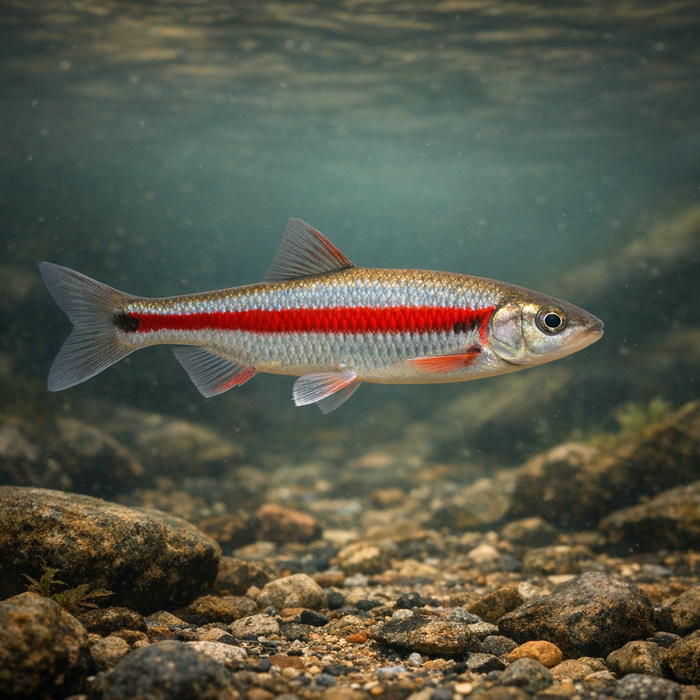
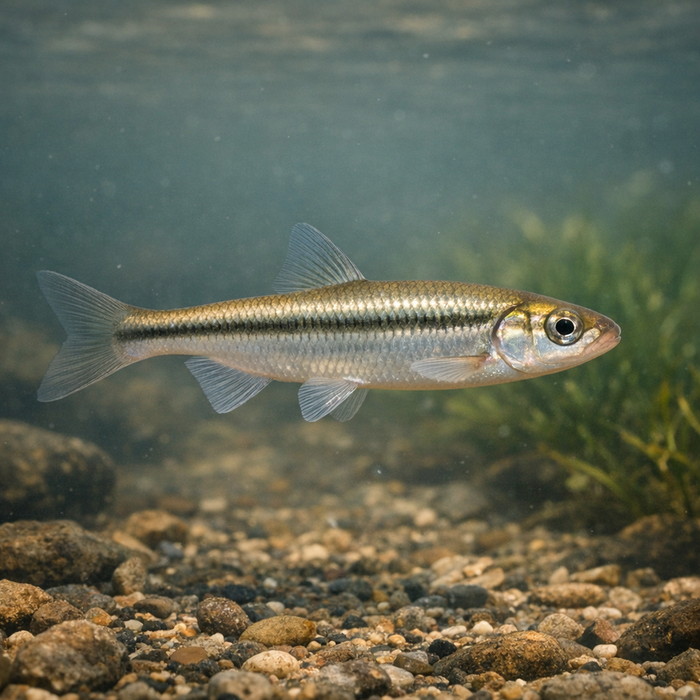
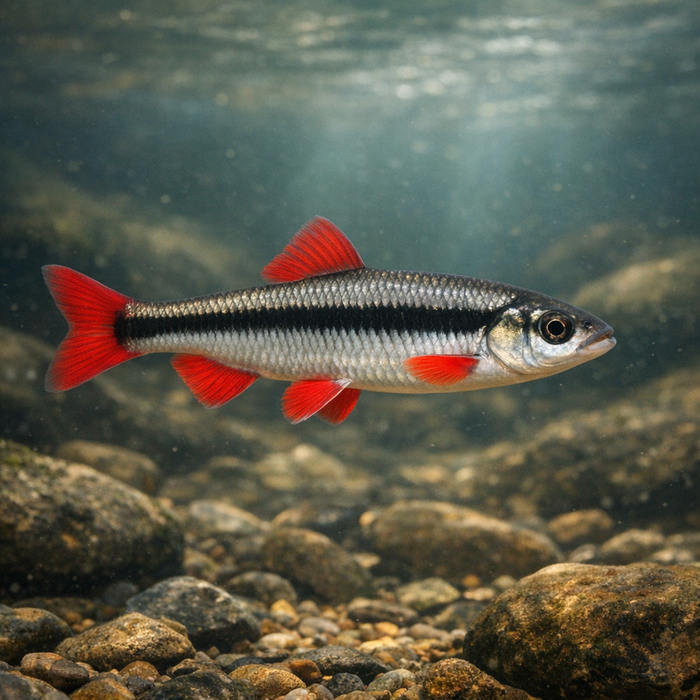
Longjaw Minnow (Ericymba amplamala): A Bold, Memorable Hook LineIntroductionThe Longjaw minnow is the stream riffle's pocket rocket. It is tiny, quick, and unapologetically specialized. You will not be spooling drag with this fish, but you will learn a lot about stealth, current seams, and what it takes to fool a creature that survives by timing and efficiency. If you want more than big-fish chest-thumping, the Longjaw minnow teaches river craft at a granular level.What Makes the Longjaw minnow Unique?Start with the namesake jaw. The Longjaw minnow carries an elongated lower jaw that functions like a miniature shovel, letting it vacuum drift and micro-debris near the bottom. That tweak, along with a streamlined, silvery profile, means it wastes almost no energy hugging fast water. During spawning season, males bristle up with tiny tubercles that make them feel like fine sandpaper. For a fish that rarely exceeds three inches, those details are a masterclass in specialization and attitude.Habitat & Global RangeAsk about Longjaw minnow habitat and you will hear the same refrain: clear, cool streams with clean gravel and moderate to fast flow. Picture riffles, shallow runs, and pool tailouts where oxygen is high and silt is low. It is a schooling fish, often bunched tight just off the bottom, and it responds quickly to changes in discharge and water clarity. The species occurs in select waters of the southeastern United States, generally in Gulf-slope drainages. It is not a wanderer of giant lakes or muddied backwaters. If the substrate is bright and the flow is talkative, you are in the neighborhood.Behavior & TemperamentThe Longjaw minnow is a current jockey. It hovers in micro-eddies and behind small stones, surfing ground effect with minimal fin flicks. Schools flit and pivot as one, shining like a pocketful of coins when the sun angles just right. Feeding is opportunistic but efficient: anything small enough riding the drift and worth the calories. When pressured, the school simply melts into the gravelscape, reappearing a few feet away. No tug-of-war here; the trick is timing and presentation.Ecological ImportanceSmall does not mean small-time. The Longjaw minnow is a midstream courier, moving energy from invertebrates into the mouths of larger fish and birds. Because it needs clean, well-oxygenated water, healthy populations are quiet indicators that the system is working. Shifts in flow regime, sediment load, or water chemistry punch above their weight for this species. In short, Longjaw minnow facts double as stream report cards.Conservation & Environmental PressuresThe Longjaw minnow thrives in stable, clear-flow conditions. Excessive siltation, riparian clearing, poorly timed water withdrawals, and chronic turbidity erode its world. Fragmentation by small dams or perched culverts can isolate schools and blunt gene flow. While the species is not a headline conservation case in most places, its reliance on clean gravel and steady current makes it vulnerable to death-by-a-thousand-cuts watershed issues.The FishyAF TakeIf you only chase grip-and-grin monsters, you will miss the point of the Longjaw minnow. This fish is a microscope for river sense. It punishes sloppy wading, loud shadows, and clumsy drifts. Dial in ultralight rigs and you will discover a surprising amount of nuance per ounce. The Longjaw minnow is honest: show it the right thing in the right lane and it plays. Show it noise and it vanishes. For anglers who like reading water as much as reeling, this little shiner is a sharp teacher and a worthy target.