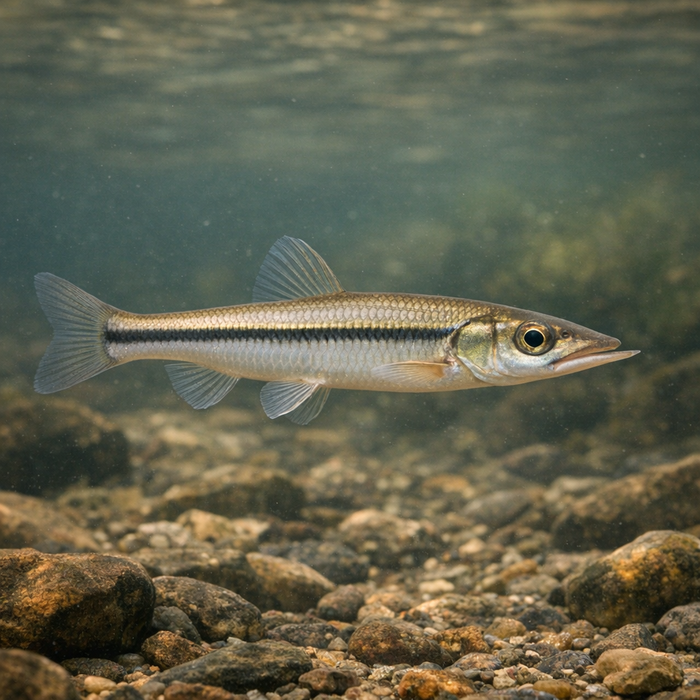
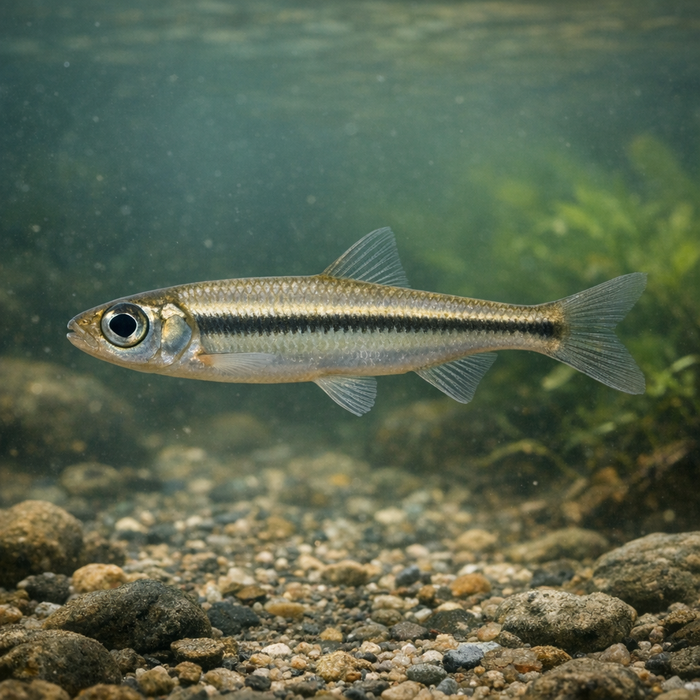
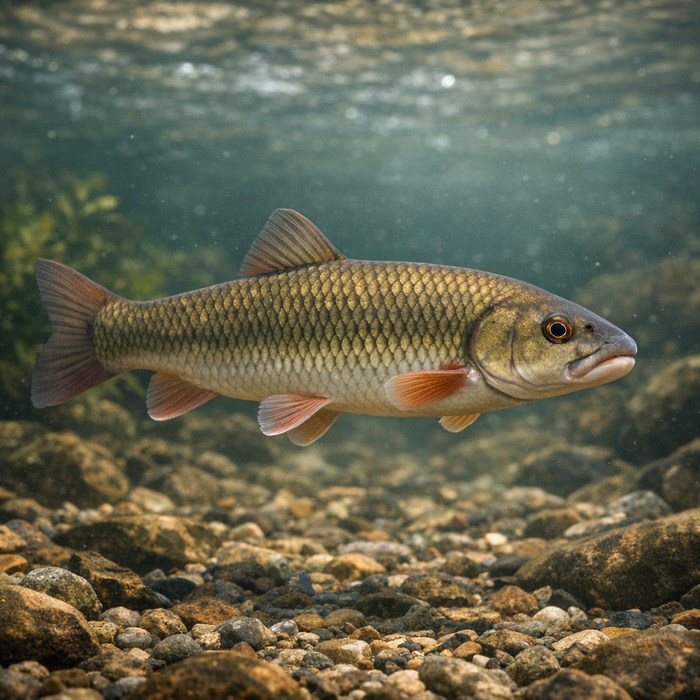
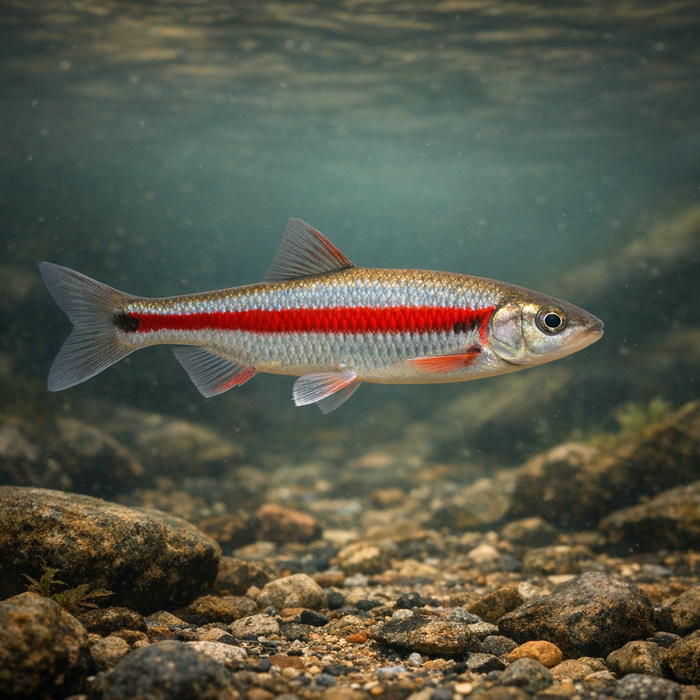
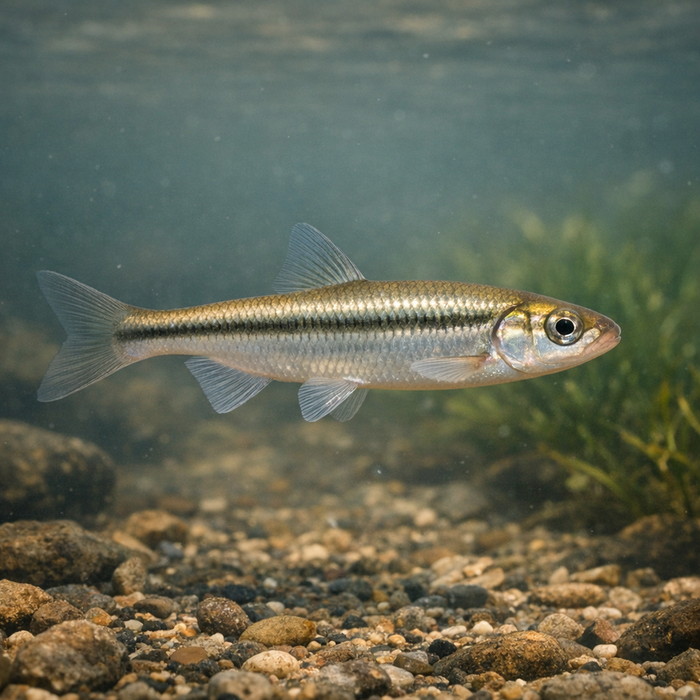
Silverstripe Shiner (Notropis stilbius): A Bold, Memorable Hook LineIntroductionMeet the little fish that outshines the whole riffle. The Silverstripe shiner is small, fast, and ridiculously flashy, turning sunny creeks into a runway show. If you're into microfishing or you just appreciate a creek coming alive, this is the silvery heartbeat pulsing through a lot of southeastern streams.What Makes the Silverstripe shiner Unique?Two things: the paint-pen stripe and the squad mentality. The namesake silver stripe is crisp and bright, an optical trick that can look like a solid neon band in moving water. Then there's the schooling. Silverstripe shiner isn't about lone wolf heroics; it's a coordinated team drill, sliding and flashing through runs like a bait-ball with better choreography. During spring, males develop lemon-tinged fins and an even darker midline, so the whole school looks turbocharged. For anglers hunting Silverstripe shiner facts, those bold visuals are a cheat code for quick ID.Habitat & Global RangeThis is a southeastern United States player, especially across the Mobile Basin and neighboring drainages. Think small to medium rivers and creeks with sand and fine gravel, enough current to keep things oxygenated, and generally clear water. You'll see them where runs glide into riffles and in the heads and tails of pools. They can tolerate a little stain after rains, but the party really pops when the water runs clean. If you're scouting Silverstripe shiner habitat, dial in on sunny, shallow glides where the stripe throws mirrors.Behavior & TemperamentSilverstripe shiner is wired for motion. The species forms tight schools that rise, dip, and pivot together, which looks pretty but serves a purpose: confuse predators and exploit drifting food with near-zero wasted effort. Large eyes, a terminal mouth, and quick-twitch acceleration are built for hoovering tiny stuff from the flow. Spawning kicks in with warming water, usually spring into early summer, when groups stage over clean sand and fine gravel. The actual dance is short and frantic. They're alert fish that don't suffer sloppy approaches; shadows, sudden movement, or clumsy splashes will snap a school out of a run in a heartbeat.Ecological ImportanceSilverstripe shiner is the silver thread stitching a lot of southeastern stream food webs. Their schools transfer energy from tiny invertebrates and organic bits up to larger predators: bass, sunfish, pickerel, and even wading birds. By grazing on drifting microfare and moving en masse, they smooth out boom-bust cycles in headwater and mid-reach systems. Healthy shiner populations usually mean the substrate is reasonably clean, the current alive, and the oxygen decent. In short, they're not just shimmer; they're a living water-quality readout.Conservation & Environmental PressuresWhile the species currently sits at Least Concern, don't mistake that for invincible. Channelization, sedimentation from poor land use, and chronic muddiness can erase the clean gravel and stable flows this fish uses to feed and spawn. Heat waves and low summer water stack stress. Add in invasive species pressure and you have a lot of straws on a small fish's back. Good riparian buffers, smarter stormwater management, and keeping gravel runs free from silt go a long way toward protecting those flashing schools.The FishyAF TakeYou won't mount a Silverstripe shiner, but you might get hooked on them anyway. They're a masterclass in small-water observation: slow down, watch the light angles, and you'll suddenly see a creek is busier than rush hour. For micro-anglers, it's the perfect confidence fish, happy to hit a thread of worm or a midge when you set the scene right. For everyone else, it's proof that not every great catch burns drag. Sometimes the win is a pocket-size chrome torpedo pulsing with life, telling you a stream is doing exactly what a stream should do.