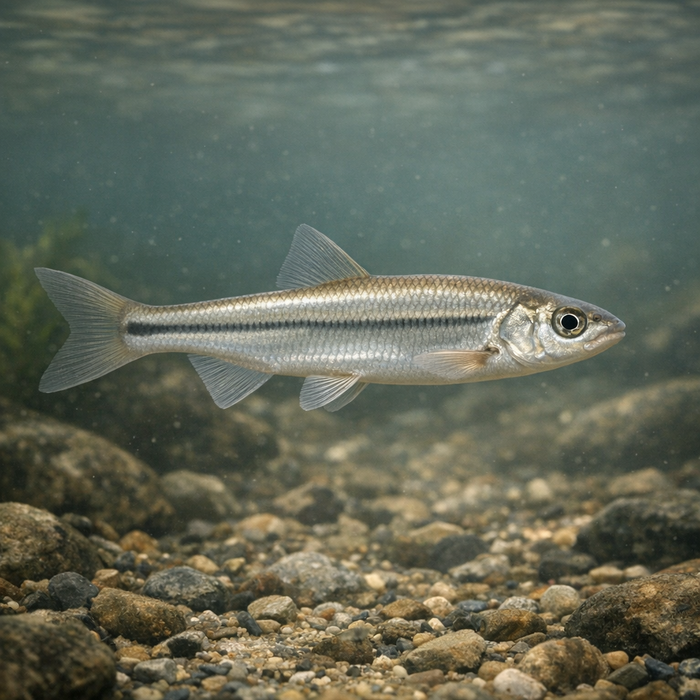
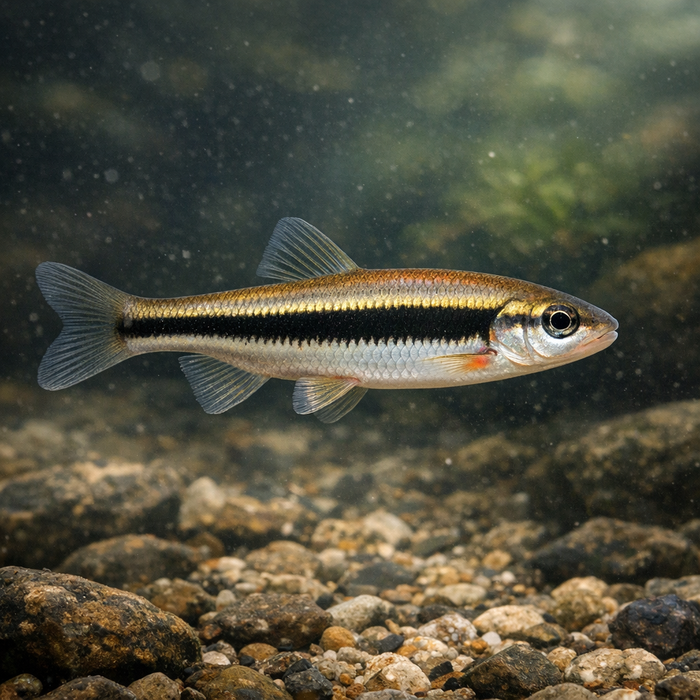
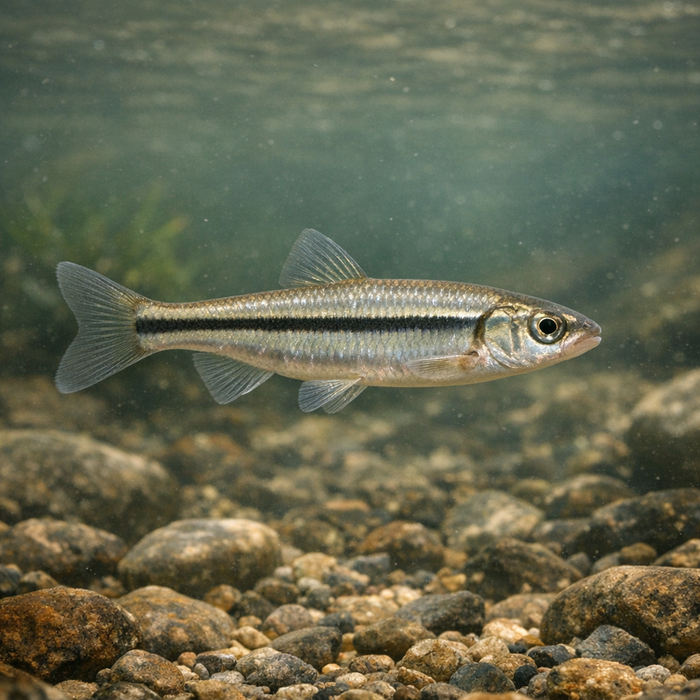
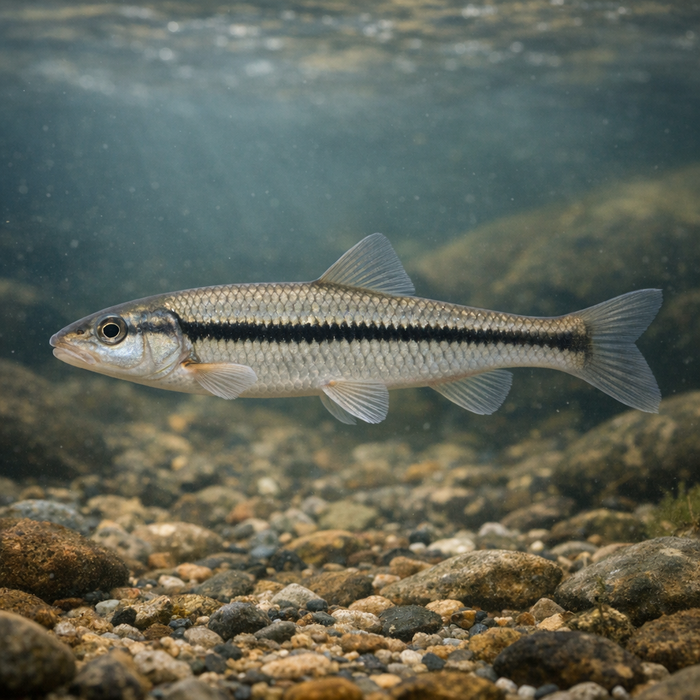
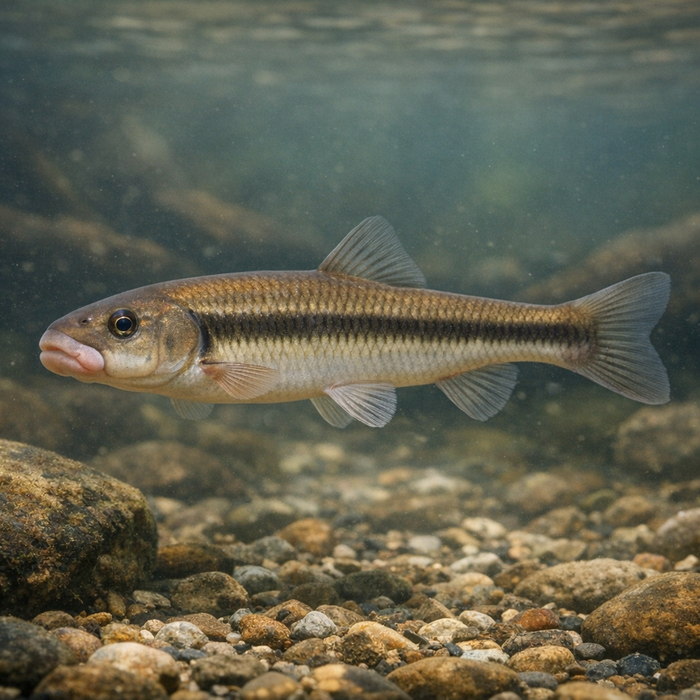
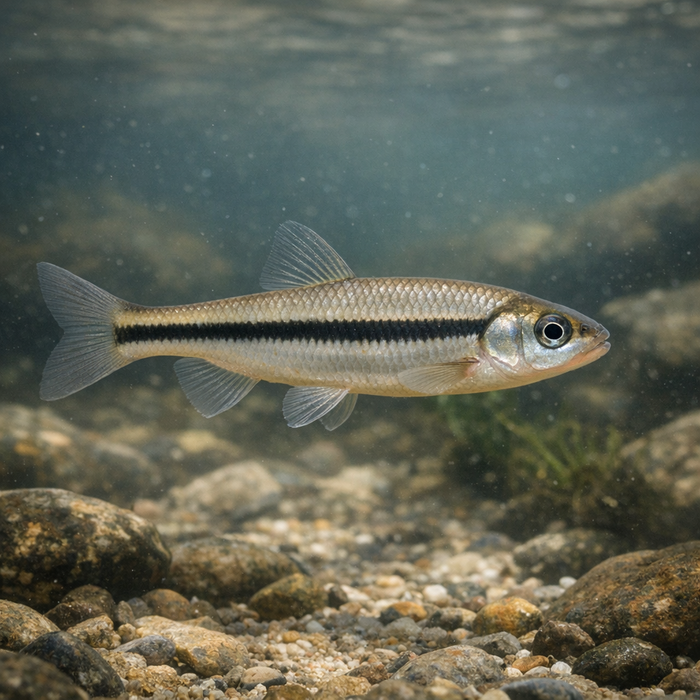
Mobile Chub (Macrhybopsis boschungi): The Sand-Drift SpecialistIntroductionThe Mobile chub is proof that not every cool fish needs to be huge or mean. This small, quick, sand-loving cyprinid does its best work inches above a moving bottom, flickering like lost sunlight. You won't headline a weigh-in with one, but if you care about wild rivers and native fish, the Mobile chub will absolutely steal your attention. Consider this your crash course in Mobile chub facts, behavior, and why this tiny rocket matters.What Makes the Mobile chub Unique?Start with strategy. The Mobile chub is a pelagic-broadcast spawner: it releases semibuoyant eggs into flowing water so they drift until hatching. That trick only works in long, unobstructed reaches with steady current, which puts a big spotlight on river connectivity.Next, the build. The Mobile chub is streamlined and understated, with a slightly downturned mouth tuned for picking tiny invertebrates off sand in fast water. Subtle pigments and a faint tail spot often appear when schools pivot over pale substrate. It's minimalism with purpose.Finally, identity. Recognized as distinct from the lookalike speckled chub complex in the 21st century, Macrhybopsis boschungi is a true regional original, not a generic minnow with a vague address.Habitat & Global RangeHere's the short version of Mobile chub habitat: clean, moving water over sand. Think riffles, runs, and broad shoals in the Mobile River Basin drainage. The species holds close to the bottom where current keeps the sand swept and oxygen high. You'll see them in the Cahaba, Black Warrior, Tombigbee, Alabama, and sister waters, often in water from ankle- to waist-deep. Distribution is tight: this is an Alabama-and-neighbors deal, not a coast-to-coast fish. If your river loses its energy to reservoirs and silt, the Mobile chub's playbook stops working fast.Behavior & TemperamentMobile chub schools cruise in loose packs, sliding just off the bottom where drifting food comes to them. They react to flow pulses, rising into the current with fresh water and dropping back when levels settle. Aggression is modest. You coax them more than you trigger them. Expect quick taps rather than violent smashes, and be ready to scale down line, hooks, and shot placement. They feed most consistently when light is reasonable and current is stable, but a mild bump in flow can turn the school on like a switch.Ecological ImportanceThis fish is a small cog in a big machine, and that's the point. By grazing invertebrates and processing organic bits on the move, Mobile chub help convert drifting food into biomass for everything above them. They're also textbook indicators for river health. Pelagic-drifting eggs require connected, free-flowing channels; when dams and heavy sediment arrive, the chub's reproductive math breaks. Lose the Mobile chub and you're not just missing a fish; you're getting a memo about the river's failing hydraulics.Conservation & Environmental PressuresThe threats are not subtle. Fragmented flow from dams, bank erosion, and heavy sediment turn sandy highways into clogged parking lots. Because the Mobile chub's eggs depend on current to stay suspended, impoundments and slack backwaters are basically reproductive dead ends. Add in nutrient spikes, low oxygen in heat waves, and general basin growth, and the species squeezes into fewer quality runs. Formal conservation status may lag behind reality, but the vulnerabilities are baked into their life history. Protecting connected sand-bed reaches, maintaining riparian buffers, and letting rivers keep their momentum are the best bets.The FishyAF TakeIf you've never chased a fish smaller than your pinkie, the Mobile chub will change how you see moving water. Dial down the tackle, and the river gets loud: micro currents, sand ribbons, and subtle seams you've ignored for years. The Mobile chub is not about glory pics; it's about system literacy. Find stable flows over clean sand, keep presentations tiny and honest, and you'll meet one. In a world obsessed with size, this little local cuts through the noise. Learn the Mobile chub, and you learn the river.