Mountain Whitefish (Prosopium williamsoni): The Underrated Stream Dweller That Owns Cold Water
Mountain Whitefish might not be the flashiest catch on the block, but they’re a cornerstone species in North America’s cold, clear waters. These sleek, silvery fish have been quietly thriving in mountain streams and rivers, often overlooked by anglers chasing bigger game. Yet, their presence signals a healthy aquatic ecosystem. If you want to understand the backbone of coldwater fisheries, knowing your Mountain Whitefish facts is a must.
What Makes the Mountain Whitefish Unique?
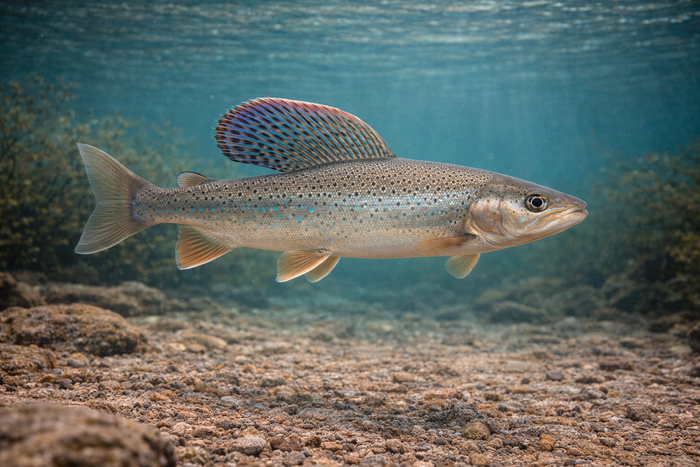
Unlike your typical trout or salmon, Mountain Whitefish sport a subtle elegance. Their body is elongated and covered in small, cycloid scales that shimmer with a silvery-bronze hue. The head is blunt with a small, downward-facing mouth designed for bottom feeding. This isn’t a predator chasing flashy prey; it’s a benthic forager, sifting through gravel and sediment for insect larvae, crustaceans, and other invertebrates.
One standout trait is their spawning behavior. Mountain Whitefish spawn in late fall or early winter, often under ice or in swift riffles. They don’t build nests or guard eggs. Instead, they rely on sheer numbers and the protective environment of gravel beds. This strategy is a throwback to primitive salmonids, making them a fascinating subject for evolutionary study.
Their sensory adaptations are also noteworthy. Mountain Whitefish have a well-developed lateral line system that detects subtle water movements, essential for navigating the often turbulent mountain streams they call home.
Habitat & Global Range
Mountain Whitefish are native to the cold, clear waters of western North America. Their range stretches from the Rocky Mountains down through the Pacific Northwest and into parts of the Sierra Nevada. They thrive in high-elevation streams, rivers, and lakes where water temperatures stay consistently low.
Mountain Whitefish habitat is characterized by clean, well-oxygenated water with gravel or rocky substrates. They prefer moderate to fast currents, which keep their food supply fresh and the sediment from smothering their spawning grounds. These fish are often found in waters that would be too cold or too harsh for many other species, making them a true mountain specialist.
Their presence is a reliable indicator of water quality. If you find Mountain Whitefish in a stream, chances are the ecosystem is in good shape.
Behavior & Temperament
Mountain Whitefish are bottom feeders with a calm demeanor. They spend much of their time patrolling the streambed, using their sensitive barbels to detect prey hidden in the substrate. Their diet mainly consists of aquatic insects like mayflies, caddisflies, and midges, but they’ll also snack on small crustaceans and even fish eggs when the opportunity arises.
They are generally non-aggressive and tend to avoid competition with more dominant species like trout. However, during spawning season, males can become territorial, engaging in subtle displays rather than outright battles.
Mountain Whitefish are mostly solitary or found in small groups. They are crepuscular feeders, most active during dawn and dusk when insect activity peaks. Their behavior reflects adaptation to the cold, fast-flowing waters they inhabit—energy-efficient and low risk.
Ecological Importance
Mountain Whitefish play a crucial role in freshwater ecosystems. As benthic feeders, they help control populations of aquatic invertebrates, maintaining a balance that supports the entire food web. Their foraging stirs up sediment, which can aid nutrient cycling and oxygenation of the streambed.
They also serve as prey for larger predators, including trout, birds, and mammals. This positions them as a vital link between lower and higher trophic levels.
Moreover, their spawning activities contribute to the physical restructuring of streambeds, promoting habitat diversity. This is essential for other species that depend on clean gravel beds for reproduction.
Conservation & Environmental Pressures
Despite their hardy nature, Mountain Whitefish face several threats. Habitat degradation from logging, mining, and urban development can increase sedimentation, smothering spawning grounds and reducing water quality. Rising water temperatures due to climate change pose a significant risk, as Mountain Whitefish require cold, oxygen-rich environments.
Invasive species and competition with introduced fish like non-native trout can also impact their populations. Overfishing is less of a concern since they are not a primary target for most anglers, but incidental catch and habitat disturbance can still affect local numbers.
Conservation efforts focus on protecting and restoring coldwater habitats, monitoring water quality, and managing land use practices to reduce sediment runoff. Maintaining riparian vegetation and stream shading is critical to preserving Mountain Whitefish habitat.
The FishyAF Take
Mountain Whitefish don’t scream for attention, but they deserve it. Their understated presence in cold mountain waters is a testament to resilience and ecological balance. If you’re serious about understanding freshwater ecosystems or coldwater fishing, ignoring Mountain Whitefish facts is a missed opportunity.
They’re not the trophy fish that dominate Instagram feeds, but they are the unsung heroes of mountain streams. Protecting their habitat means safeguarding entire aquatic communities. Next time you’re casting in a chilly mountain river, remember the Mountain Whitefish—quiet, efficient, and essential.