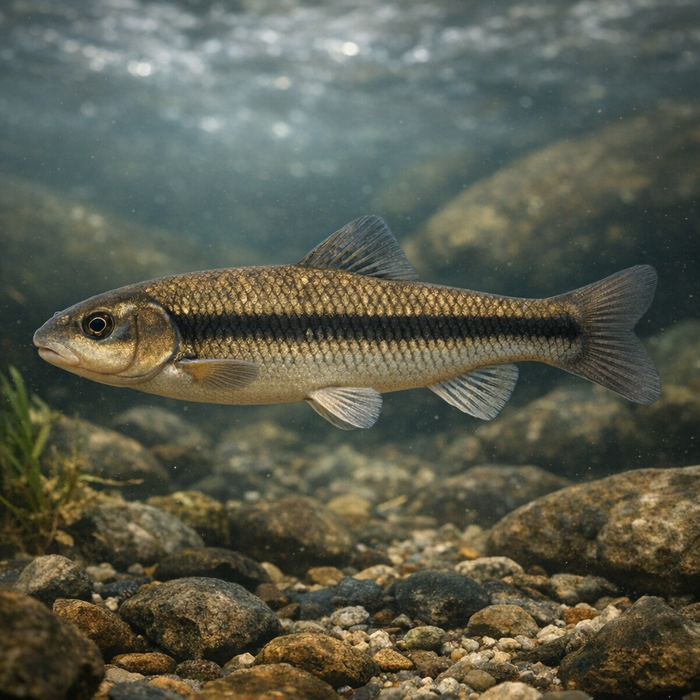
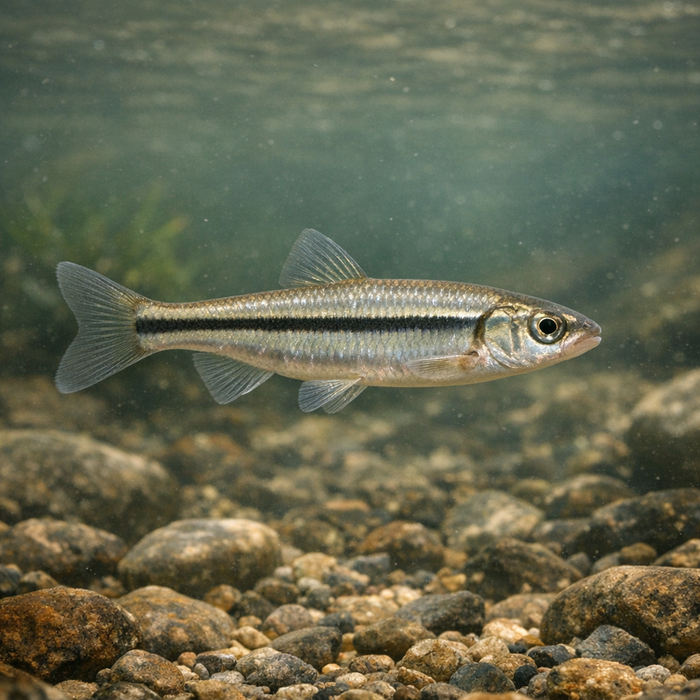
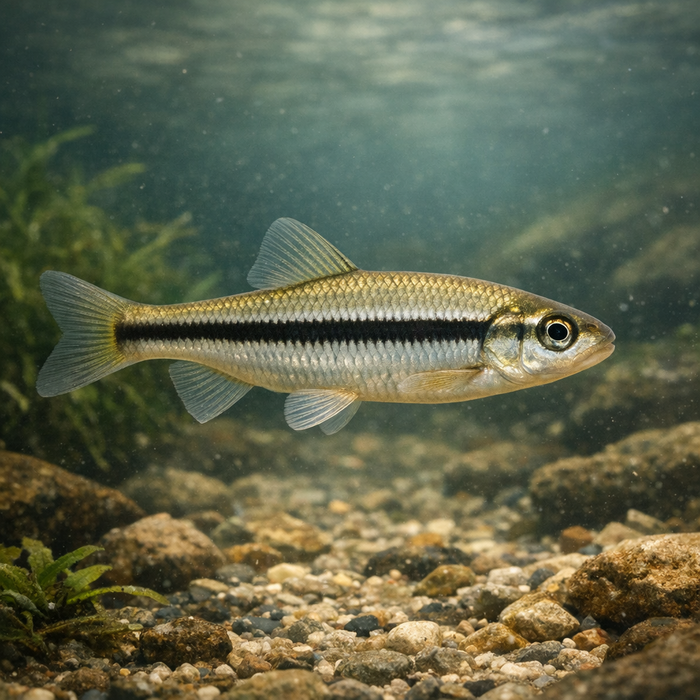
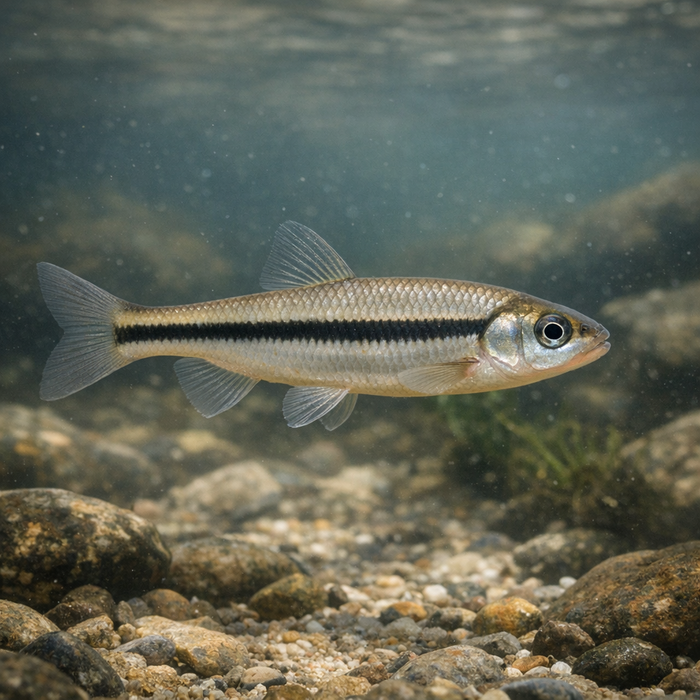
Nueces Roundnose Minnow (Dionda serena): Tiny Nose, Big Attitude In Texas Spring WaterIntroductionThe Nueces roundnose minnow is the pint-sized resident of Texas Hill Country springs that turns clear water into a living glitter cloud. It's not a fish you chase for drag-melting runs. You chase it because good things come in small, tricky packages, and because the currents that keep it alive make for some of the prettiest fishing on the planet. If you want solid Nueces roundnose minnow facts without the yawn, buckle up.What Makes the Nueces roundnose minnow Unique?First, that face. The rounded, overbite-free snout is more than cute branding. It works like a tiny squeegee, letting the fish graze algae and biofilm off smooth limestone. Second, the body flashes a bronze midline highlight, especially when males gear up for spring, giving schools a metallic shimmer that whistles through riffles. Third, this species is built for current. Light bones, stiff little fin rays, and a streamlined profile let a Nueces roundnose minnow hold a lane in pushy flow like a miniature drift car.Habitat & Global RangeThis species is a Texas specialist, tied to spring-fed streams of the Nueces basin and the clear, calcium-rich water that bubbles out of the Edwards Plateau. Think shallow riffles, knee-deep runs, and quiet margins braided around gravel bars. Stability is the secret. Aquifer-fed flows buffer temperature swings, which is the core of Nueces roundnose minnow habitat. Floods rearrange the gravel; droughts test resilience; but when springs run steady, so does the minnow's life cycle. If you're scouting, look for healthy periphyton on limestone, cobble riffles with knee-high current, and tight schools slipping around seams.Behavior & TemperamentCall it twitchy in the best way. The Nueces roundnose minnow is a schooling specialist that splits and re-forms like spilled mercury. It feeds low in the water column, nipping at algae, diatoms, and whatever invertebrates cling to rock. It's wary, too. One shadow from a heron or a bass and the whole squadron folds into the bottom like origami. For anglers, that means stealth: longer leaders, micro hooks, and soft steps. Hooked fish don't brawl; they helicopter for a breath and you're done. The real sport is putting a matchstick-sized bait exactly where a matchstick-sized mouth expects it.Ecological ImportanceThe Nueces roundnose minnow is a small cog that makes the whole river spin. By scraping slime and snacking small, it turns sunlight and rock scum into calories for everything bigger and toothier. It's prey for bass, sunfish, kingfishers, and snakes. It's also a barometer. When this fish vanishes, you're looking at spring failure, sediment smothering, or chemistry issues that won't stop at minnows. Like many Hill Country natives, it embodies the river's input-output ledger: clean water in, healthy food webs out.Conservation & Environmental PressuresMinuscule doesn't mean bulletproof. The species rides a knife edge between flood and drought. Water withdrawals upstream, altered spring recharge, and silt loading from disturbed banks all pile on. Because portions of its range thread private lands, access and data can be spotty, and that makes trends hard to pin down. Still, the playbook is familiar: protect spring flow, keep banks vegetated, and don't grind riffles into paste with ATVs or careless crossings. This isn't doomsaying. It's just how a fish that tops out around two and a half inches survives in Texas.The FishyAF TakeThe Nueces roundnose minnow is proof you don't need a hundred pounds to have a hundred-watt fishery. If you're a micro angler, it's a perfect test of stealth and precision. If you're a bass angler, it's free intel; where schools of these minnows stack up, your predators won't be far. And if you're a river person, period, this fish is your canary. Keep the springs honest, and the minnows will keep the riffles honest. That's the kind of Nueces roundnose minnow facts we can get behind: not just ID marks and lengths, but how this tiny grazer tells you the river is working.