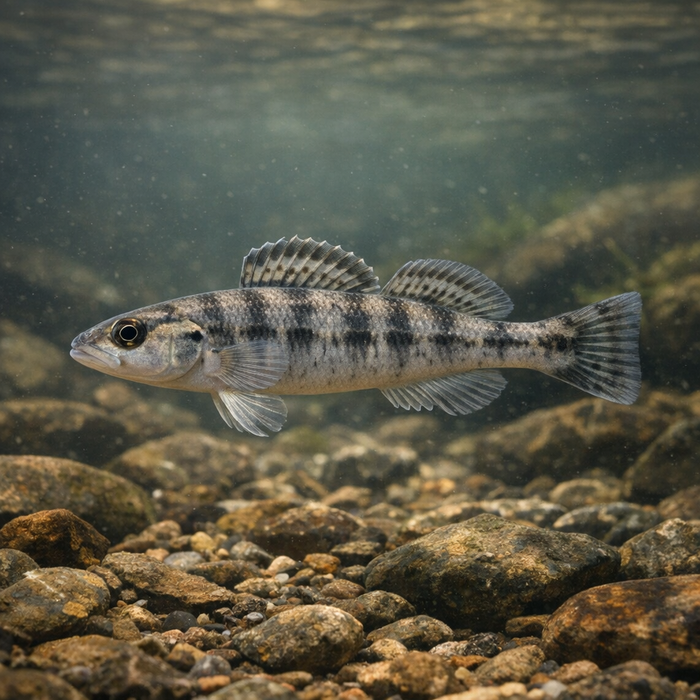
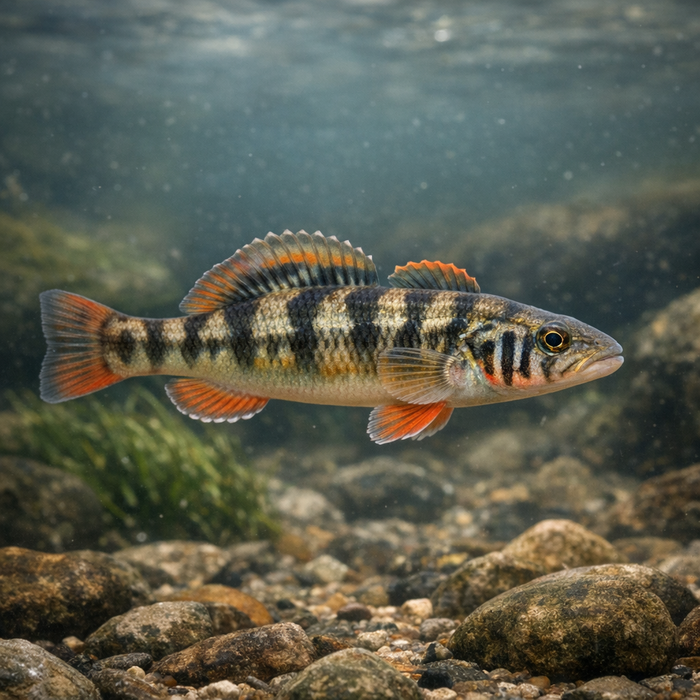
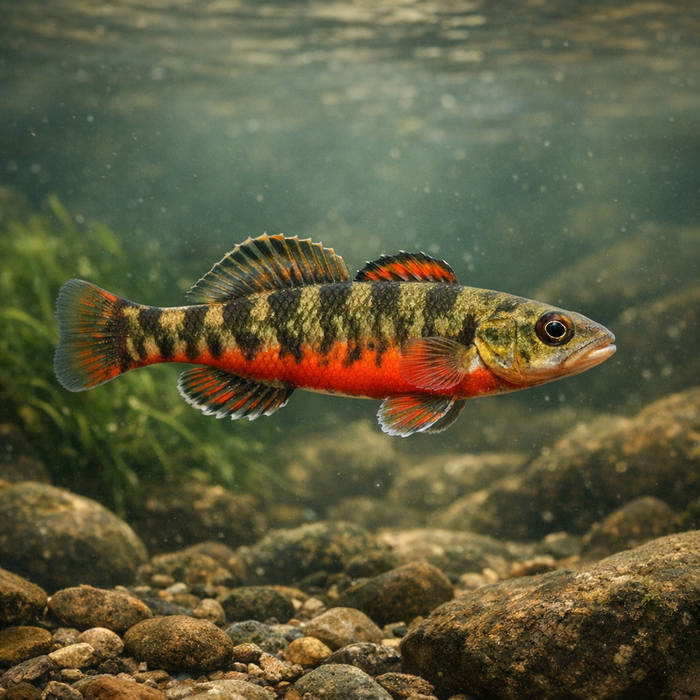
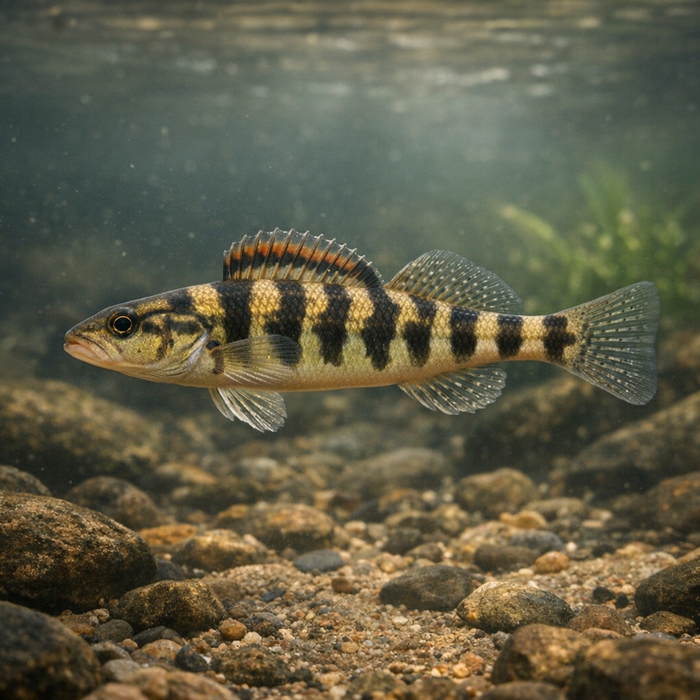
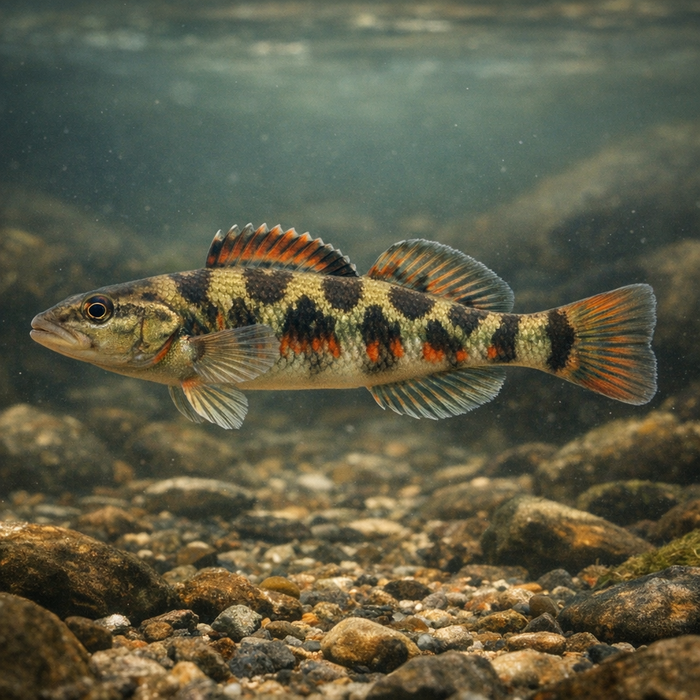
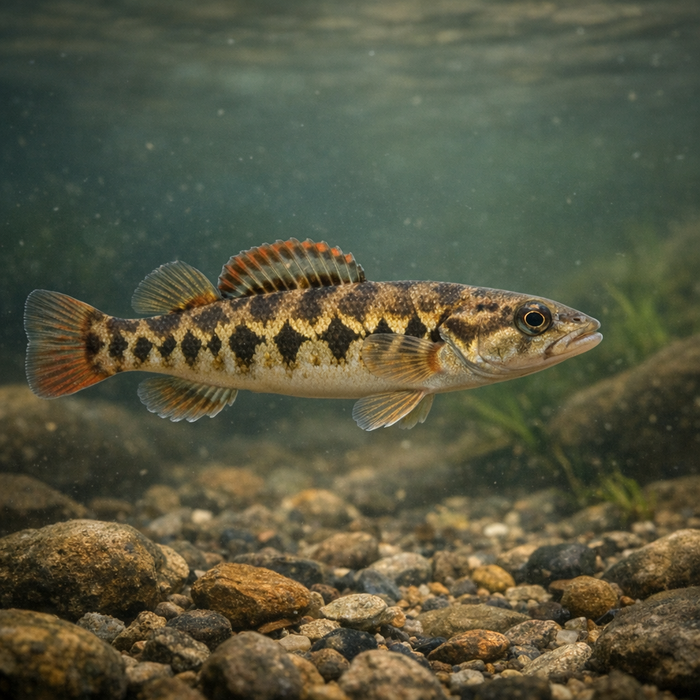
Orangefin Darter (Etheostoma bellum): Riffle Rocket With Neon FinsIntroductionThe orangefin darter is proof that small fish can pack serious swagger. It's a bottom-hugging, current-loving sprinter that lights up like a freshwater traffic cone in spring. If you think creek fish are dull, this little rocket will change your mind. For anglers curious about microfishing or just chasing color, the orangefin darter delivers fast lessons and fast fun. Consider this your crash course in orangefin darter facts without the academic nap time.What Makes the Orangefin darter Unique?First, the colors. Breeding males of the orangefin darter turn outrageous, flashing saturated orange fins often edged with a sharp blue band. In clear current, those fins don't just show; they broadcast. Second, the build. Like most darters, it's designed to fight flow: low profile, broad pectorals, and a reduced swim bladder that lets it glue to rock like a tiny paperweight. Third, the attitude. The orangefin darter may be small, but it defends tiny territories with sudden bursts and intense fin-fanning displays that read like miniature MMA.Habitat & Global RangeIf you're hunting orangefin darter habitat, think clean, shallow riffles and runs over gravel and small cobble. This fish is a current specialist. It tucks behind stones, edges along seams, and shifts a few yards as water levels and temperatures change. Silted, sluggish water is its kryptonite. Healthy, clear flow with oxygen and clean gravel is its jam. The orangefin darter prefers that sparkling creek aesthetic: sunlight on limestone, knee-deep riffles, and no muck.Behavior & TemperamentThe orangefin darter spends most of its time glued to the bottom. It rides micro-currents behind pebbles, then darts to intercept drifting prey within inches. It doesn't roam far, but it's no pushover. During the spawn, males posture hard, crank up the glow, and rattle off short chases. Outside breeding season, it tones down but keeps the same "stay low, strike fast" behavior. Hook one and you'll feel a quick shake and a short sprint before it settles back to the rocks where it rules.Ecological ImportanceThis little fish does big work. The orangefin darter helps process aquatic insect production, channeling calories from riffle bugs into the food web. Because it's picky about clean, well-oxygenated gravel, its presence often signals good water quality. When orangefin darters thrive, your stream is probably doing something right: stable flows, intact riparian buffers, and limited fine sediment. It's a small fish with indicator clout.Conservation & Environmental PressuresThe threats are the usual suspects for riffle specialists: sediment from poor land use, low dissolved oxygen from nutrient runoff, and flow alteration from dams or withdrawals. These shrink or degrade the exact habitats orangefin darter needs. The fish doesn't migrate far to escape trouble, so local issues can blitz local populations. Protecting rocky riffles and curbing sediment loads protect far more than one colorful fish; they guard an entire stream community that depends on clean stones and steady current.The FishyAF TakeThe orangefin darter is the stream's tiny hype man. It refuses to be boring, it rewards stealth, and it turns spring into a fin-flashing runway show. For anglers, it's a fantastic introduction to sight-fishing micro species and reading current at a granular level. For everyone else, it's a neon reminder that small creeks hold big surprises. Chase the orangefin darter for the color, stay for the crash course in precision. Once you've watched one pin itself to a rock and launch like a spring-loaded paperclip, you'll never look at riffles the same again. Consider this your unofficial starter kit for Orangefin darter habitat and all the good, clean current that comes with it.