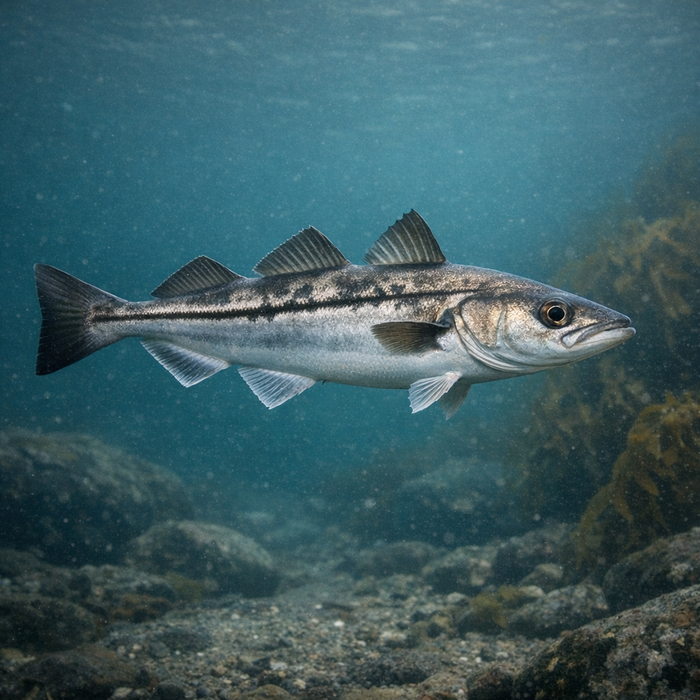
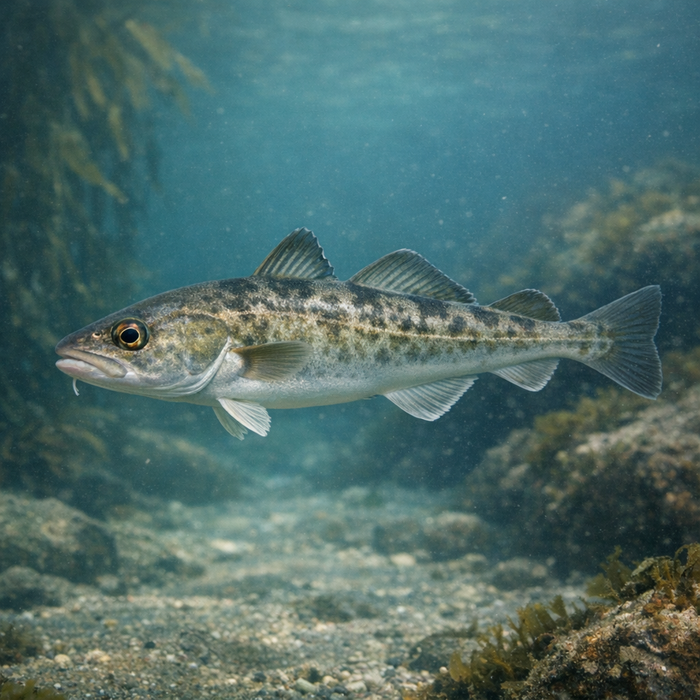
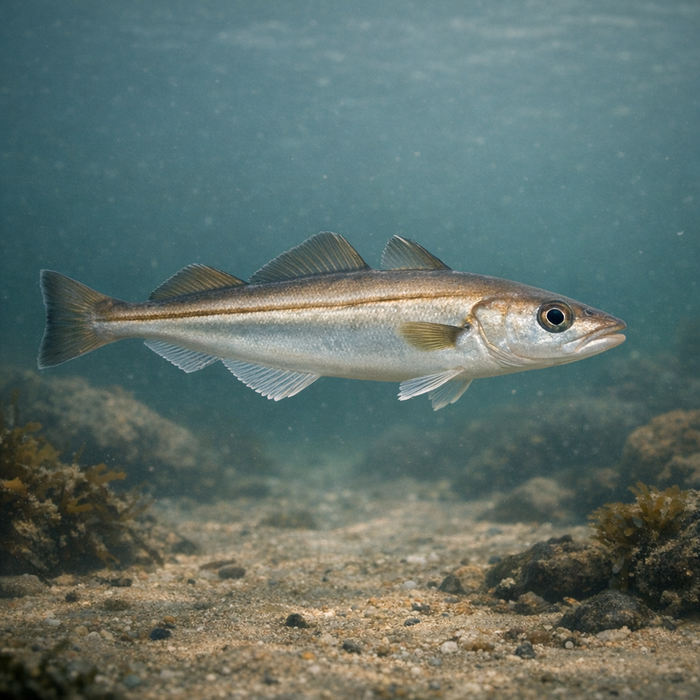
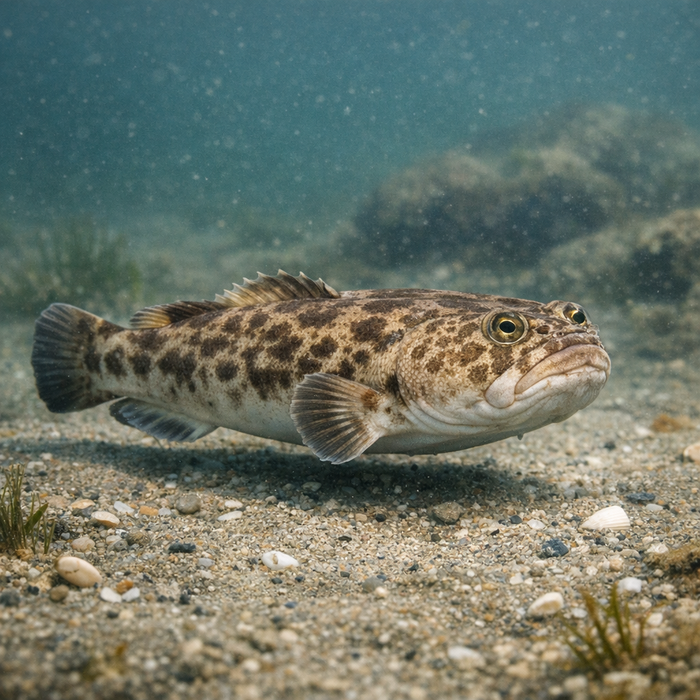
Pacific Cod (Gadus macrocephalus): The North Pacific's hardworking bottom bruiser with a soft spot for jigs and herring.IntroductionIf you like fast action with a side of fish tacos, the Pacific cod is your blue-collar hero. This is the fish that stuffs freezers across Alaska and keeps deckhands busy rinsing slime from rain gear. Pacific cod are not fancy, fickle, or mysterious. They are honest, head-shaking, lunch-bucket predators that do exactly what you expect around the bottom. And for anglers who appreciate consistent bites and clean fillets, that reliability is gold.What Makes the Pacific cod Unique?First, that build. The species name literally means big head, and Pacific cod deliver the look: hefty noggin, stout body, and a whiskery chin barbel that sniffs out dinner along the seafloor. They also pack the classic cod family blueprint of three dorsal fins and two anal fins, a layout that screams "gadid" even on a blurry sonar screen. Finally, they eat like they mean it. Pacific cod punish metal jigs and baited rigs without overthinking things, which is a breath of fresh air in a world of picky fish. If you came for practical Pacific cod facts, start with this one: they're dependable takers.Habitat & Global RangePacific cod habitat is all about cold, productive water. They haunt continental shelves and upper slopes across the North Pacific, from the Bering Sea and Gulf of Alaska to the Sea of Japan and beyond. Depth-wise, think dozens to a few hundred feet, with seasonal shuffles. Winter into spring often brings fish in shallower for spawning, while summer can push them deeper as temperatures and forage shift. Bottom type matters too. Sand, mud, gravel, scattered boulders, and edges where flat meets broken all play. They like room to roam and aren't glued to tight structure the way rockfish are, but drop-offs, humps, and current lines concentrate bait and bites.Behavior & TemperamentPacific cod are cruising, opportunistic predators with a bulldog streak. They work the bottom, crush anything resembling herring, capelin, or squid, and throw heavy, head-first shakes when hooked. Schooling is common, especially around spawning, so it's normal to go from nothing to chaos in one drift. They aren't skittish. Noise, jig thumps, and scent are more like dinner bells than alarms. While they rarely blow up near the surface, they will slide off bottom to meet a fluttering spoon in midwater if the buffet looks right.Ecological ImportanceThis fish is a workhorse cog in the North Pacific machine. Pacific cod convert swarms of small forage into growth for themselves and calories for bigger predators, from halibut to marine mammals. Their sheer biomass makes them central to energy flow on the shelf ecosystems. For humans, they're equally essential: a high-volume, staple whitefish that underpins commercial fleets, local food security, and an awful lot of fish-and-chips baskets. Keep the cod healthy and the entire neighborhood benefits.Conservation & Environmental PressuresOverall, Pacific cod populations are considered stable in many regions, but the species isn't bulletproof. Cold-water timing, shifting prey, and episodic warm spells can shuffle distribution and recruitment. Heavy commercial pressure is a given, so science-based quotas, bycatch controls, and habitat protections matter. The good news is that this fish has a long management history with robust surveys in places like Alaska. The watch-out is complacency. Environmental swings can clobber year classes, and localized declines are real if oversight slacks.The FishyAF TakePacific cod aren't glamorous. Perfect. You don't need glamour, you need bites, and this species delivers. Few fish reward drifts so reliably or stack so neatly in the cooler without drama. If your plan is straightforward bottom fishing that turns into crispy fillets and zero attitude, the Pacific cod is your huckleberry. Call it blue-collar or call it bulletproof, but respect it. Treat the resource right, bleed your catch, and run sharp hooks. For anglers craving practical wins over Instagram flexes, the Pacific cod is exactly the kind of honest fish that keeps you fishing.