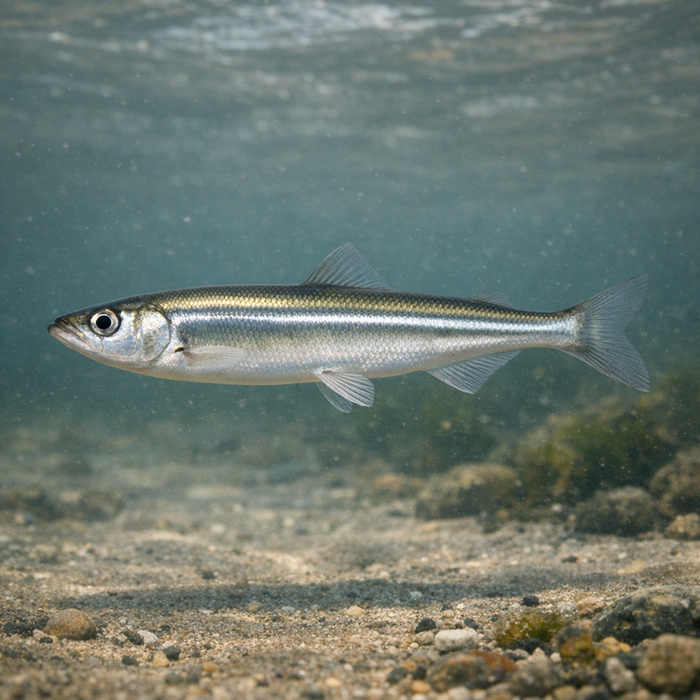
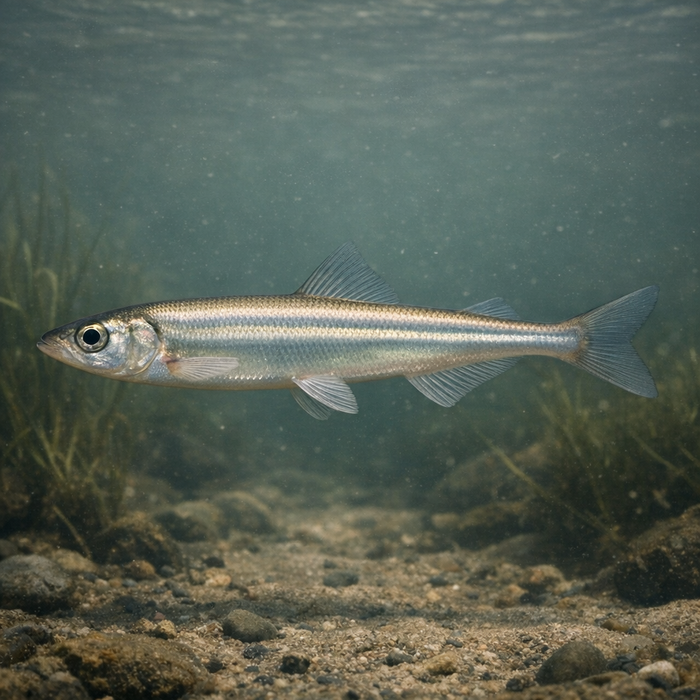
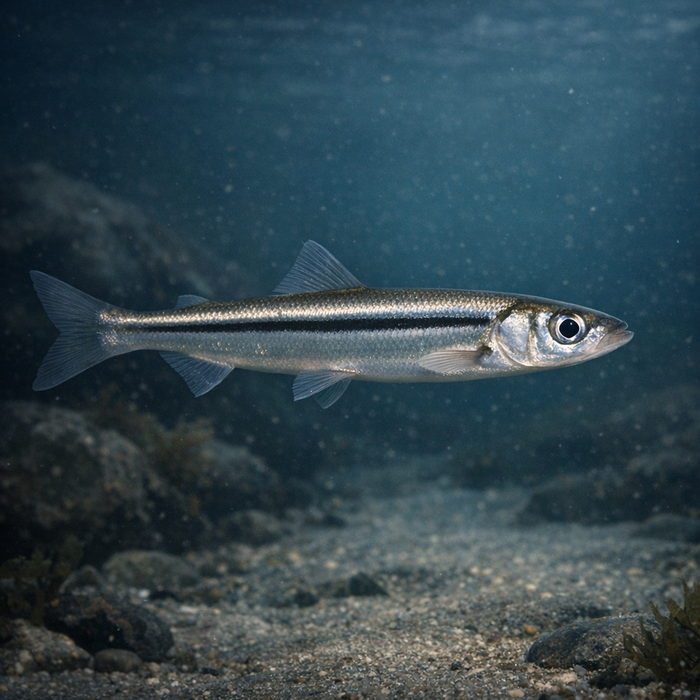
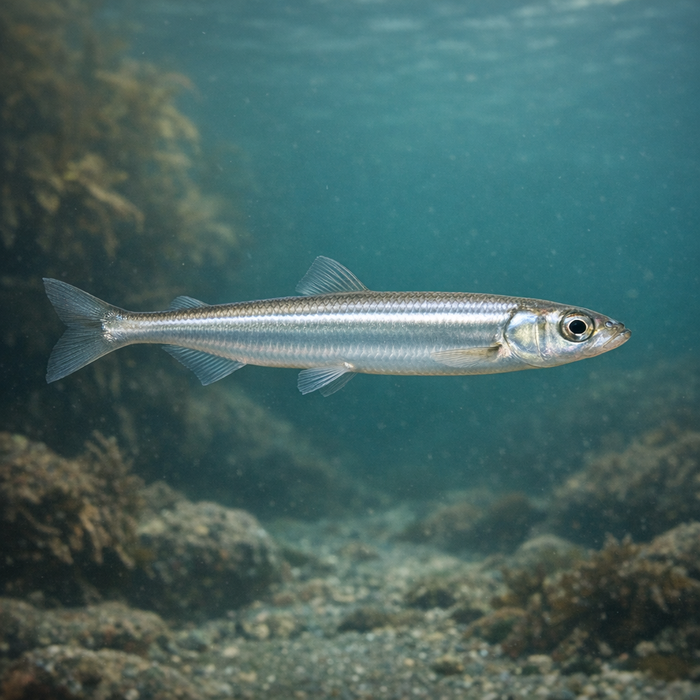
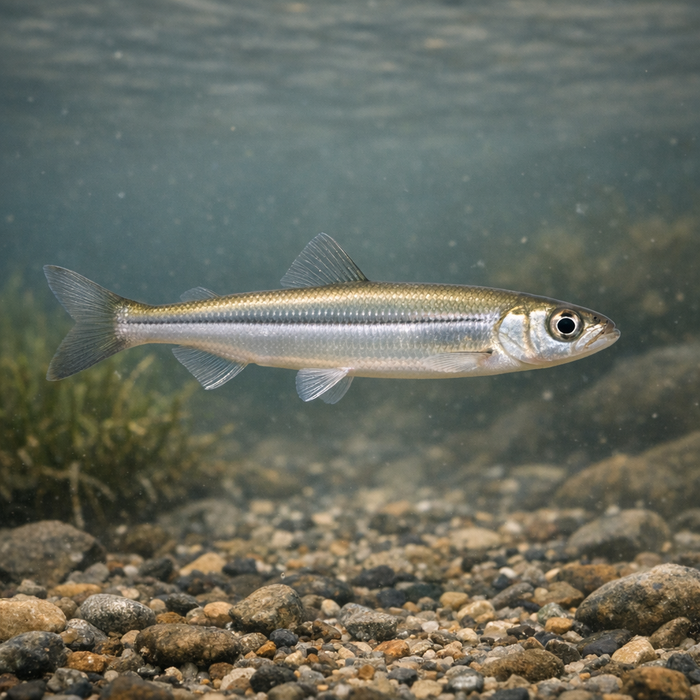
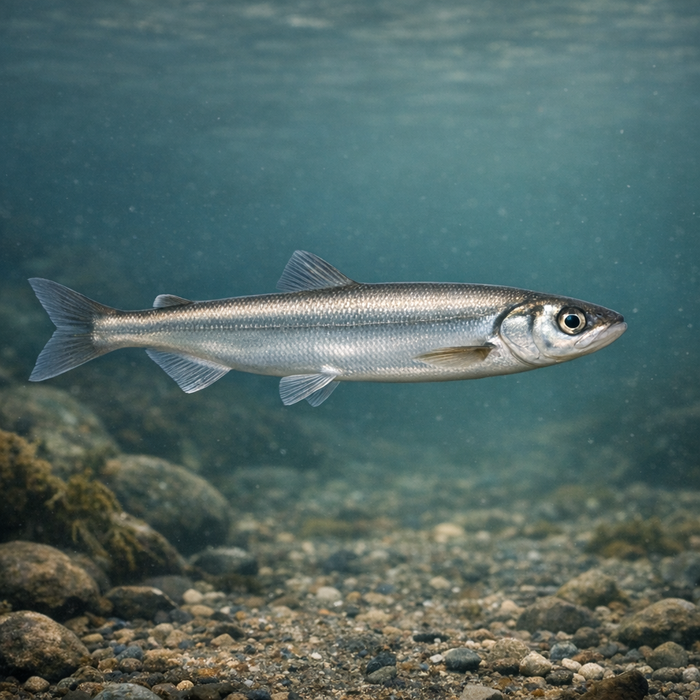
Pacific rainbow smelt (Osmerus dentex): A Bold, Memorable Hook LineIntroductionThe Pacific rainbow smelt is proof that a fish doesn't need shoulders to be addictive. Tiny silver rockets show up in frigid shallows, turn on like a light switch, and leave buckets shining with scales and that unmistakable cucumber scent. They're perfect for beginners, highly seasonal for obsessives, and straight-up delicious for anyone with a skillet.What Makes the Pacific rainbow smelt Unique?First, the smell. Fresh Pacific rainbow smelt carry a crisp cucumber aroma that's oddly pleasant and totally iconic. Second, teeth. The dentex part of Osmerus dentex isn't a joke; this dainty fish has real hardware for nailing plankton, crustaceans, and tiny fishes. Third, they sport an adipose fin and sleek smelt lines that link them to salmonids, even if they play a much smaller game. Put it together and you've got a fast-growing, short-lived, migratory forage fish that still inspires full-on angler devotion.Habitat & Global RangeIf you're digging into Pacific rainbow smelt facts, start with the neighborhood. This species runs the North Pacific rim: far eastern Russia, Hokkaido, the Sea of Okhotsk, the Bering Sea, and Alaska. Most populations are anadromous, fattening in nearshore saltwater before charging into estuaries and lower rivers to spawn. Their sweet spot is cold, oxygen-rich water, often within a tide cycle or two of the surf line. They'll pile into river mouths, surf zones, and under-ice edges where cobble, gravel, or shell grit gives their sticky eggs something to cling to. Outside of the big seasonal rushes, expect them in coastal midwater schools that often slide shallower at night.Behavior & TemperamentThe Pacific rainbow smelt is schooling to the core. When they move, they really move, and the bite turns from dead to stupid-good in minutes. Low-light triggers are huge; dusk, night, and under-ice conditions pull fish up in the column where tiny jigs and morsels of bait get inhaled. Despite the teeth, they aren't brawlers; fight is a quick rattle-and-skitter. But that's fine because this is a numbers game. During spawning runs, males develop rough tubercles and jostle hard in the riffles and wash while females dump adhesive eggs over coarse substrate. Those eggs stick like glue, resisting waves and ice rub until hatching.Ecological ImportancePacific rainbow smelt are pint-sized engines in northern food webs. They convert zooplankton and small invertebrates into high-quality calories for salmon, char, cod, seabirds, and marine mammals. When smelt schools stack up, everything with a mouth shows up. Spawning pulses also deliver nutrient pulses upriver, feeding insects and juvenile fishes. If you like big predators, you quietly owe a thank-you to this shiny little workforce.Conservation & Environmental PressuresOverall, the Pacific rainbow smelt has healthy strongholds, but timing is everything. Warming winters shift ice and freshet patterns, moving the target on run timing and egg survival. Coastal development, armoring, and dredging can smooth out the coarse substrates eggs need. Local net fisheries and bycatch can ding certain runs if managers don't keep an eye on escapement. Because identification can blur among smelts, data quality isn't always rock solid. The good news: short life cycles and high fecundity help them rebound when habitat lines up.The FishyAF TakeHere's the play: watch tides, watch temps, watch local chatter, and be there when the lights flip on. The Pacific rainbow smelt isn't a glory photo; it's a rhythm fish. You get a window, you crush it, and you eat like royalty after. Practical, seasonal, completely habit-forming. Want Pacific rainbow smelt habitat in one line? Cold, moving edges where salt kisses fresh and the bottom has some grit. That's your hunt. And if you open the cooler and catch that cucumber whiff, you did it right.