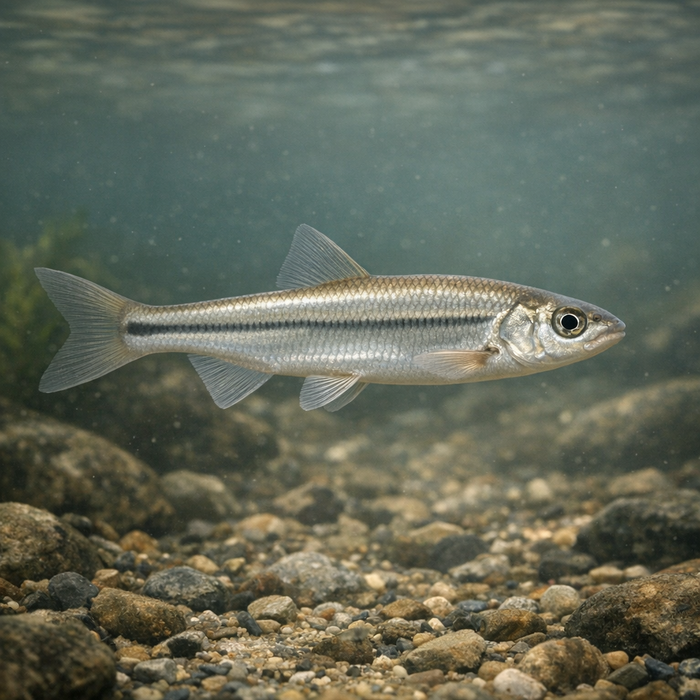
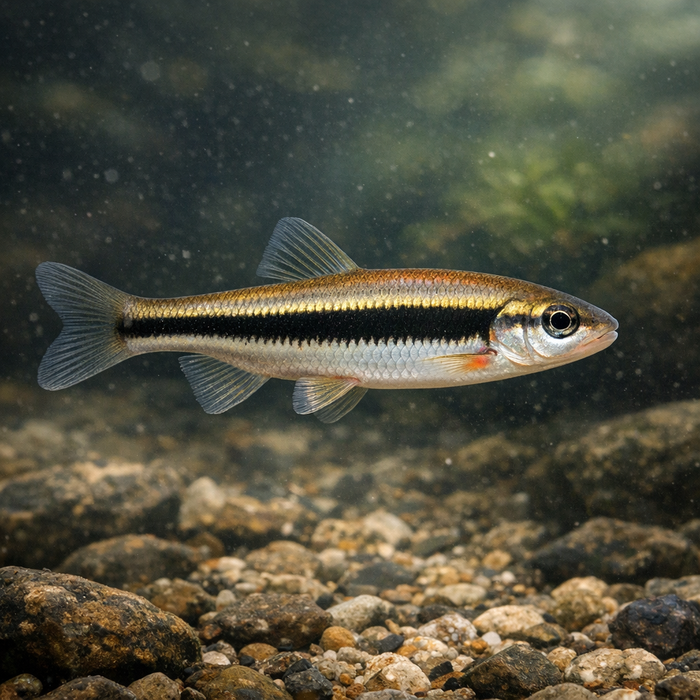
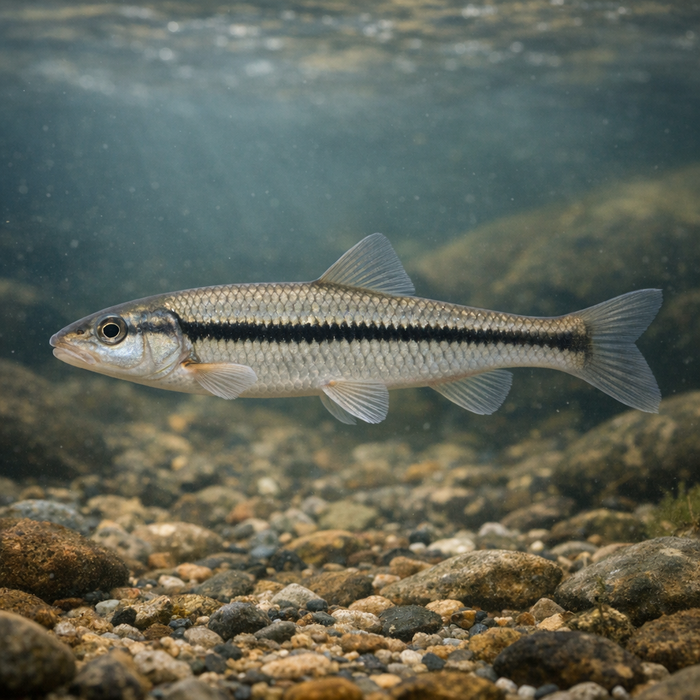
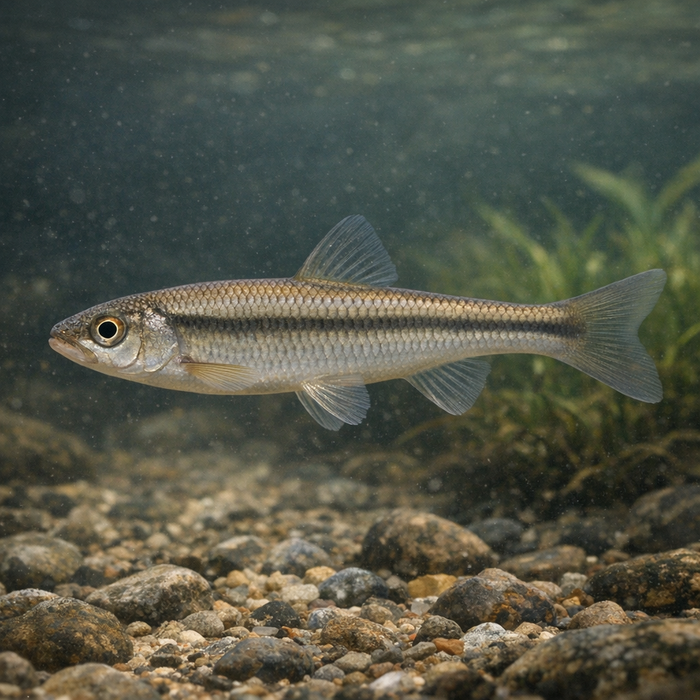
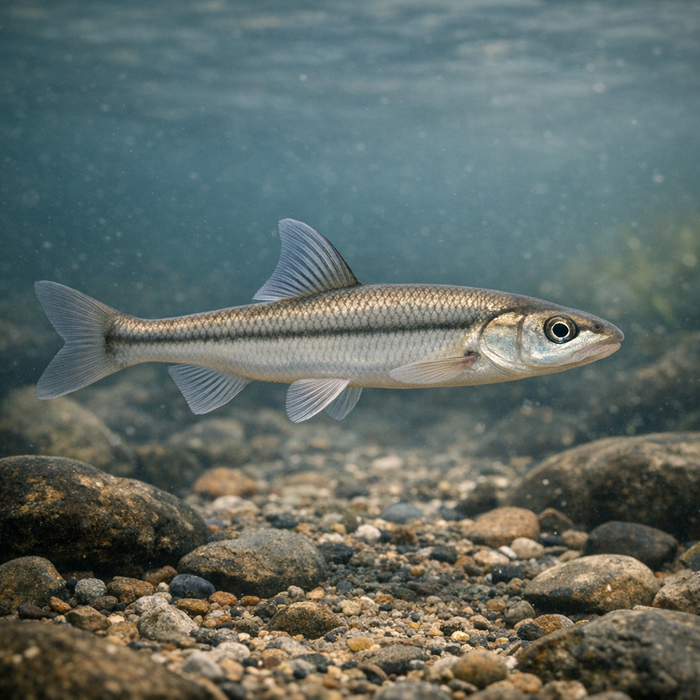
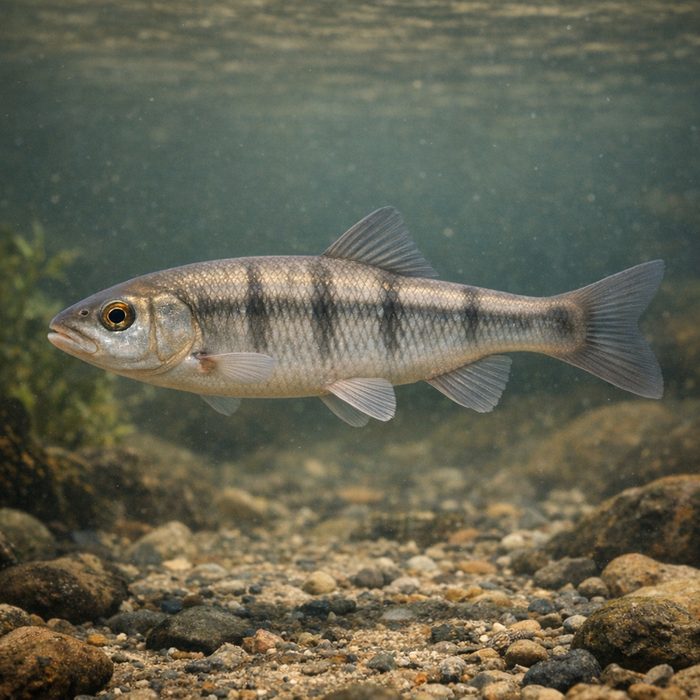
Peppered Chub (Macrhybopsis tetranema): Tiny speedster of sandy torrents with a comeback story bigger than its frame.IntroductionIf you measure a fish by swagger per ounce, the peppered chub punches way above its weight. This Great Plains sprinter rides fast, sandy currents, grows to about the length of your pinky, and still manages to stir up big conservation headlines. Anglers don't chase peppered chub for glory shots. They chase a connection to living rivers, to shifting sandbars, and to a species tough enough to make a life where flow is feast or famine. If you're after Peppered chub facts or just trying to decode Peppered chub habitat, welcome to the grainy, high-velocity world they call home.What Makes the Peppered chub Unique?First, strategy. The peppered chub doesn't glue eggs to rocks or guard nests. It launches semi-buoyant eggs and larvae into the current, letting the river do the hard work. When flows stay natural, those eggs tumble downstream for miles, feeding and growing as they drift. Second, build. The fish is stripped down for speed: streamlined head, subterminal mouth, and the right body plan to hold in swift water without wasting energy. Third, style. That salt-and-pepper speckling gives the species its name and a surprisingly bold look for such a small fish.Habitat & Global RangeThe peppered chub is a river specialist from the Great Plains portions of the Arkansas River basin, historically including the Arkansas, Canadian, Cimarron, and affiliated sandy tributaries. Think wide, shallow channels, buff-colored water, mid-channel bars, and steady current. Dams, diversions, and siltation sliced that habitat into fragments, so today you're looking at patchy strongholds rather than a continuous range. When anglers talk Peppered chub habitat, they mean sandy runs with enough push to keep fine sediments moving, typically knee-deep or less, and often smack in the middle of the channel rather than along the banks.Behavior & TemperamentFor a fish that could hide in a taco sauce cup, the peppered chub is boldly pelagic for its size. It schools, cruises midwater to near-bottom in the fastest lanes, and feeds on tiny drifting invertebrates it intercepts like a vacuum on a treadmill. Spawning timing keys off storm-driven flow pulses more than calendar dates. That means a prime window can arrive with the first big thunderhead, then fade if the river falls out. The fish won't smash lures like a bass; takes are subtle and quick. Blink and you'll miss the tap.Ecological ImportanceThe peppered chub is a little quality-control inspector for sandy rivers. Its life cycle depends entirely on flow, sediment, and connectivity. When flows are choked by dams or sucked dry, eggs drop out of suspension and die. When fine silt blankets the channel, insect production plummets and the food conveyor slows. Keep these minnows thriving and you've usually kept the rest of a sandy river's invertebrates, shorebirds, and other fish in decent shape too. Lose them and the warning lights on the river's dashboard are likely already blinking.Conservation & Environmental PressuresThis species has been hammered by flow alteration, drought, reservoir fragmentation, and channel stabilization that steals the river's ability to "move." Add groundwater pumping and prolonged heat, and you've got a rough deck for a drift-dependent spawner. Populations that once linked like a daisy chain now sit isolated. Conservation teams are fighting back with flow management, barrier assessments, and targeted reintroductions. Success hinges on letting the river flex: more natural pulses, more connected habitat, and less sand entombed under slackwater.The FishyAF TakeIf you're an angler who loves rough fish and river nuance, the peppered chub is your kind of weird. It's not a grip-and-grin species; it's a field note, a micro victory, a reminder that the whole point of a river is motion. Anyone tossing ultra-tiny baits into swift runs knows the rush of coaxing life from water that looks empty at first glance. Keep it legal, keep it gentle, and keep rooting for the flows. The smallest fish sometimes tell the biggest truth about a fishery: without pulse, there's no future. The peppered chub just says it louder, one drift at a time.