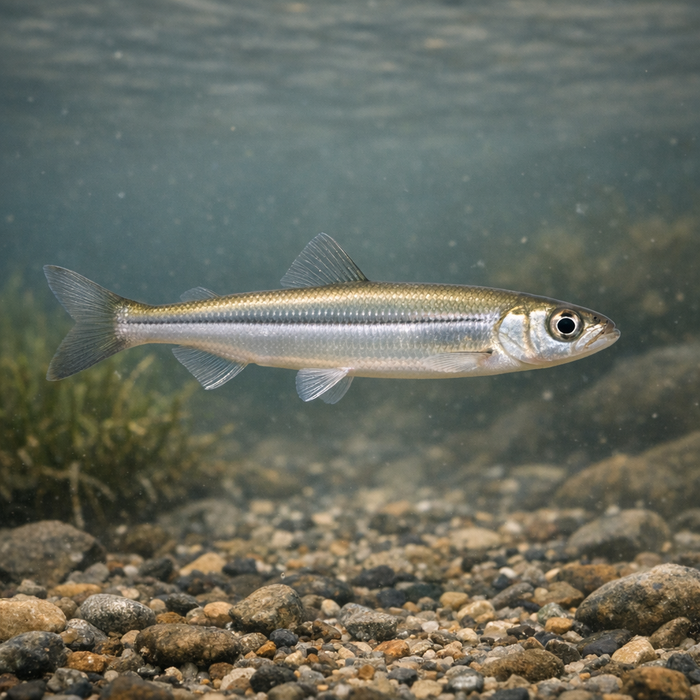
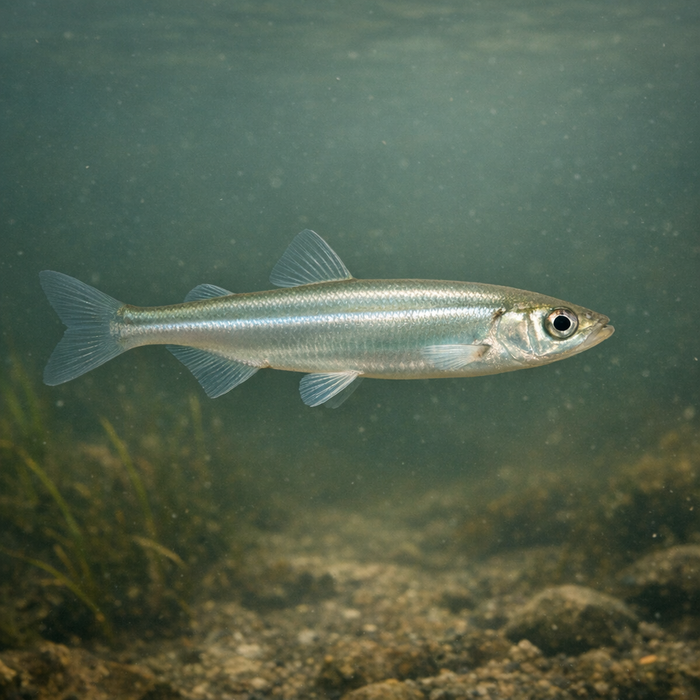
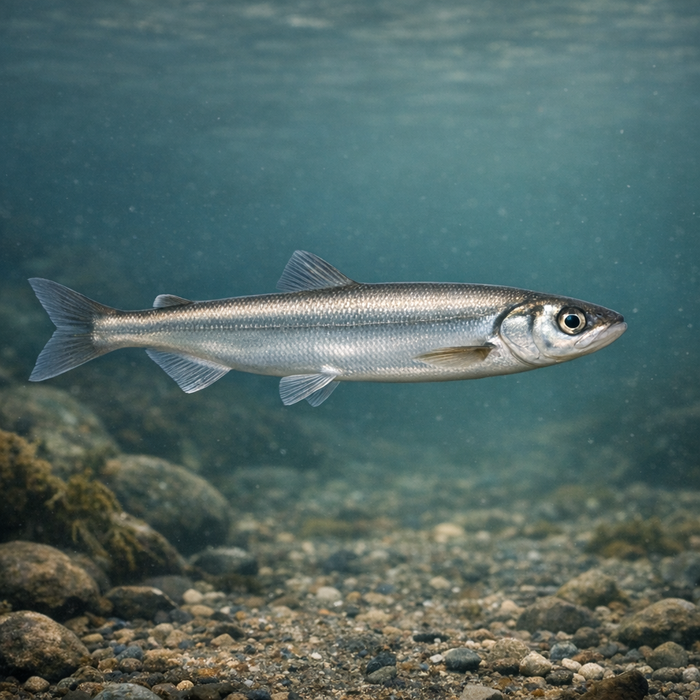
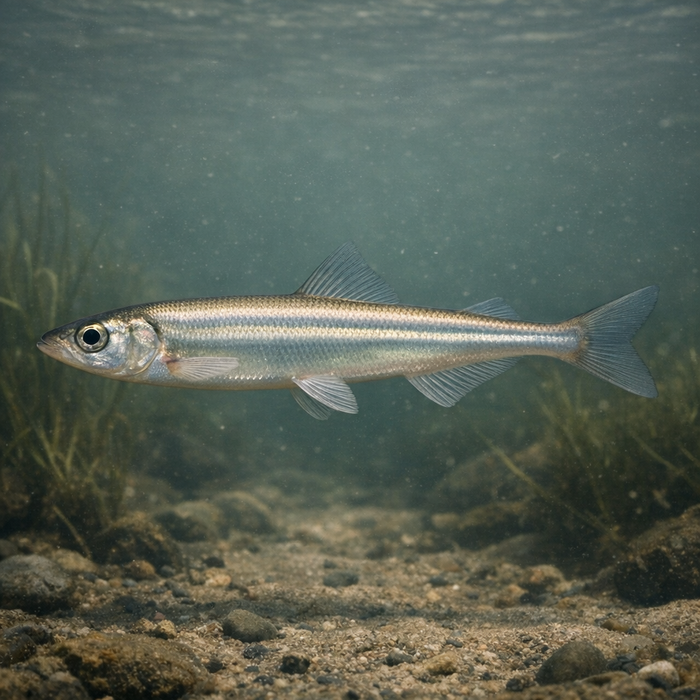
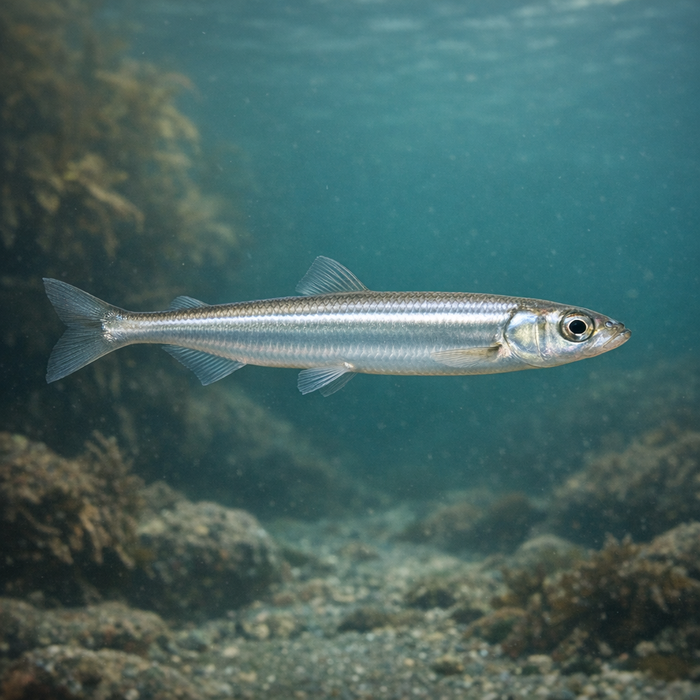
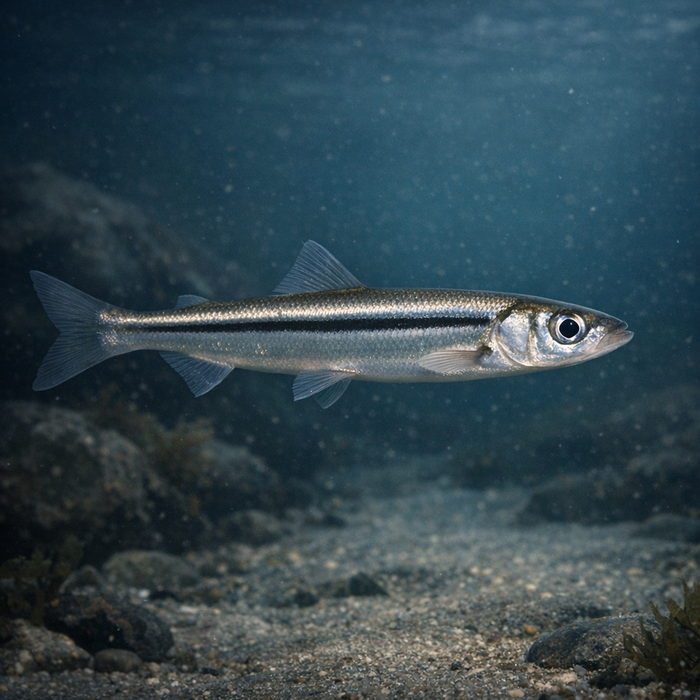
Pigmy smelt (Osmerus spectrum): Tiny Silver Torpedoes With Big School EnergyIntroductionThe Pigmy smelt is the fish equivalent of a pocket rocket: small frame, high output, and absolutely mobbed up in schools. Blink and they're up under the ice. Blink again and they've vanished into midwater like a cloud of glitter. If you're here for Pigmy smelt facts or trying to decode Pigmy smelt habitat, you're after a species that rewards timing, finesse, and an appreciation for life at the micro-scale.What Makes the Pigmy smelt Unique?First, they punch way above their weight in scent and shine. Handle one and you'll catch that trademark cucumber aroma, the smelt family's calling card, somehow concentrated in this downsized package. Second, Pigmy smelt live fast. Most are two- or three-year sprinters that pour energy into a brief, explosive spawn, then get back to the business of eating and evading everything larger than a Sharpie. Third, they're genuinely built like little salmonids, complete with an adipose fin and silver sides that shed scales instantly, a slick defense that also explains why your gloves look like they were dusted with tinsel.Habitat & Global RangePigmy smelt favor cold, clear water with clean inflows and consistent oxygen. Think deep lakes with honest winter, feeder streams that still run in March, and bays that cool quickly in fall. In many waters they're semi-anchored to midwater zones, moving vertically rather than hugging shoreline structure. When conditions line up, they surge shallow at night or beneath safe ice to graze zooplankton and micro-invertebrates. During spawn windows they slide into inlets and wave-washed shallows where eggs can glue to gravel and vegetation. The distribution is patchy, often regional, and can hinge on the presence of robust coldwater lakes. Wherever they occur, the Pigmy smelt builds the buffet line for salmonids, lake trout, and any predator that knows opportunity when it flickers.Behavior & TemperamentThe Pigmy smelt is not a brawler; it's a tactician. Schools can be unbelievably tight, operating like a single organism that lifts at dusk, feeds in pulses, and sinks again when light or pressure changes. On sonar they appear as drifting smoke columns or stacked plates midwater. Their eyes are proportionally huge, primed for low light, and their response to noise, vibration, and shadows is immediate. Miss your window and the screen clears like someone flipped a switch. They aren't picky in the culinary sense, but presentation matters: tiny offerings that match the size of plankton or pin minnows get inhaled; heavy, clumsy baits get snubbed.Ecological ImportanceIf the lake is a theater, the Pigmy smelt is the popcorn machine, fueling the entire show. They convert plankton into protein packets that predators crave, cycling fast enough that a down year can echo through the food web. Their adhesive eggs spread risk across substrates and microhabitats. Young-of-year fish pack dense protein and oil, a literal growth engine for trout, salmon, burbot, and everything else stalking the pelagic lanes. Lose Pigmy smelt and you feel it in slower growth, skinnier predators, and shifting competition among forage species.Conservation & Environmental PressuresCold water and oxygen are the twin pillars here. Warm, low-oxygen summers, silt-choked inlets, or nutrient spikes that trigger algae crashes can kneecap Pigmy smelt quickly. Overzealous bait harvests don't help, and neither do shoreline alterations that erase gravel and vegetation critical for sticky eggs. Because they're small and often misidentified, their status can be fuzzy. Local agencies may protect them indirectly by managing predator quotas or closing certain tributaries during peak runs. Anglers carry a big lever too: handle gently, minimize air time, and respect whatever the local rulebook says about smelt harvest.The FishyAF TakeThe Pigmy smelt isn't about brag-board photos; it's about timing, finesse, and reading a lake like a lie detector. Show up with ultralight gear, a plan for low light, and the humility to fish micro. When the school lifts, it's like flipping to the bonus round. And when they don't? Well, welcome to the graduate course in patience. Among all the shimmer and cucumber scent, the Pigmy smelt teaches a blunt lesson: master the small stuff and the big fish upstream of them get easier, too. That's a trade every serious angler should be happy to make.