Queenfish (Seriphus politus): Small Fish, Big After-Dark Agenda
Queenfish do not need to empty a spool to earn their place on a pier. These slim, silver coastal fish turn a light rod, a few tiny hooks, and a patch of sandy-bottom water into an accessible saltwater session. Most anglers meet them at 6–8 inches, which makes them approachable without making them biologically boring. The mistake is assuming a small fish must have a small story.
This is the West Coast croaker, not one of the larger tropical fishes sharing the same common name. Queenfish belong to Sciaenidae, the drum and croaker family. Around Southern California piers, they are also casually called herring, despite not being true herrings. Get the identity right before borrowing tackle advice or record claims from another continent. Those shortcuts can get impressively wrong.
What Makes the Queenfish Unique?
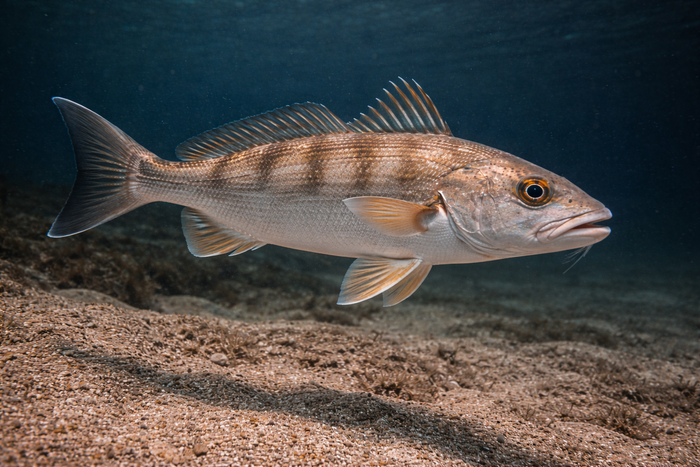
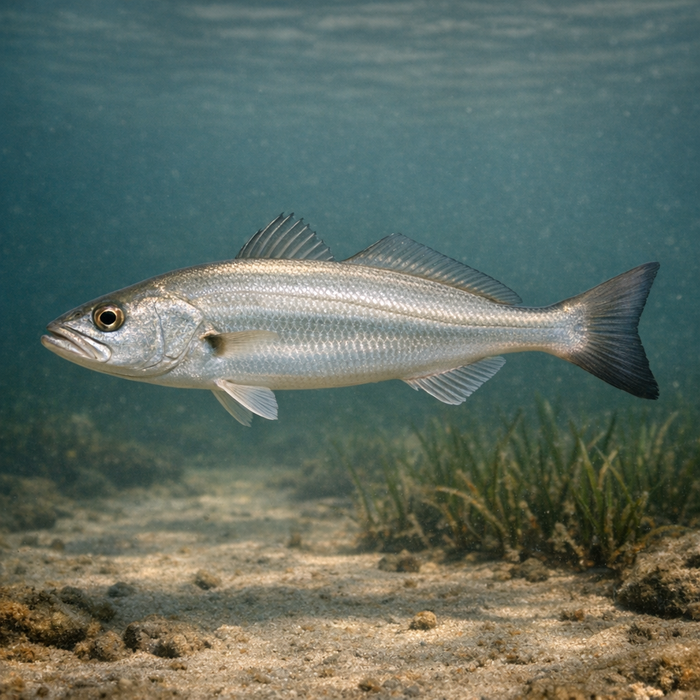
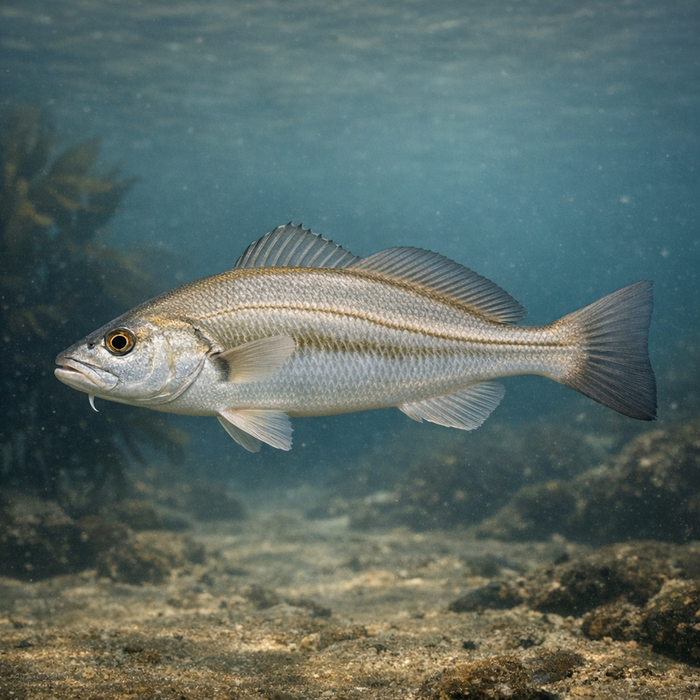
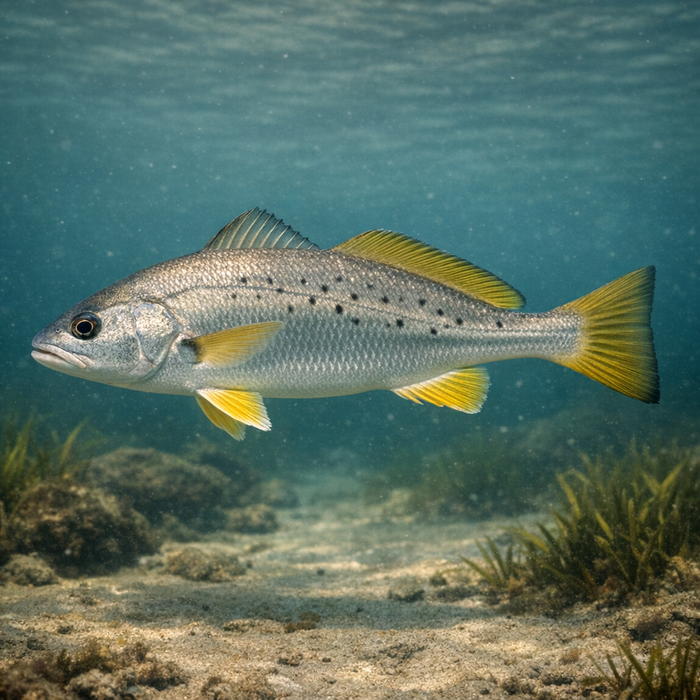
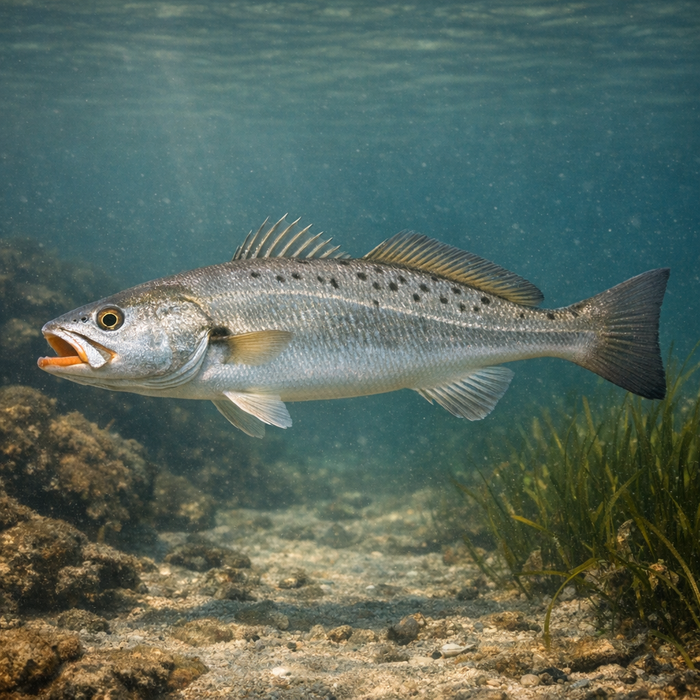
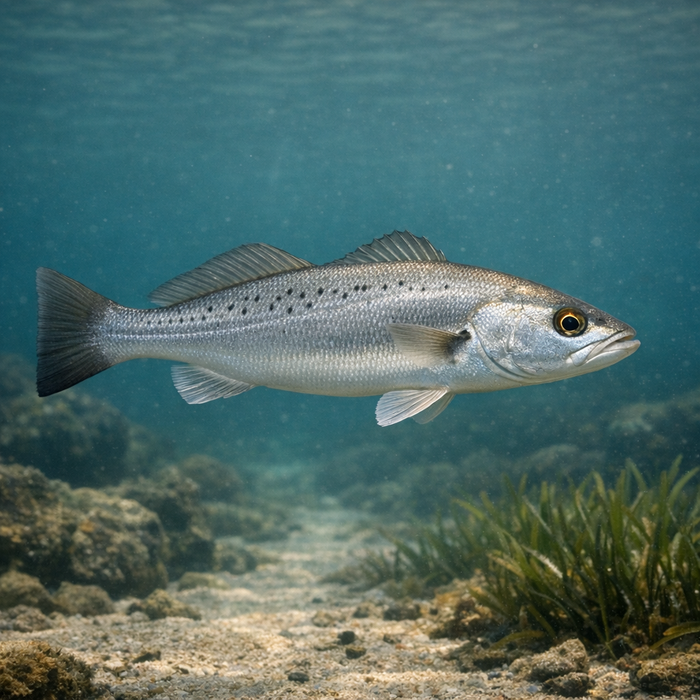
Start with the silhouette. An elongated, compressed body and a conspicuous gap between the two dorsal fins distinguish this species from its chunkier coastal relatives. The upper body is blue-gray to tan, the belly bright silver, and dark lines follow the scale rows along the sides. Its angled mouth has a projecting lower jaw, but no canine teeth. That is a useful identification package, not just another anonymous silver fish.
The bigger surprise is its reproductive schedule. Females release repeated batches of drifting eggs rather than putting the entire season into one spawning event. Research near San Diego found roughly weekly spawning, with larger females starting earlier and continuing longer than smaller first-time spawners. These are among the better Queenfish facts: body size changes not only egg production, but how much of the breeding season a female participates in.
Habitat & Global Range
Queenfish habitat centers on sandy and muddy coastal bottoms, including bays, tidal lagoons, and the surf zone. Southern California is the practical heartland for anglers, with the broader eastern Pacific distribution extending from Oregon south through Baja California into the southwestern Gulf of California. Northern occurrences do not mean every West Coast pier offers equally dependable fishing. Local abundance matters more than a broad range map.
The species is not confined to the shallow strip beneath a pier. Published accounts include depths approaching 181 meters, although familiar recreational encounters happen much closer to shore. Adults can move between nearshore and offshore water, while younger fish have been observed remaining closer to the coast at night. Think of a pier as an interception point within a changing coastal neighborhood, not a permanent address.
Behavior & Temperament
During daylight, Queenfish can assemble in dense, relatively inactive schools. After sunset, those aggregations disperse and fish move into feeding areas, taking prey in the water column. Research supports primarily nocturnal feeding, including movements away from daytime gathering sites. That does not make daytime fishing pointless; it explains why locating a concentrated school and finding actively feeding fish are different problems.
For anglers, the useful lesson is to search vertically. Start near the bottom, then lift gradually through the water column instead of repeating the same unsuccessful drop. A light Sabiki rig and gentle movement suit this beginner-friendly fishery. Tiny anchovy or squid strips provide another option. Scale everything to the fish in front of you; a small target does not require a complicated solution or a sinker that belongs on a ship.
Ecological Importance
Queenfish occupy both sides of the dinner arrangement. They consume small crustaceans and other animal prey, while larger coastal predators can eat them. Nocturnal feeding links them to creatures entering the water column after dark, including mysid shrimps and swimming worms. Their ecological job is less about glamour and more about moving energy through an active nearshore food web.
There is a darker twist: researchers have recovered juvenile members of this species from the stomachs of larger individuals. Cannibalism is documented, not a dockside exaggeration. That detail makes the harmless-looking school beneath your feet a little less wholesome. It also reminds anglers that predator and prey are roles, not permanent labels attached to a fish.
Conservation & Environmental Pressures
The current conservation status is Least Concern, but that should never translate into indifference. Historical Southern California monitoring documented declines in juvenile, adult, and larval abundance across studied locations, with adult and juvenile trends associated with changes in nearshore plankton biomass. Those historical findings are not a current population census, and they do not establish that every local school is declining today. They show why abundance deserves monitoring even for familiar pier fish.
Coastal food-web changes and exposure to cooling-water intakes are relevant concerns. Anglers can keep their contribution straightforward: avoid unnecessary harvest, release unwanted fish promptly, and remove discarded line. If keeping fish for food, check location-specific consumption advice rather than assuming that a small coastal fish is automatically safe to eat.
The FishyAF Take
Queenfish are a good antidote to tackle-shop inflation and trophy-only thinking. Bring a light rod, pay attention, and let the session be interesting without demanding a personal best. There is nothing second-rate about learning where a school holds or watching a quiet patch of water become productive.
Respect the small stuff. The fish beneath the pier has an after-dark feeding schedule, repeated spawning runs, and occasionally relatives on the menu. Your heavy offshore outfit is not the impressive part of this conversation.