Red Sea Bream (Pagrus major): Blue Spots, Crushing Teeth, and No Respect for Light Drag
Red Sea Bream looks dressed for a celebration, right up until it starts taking line. Pink-red flanks, electric-blue spots, and a deep body give this East Asian saltwater predator unmistakable presence. In Japan, it is known as madai and carries serious cultural prestige, appearing at weddings and other celebrations. Anglers appreciate a different introduction: a loaded rod and a fish that needs lifting away from the bottom. Attractive does not mean cooperative.
This is a member of the porgy family, Sparidae, rather than a tropical snapper wearing another name. It belongs squarely in the reef-and-bottom fishing conversation, with bait fishing, bottom fishing, and jigging all earning their place. The appeal is unusually complete: distinctive looks, rewarding fishing, and a reputation at the table that matches its reputation on the water.
What Makes the Red Sea Bream Unique?
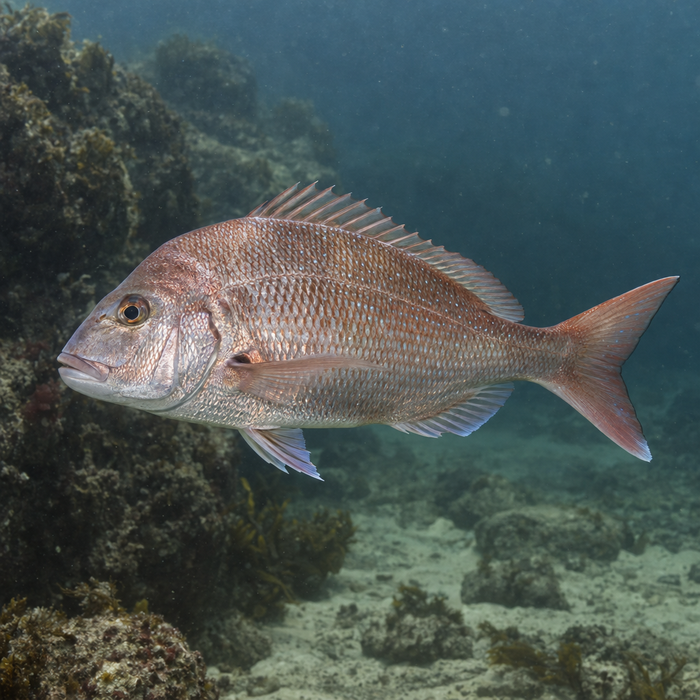
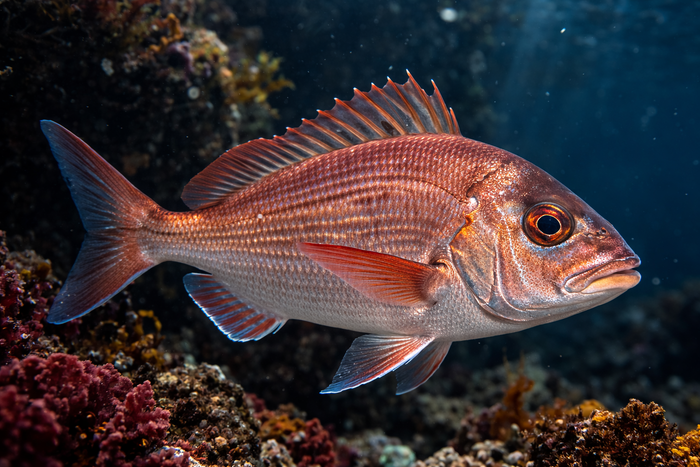
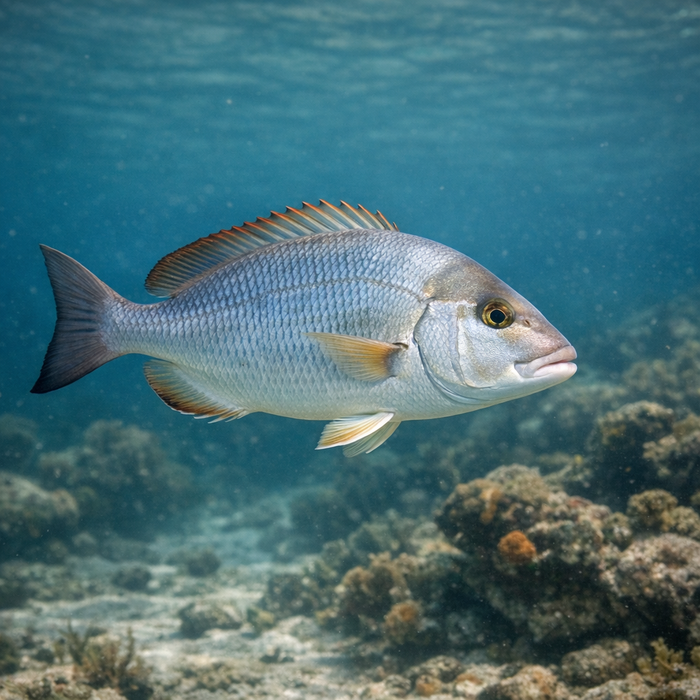
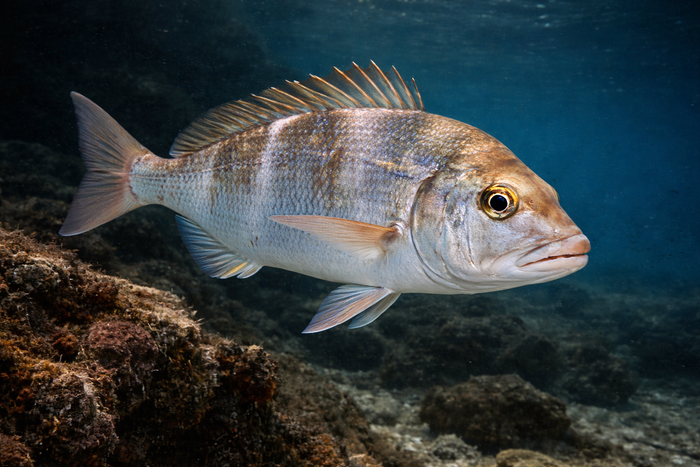
Start with the mouth. Red Sea Bream combines pointed canine teeth with rows of molar-like crushing teeth, equipment suited to grabbing prey and breaking hard shells. Its pinkish body is scattered with bright blue spots, while the rear edge of the forked tail is dark. Those details matter for identification; not every reddish porgy is this species. The dental arrangement also explains why a small mouth should never be mistaken for a harmless one.
Then there is the learning ability. Experiments have trained juveniles to associate underwater sound with feeding, and separate nursery studies found that early experience could shape their preference for sand or artificial seaweed. These are controlled research findings, not proof that your lure needs a soundtrack. Still, among Red Sea Bream facts, the ability to learn environmental cues deserves more attention than another photograph of a pink fish.
Habitat & Global Range
The species' native stronghold is the northwestern Pacific, including Japan, Korea, and Chinese waters. Red Sea Bream habitat includes coastal rocky reefs and surrounding sand or gravel, with records extending across roughly 10–200 meters of depth. That is a broad operating envelope, not a promise that every reef holds fish. Reef edges and nearby softer ground belong in the same search pattern, rather than being treated as completely separate fisheries.
Japan offers established angling destinations including Tokyo Bay, Sagami Bay, Akashi Strait, Kagoshima Bay, and Kashimanada. Seasonal movement matters within those waters: spring spawning approaches can bring fish shallower, while autumn cooling can accompany movement toward deeper ground. Geography gives you the destination; current conditions determine the useful depth. A famous bay name is a starting point, not a substitute for understanding where fish are holding that week.
Behavior & Temperament
Red Sea Bream is a versatile predator, not a shrimp-only specialist. Research in the Korea Strait documented a changing menu with fish size and season, including crabs, cephalopods, and other bottom-associated animals. Larger specimens consumed more substantial prey. That flexibility helps explain why both natural bait and artificial presentations can work, although the effectiveness of a particular offering still depends on the fishing situation.
Its bites are not always as dramatic as its appearance. A tai-rubber jig may receive tentative taps before the rod properly loads. Continuing a steady retrieve can be more productive than reacting to every touch with a violent strike. Once hooked, fish can run near abrasive bottom structure, making controlled pressure important. This is an intermediate challenge because the basic presentation is approachable, but consistency demands attention rather than enthusiastic rod waving.
Ecological Importance
As a predator of bottom-associated animals, Red Sea Bream connects reef and seabed food resources to a larger coastal food web. Its feeding is not fixed throughout life: changes in prey size and composition mean juveniles and larger fish use those resources differently. Protecting a productive fishery therefore involves more than protecting the exact rock where somebody caught a trophy.
Early life adds another layer. Eggs and larvae are planktonic, while juvenile studies show that nursery experience can influence habitat choice. Hatchery releases have also been used to support Japanese fisheries. Those releases demonstrate the species' economic importance, but putting more young fish into the sea does not remove the need for suitable habitat and adequate food. Stocking is a management tool, not an ecological reset button.
Conservation & Environmental Pressures
The species is listed as Least Concern, consistent with its broad distribution. That assessment does not mean every local stock is thriving. Research from Hyuga-nada documented historical declines in catches and changes in body condition and spawning timing, with warming coastal waters considered a possible contributing factor. Local fisheries can experience trouble without the entire species approaching extinction.
For anglers, the useful response is practical: follow local rules, retain fish deliberately, and treat nursery habitat as part of the fishery. Pay attention to local information rather than assuming a global conservation label answers every regional question. A celebrated food fish still benefits from restraint, especially when fishing concentrates on predictable seasonal movements.
The FishyAF Take
Red Sea Bream is proof that finesse does not have to mean fragile entertainment. The satisfying part is the contrast: a restrained presentation, a few ambiguous taps, then a proper bend in the rod. We like a fish that rewards keeping your composure more than showing off your tackle. Fish the bottom intelligently, trust the retrieve, and save the victory speech until the net closes. Celebration fish or not, it owes you nothing.