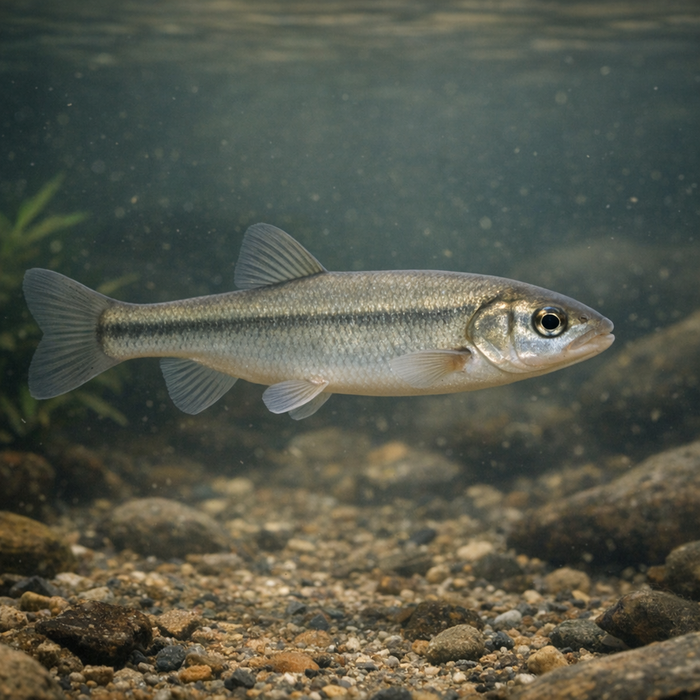
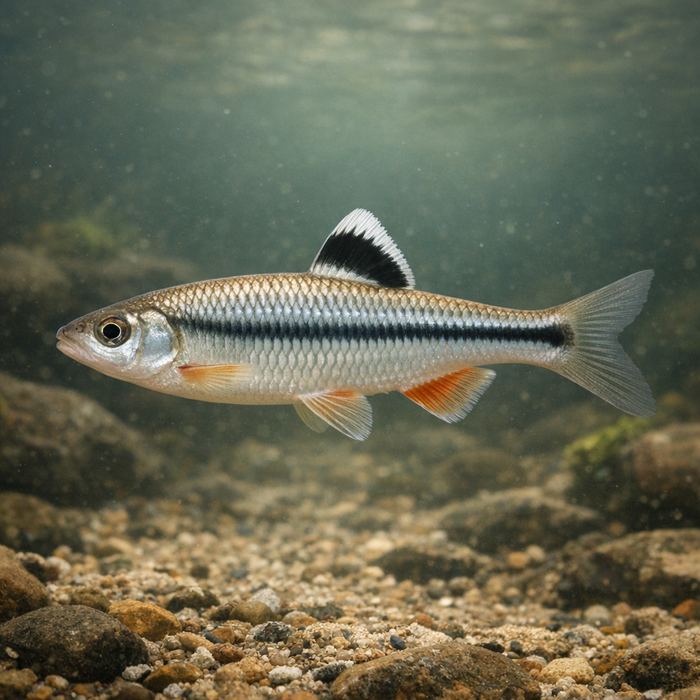
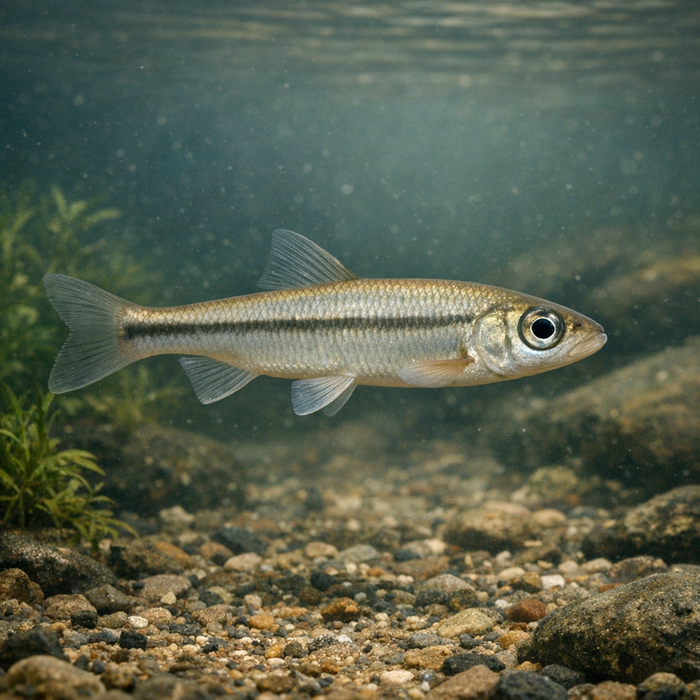
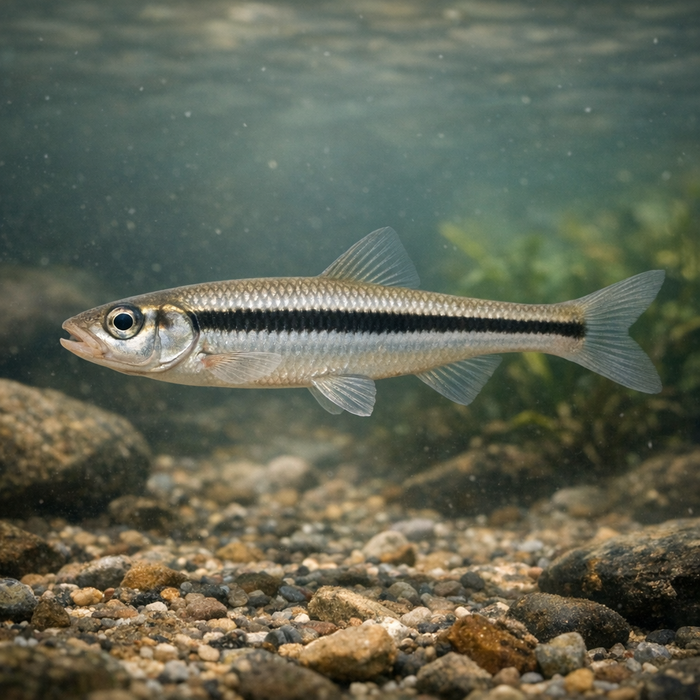
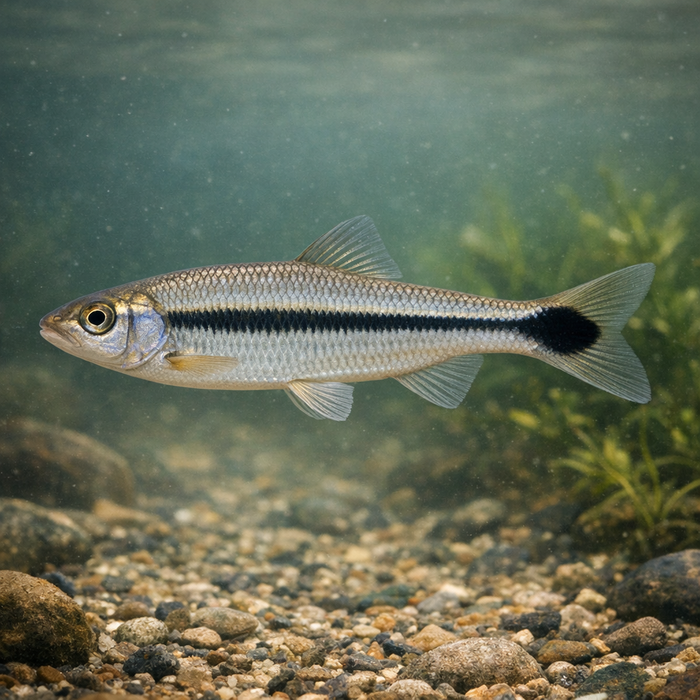
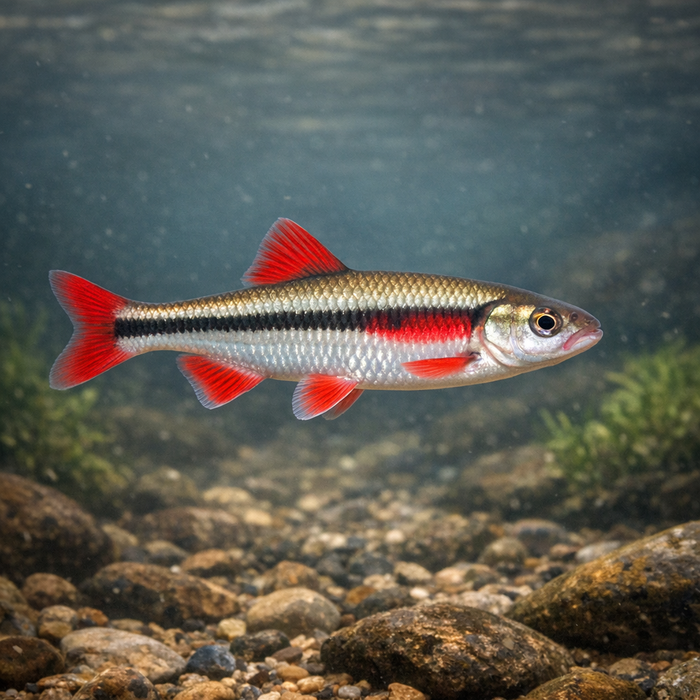
Red Shiner (Cyprinella lutrensis): The little minnow with a neon paint job and zero quit.IntroductionMeet the underdog that never got the memo about staying subtle. The red shiner is tiny, scrappy, and wildly adaptable. It thrives in water that would make trout write angry letters, and when it's in the mood, it lights up like a pocket-sized flare. Anglers chasing micros, bait collectors, and curious creek-walkers all cross paths with this species, usually fast and often in ridiculous numbers. You want Red shiner facts? Pull up a rock.What Makes the Red shiner Unique?Color and swagger. During spawning season, males turn lipstick red on the body and fins, then throw headbutty courtship dances using rough breeding tubercles. That's not dainty; that's full send. They also show off an absurd tolerance for heat, silt, and low clarity. While many minnows sulk when conditions go south, the red shiner keeps feeding and schooling. Its flexibility has helped it spread well beyond native drainages, hitchhiking via bait buckets and thriving in waters others simply endure.Habitat & Global RangeWhen you picture Red shiner habitat, think warm, shallow creeks, lowland rivers, sloughs, and pond margins with just enough current to shuffle leaves. Riffles, runs, and pool edges are prime, especially where submerged brush or chunk rock breaks flow. They crowd up in inches to a few feet of water, using seams and eddies like escalators for drifting chow. Originally a Great Plains and central U.S. fish, it's now common in many additional basins thanks to human help. Reservoir inlets, irrigation ditches, and urban creeks are all fair game, which is why searching "where to catch red shiner" usually yields more options than you expected.Behavior & TemperamentSchooling is the red shiner's superpower. Dozens flip to hundreds fast, and when food drifts by, it's a feed-the-geese free-for-all. They strike micro flies and tiny baits with startling confidence, often right at the surface. Spawning runs crank from late spring into summer, with repeat batches of adhesive eggs laid in cracks and crevices. Males brawl for position, flash their reds, then get back to eating. They don't stage marathon fights once hooked, but they absolutely drill small offerings and keep the action steady.Ecological ImportanceThe red shiner is a conveyor belt between the bug world and everything bigger. Sunfish, small bass, and a parade of predators treat them like moving energy bars. That makes this species a bellwether for shallow-water productivity. In places it's been introduced, its success can crowd out more sensitive native minnows, nudging food webs in new directions. Love it or worry about it, the fish is influential far beyond its length.Conservation & Environmental PressuresGlobally it's doing fine, scored as Least Concern, but context matters. In its historical range, channelization, flashy stormwater, and drought-whiplash can pinch habitat. Elsewhere, its toughness lets it outcompete locals, which earns it a reputation as an aquatic party crasher. Regulations often focus on bait transport and waterway-to-waterway movement. If you handle red shiners, know the rules where you stand and keep your buckets honest.The FishyAF TakeThe red shiner is proof you don't need big to be bold. It's flashy, fearless, and everywhere you thought fishing was too "meh" to try. Micro anglers love it because you can turn a five-minute creek stop into a pile of checkmarks and smiles. If you're here for Red shiner habitat intel, the playbook is simple: shallow current, warm water, and any little break that collects drifting snacks. It's a starter fish, a teaching fish, and a surprisingly photogenic fish. Catch one, and you'll understand why this tiny unit punches way above its weight.