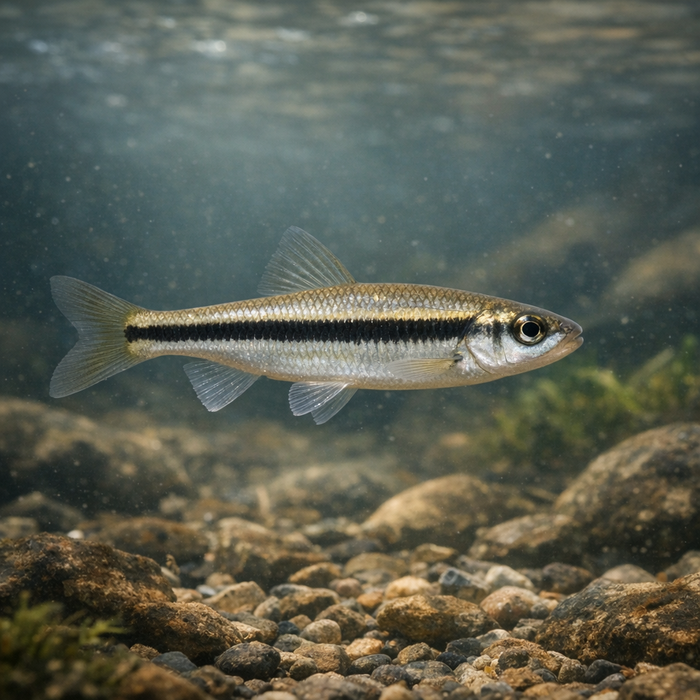
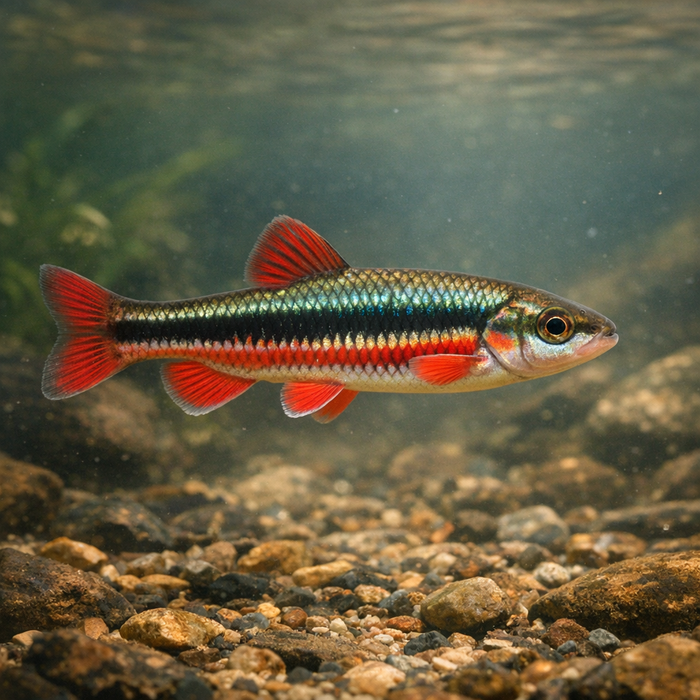
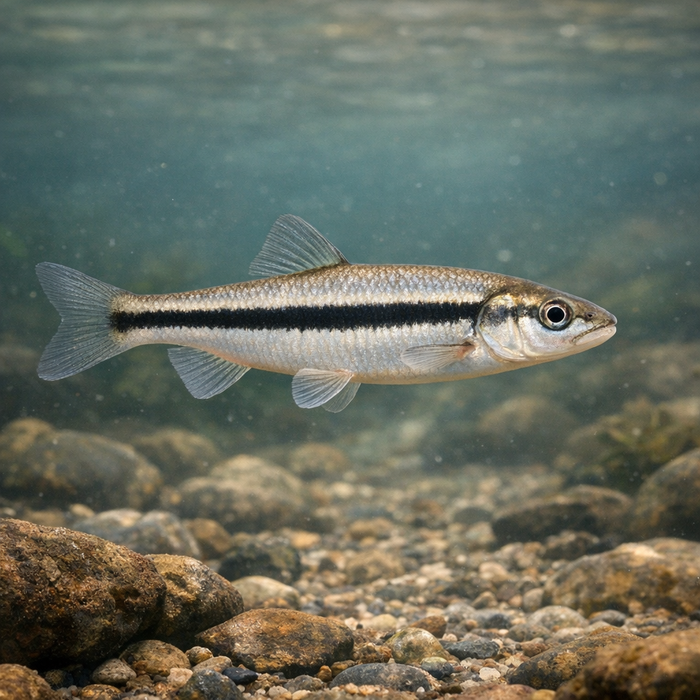
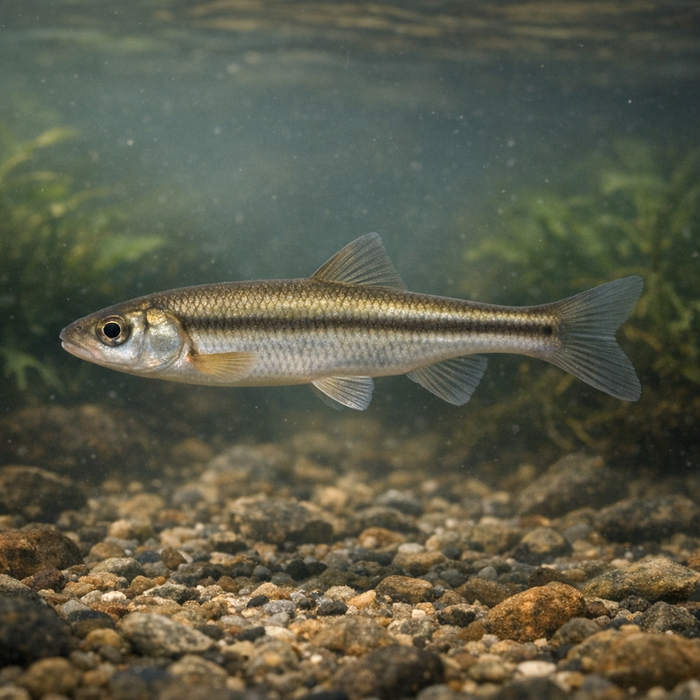
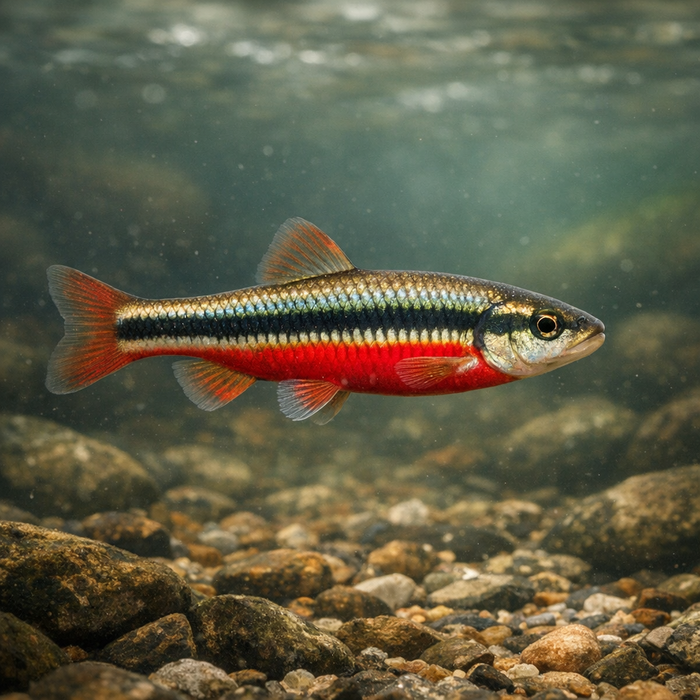
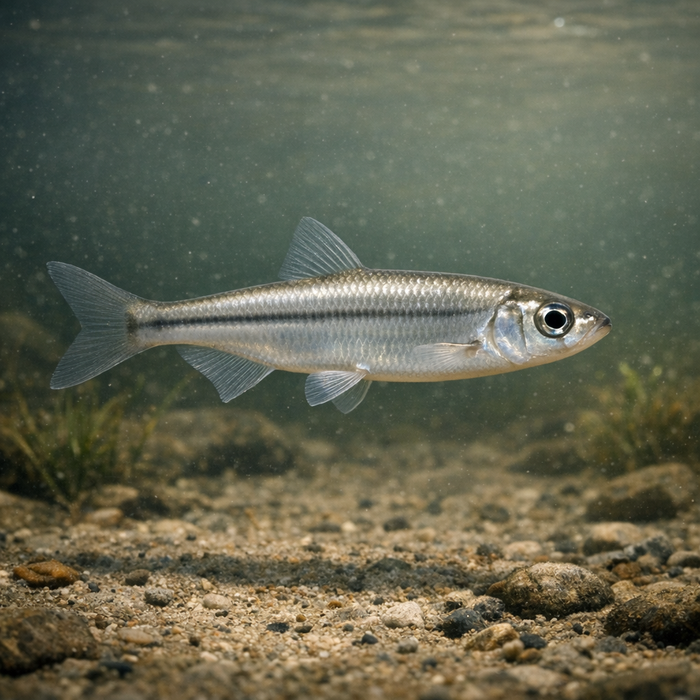
Redside Dace (Clinostomus elongatus): A little rocket with a paint-job and a jump shot.IntroductionIf you've ever watched a stream and thought a minnow just tried to be a trout, you met a redside dace. This little North American stream specialist is part acrobat, part jewel, and 100 percent attitude. Tiny? Sure. Forgettable? Not a chance. Few fish pack more style into four inches than the redside dace, and if you care about clean creeks, you should care about this fish.What Makes the Redside dace Unique?Start with the slanted, upturned mouth that screams "surface sniper." Redside dace don't just sip; they launch, blasting out of calm pool edges to intercept low-flying insects like pocket-sized tarpon. Then there's the color show. In spawning season, males light up with a fire-red stripe along the flank, edged by chrome and gold. It's like someone airbrushed a sports car onto a minnow. Add their midwater hover technique-holding in silky seams before rocketing upward-and you have a fish that looks and hunts unlike your average creek chub.Habitat & Global RangeThis species is a connoisseur of clarity. Think clear, cool, well-oxygenated streams with alternating riffles and pools, undercut banks, and overhanging grasses. Redside dace habitat often includes gentle pool tails where insects collect and the current softens. They occur across parts of the Great Lakes and upper Ohio River drainages, with strongholds in southern Ontario and scattered strongholds in the Northeast and Midwest. They're homebodies, making short seasonal shifts between riffles for spawning and pools for feeding and shelter.Behavior & TemperamentRedside dace are ambush artists. They stage behind stones and root wads, suspending in the laminar layer like little kites, then torpedo upward at bugs drifting or even flying inches above the surface. Schooling is loose: small groups mingle, but individuals guard micro-spaces, especially during spawning. In ultra-clear water, they're wary. Flashy movement or a footfall on gravel can send the whole crew ghosting into cover. Low light and calm skies often cue that famous surface strike.Ecological ImportanceThis fish is a living gauge of stream health. Where redside dace thrive, you usually find cool water, shaded banks, intact riffle-pool sequences, and stable flows. As surface-insect assassins, they link riparian life to fish energy, turning terrestrial bugs into stream calories. They, in turn, feed kingfishers, herons, and predatory fish. Pull the redside dace out of a watershed and you don't just lose a species-you lose an indicator that the creek's pulse is steady.Conservation & Environmental PressuresHere's the rub: the redside dace is in trouble across much of its range. Urban sprawl straightens and deepens streams, stormwater spikes flows and temperature, and sediment buries the clean gravel they need. Nutrient runoff clouds their glassy pools. Even well-meaning bank "cleanups" can strip the overhanging grasses that fuel their bug buffet. Many regions now list the redside dace as endangered or otherwise protected. Translation: legal capture is restricted or banned in numerous waters, and even where incidental encounters are allowed, gentle handling and immediate release are the norm.The FishyAF TakeIf you want brute force, look elsewhere. If you want style points, redside dace deliver. They're the creek's glittering conscience-rewarding stealth, precise presentations, and respect for habitat. Chase them for the moment when a ruby flash rockets through a sunbeam and tags your tiny fly midair. Then put them back like the treasure they are. Redside dace facts aren't about inches and pounds; they're about clean water and sharp eyes. Learn the subtleties of redside dace habitat, and you'll read small streams better for every species you fish. That's a win even a bass angler can appreciate.