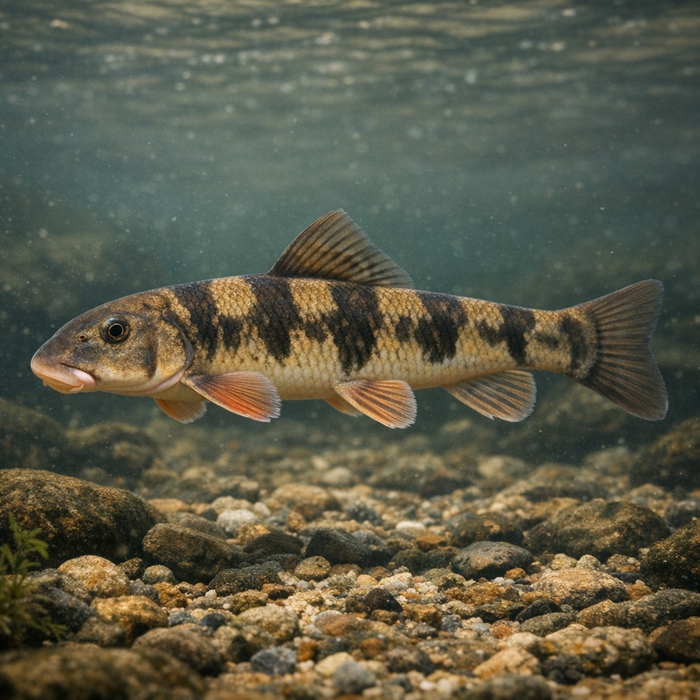
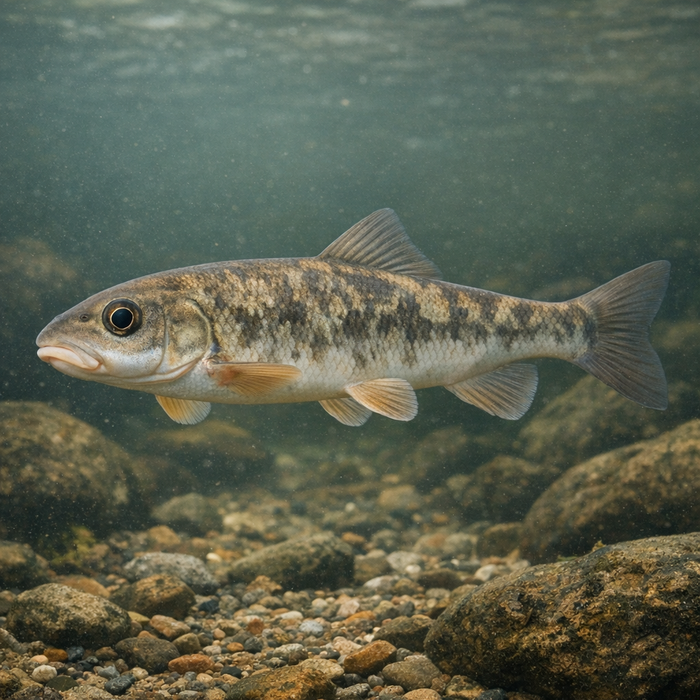
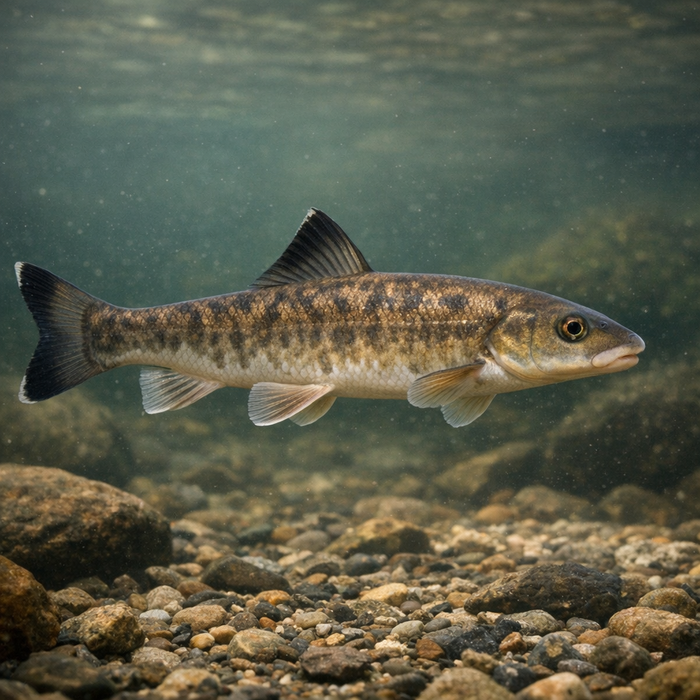
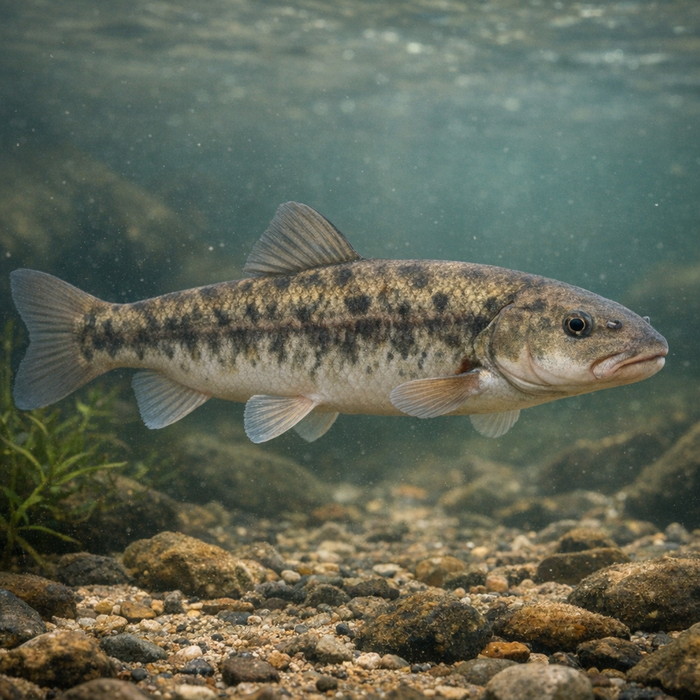
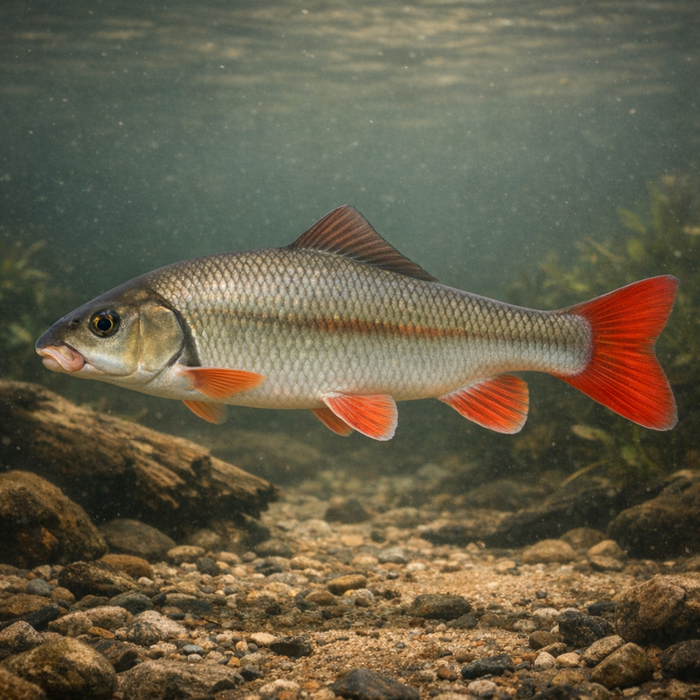
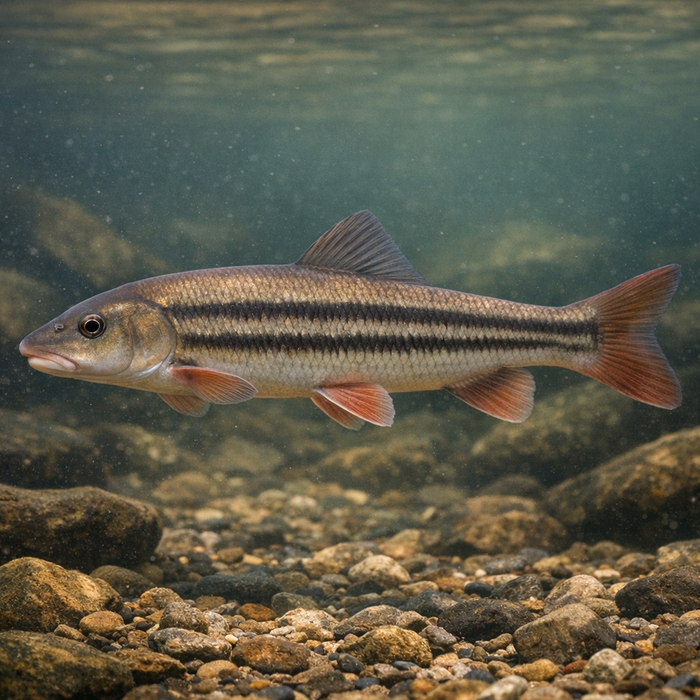
Roanoke Hog Sucker (Hypentelium roanokense): A Bold, Memorable Hook LineIntroductionThe Roanoke hog sucker is the stream janitor with a square head and a vacuum-cleaner mouth. Anglers rarely travel for it, but anyone prowling Virginia and North Carolina riffles has watched this fish bulldoze gravel like it owns the river. Tough, specialized, and sneakily handsome, the Roanoke hog sucker is a niche prize that rewards patience, stealth, and a taste for weird fish.What Makes the Roanoke hog sucker Unique?Start with that head. The Roanoke hog sucker has a blocky, squared nape leading to a flat-topped skull, big pectorals, and a thick chest designed for life in fast water. Its mouth protrudes downward and outward, literally pistoning to flip pebbles and slurp insect larvae. Add crisp, dark saddles across a coppery-olive back and you get a fish that looks like it came from a custom riffle factory. Compared to its northern cousin, the markings often look sharper in clear water, and the body carries that telltale bulldozer stance. These aren't generalized river fish; they're riffle specialists with purpose-built gear.Habitat & Global RangeIf you're hunting Roanoke hog sucker habitat, think Appalachian foothills: cool, clear, rocky streams with cobble riffles, swift runs, and pocket water. The species is primarily tied to the Roanoke and adjacent basins in Virginia and North Carolina. It's a local act, not a touring band. Depth is usually knee-deep or less, with fish working the exact lanes where current cleans the rocks. Tailwaters with good oxygen and stable flow can stack them up, especially below dams where insect drift stays consistent year-round. They don't roam lakes and big reservoirs much; current is life, clarity is comfort, and clean gravel is the dinner plate.Behavior & TemperamentThis fish is not aggressive like a smallmouth. It's calculated. Roanoke hog suckers glue themselves to the bottom, facing upstream, picking off caddis, mayflies, and stoneflies with surgical drifts. They spook easily in skinny water and slide behind boulders or into seams the second boots splash. Spring brings loose aggregations for spawning in shallow riffles, but there's no nest-building or parental care; eggs scatter into gravel and the fish get back to feeding. Fights are short bulldogging bursts. Hook one, and expect a low-gear tussle with quick leverage to the net if you keep it pinned.Ecological ImportanceThe Roanoke hog sucker is a conveyor belt for stream health. Its foraging flips and vacuums keep biofilm and fine sediment from smothering stones, which frees up microhabitats for aquatic insects. That action also churns calories into the drift, feeding trout, sunfish, and anyone else poised to intercept a wayward nymph. If you want a loaded macroinvertebrate menu for gamefish, you want hog suckers doing their blue-collar work on the bottom. They're also canaries for watershed quality. When silt and runoff spike, this species thins out; when flows stabilize and clarity returns, they rebound.Conservation & Environmental PressuresDespite a relatively narrow range, the Roanoke hog sucker is currently assessed as Least Concern, largely because viable habitat still exists across multiple tributaries. The threats are familiar: sedimentation from development, poorly managed road crossings, warm, low-oxygen summer flows, and the slow creep of nutrient pollution. Headwater protection, buffer plantings, and dam operations that stabilize summer temperatures keep this fish in business. Because it's rarely targeted, harvest pressure is negligible. The bigger risk is death by a thousand watershed cuts.The FishyAF TakeRoanoke hog suckers are proof that not every cool fish needs a fan club. They won't smoke your drag, and they won't smash a topwater. But if you appreciate precision, stealth, and clean current, they're a satisfying puzzle. You'll learn current seams, weight placement, and quiet wading faster chasing these than most glamour species. They're a litmus test for healthy riffles, a photo-worthy oddball, and a great excuse to explore small water. If you wanted Roanoke hog sucker facts, here's the best one: master this fish and everything else in that creek gets easier.