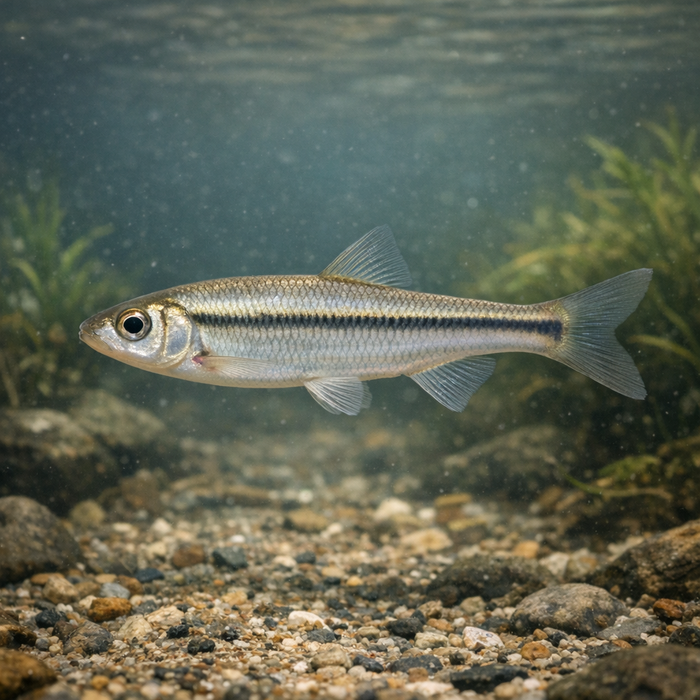
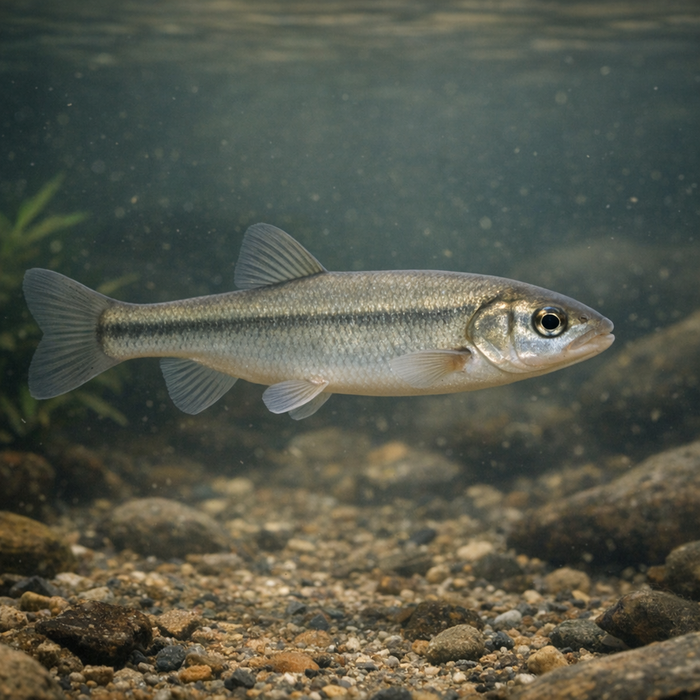
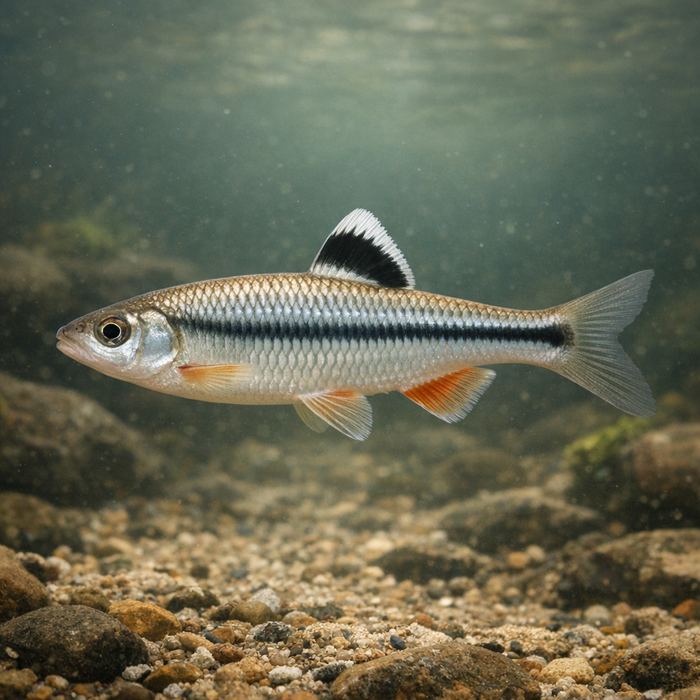
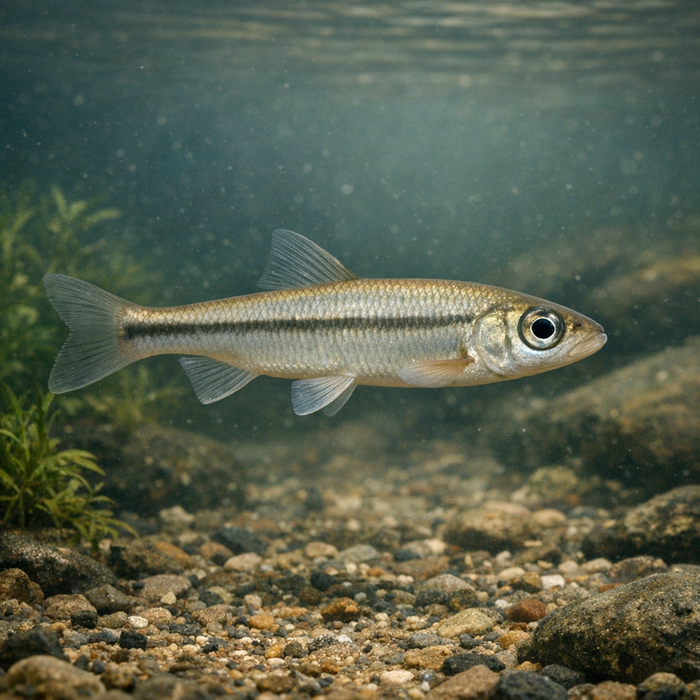
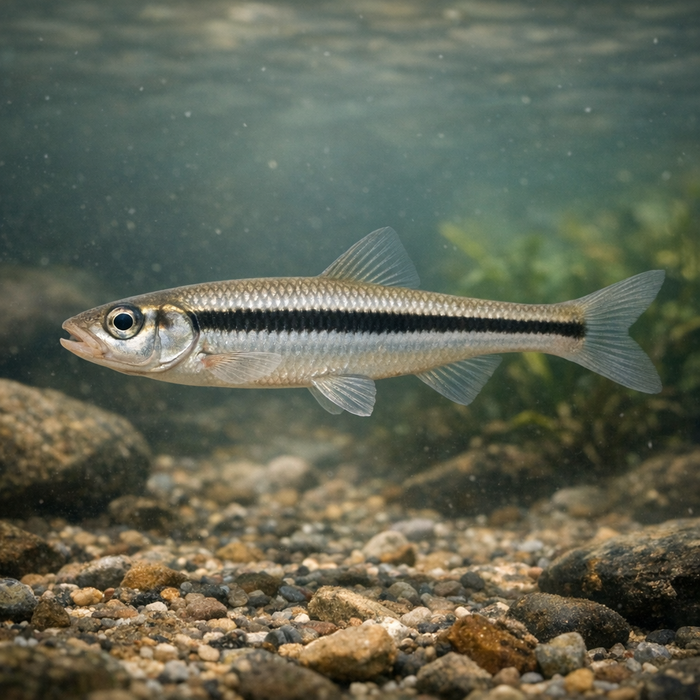
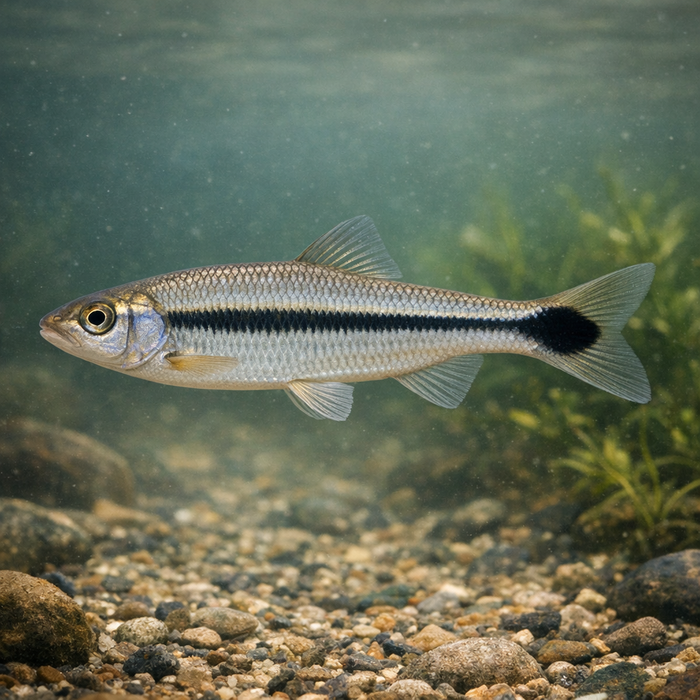
Satinfin Shiner (Cyprinella analostana): A Bold, Memorable Hook LineIntroductionThe satinfin shiner is the tiny spark plug of Mid-Atlantic creeks. Where the current hums and gravel rattles, these silver bullets gather, flash, and make the whole riffle feel alive. Anglers chasing trout or smallmouth stumble into them all the time; micro anglers make them the main event. Either way, a few Satinfin shiner facts go a long way when you're picking apart a shallow run.What Makes the Satinfin shiner Unique?Two showstopper traits set this fish apart. First, breeding males wear razor-clean white fin edges that look like they were dipped in paint, giving the "satinfin" its name. In bright sun, those margins glow, and a pulsing school looks like a handful of metallic confetti. Second, its nesting is pure crevice-ops: instead of fanning open gravel like many minnows, males guard eggs tucked deep in cracks in rock or wood. They'll even adopt bridge riprap and dock timbers if the current and cover feel right.Habitat & Global RangeIf you're browsing for Satinfin shiner habitat, think Atlantic-slope streams from New York through the Mid-Atlantic into North Carolina. They like clean, moving water and rocky substrate: cobble riffles, pocket-water edges, and the heads and tails of pools. They also spill into small rivers, floodplain channels, and the quieter corners of lakes connected to streams. Depth is usually measured in shin to knee deep, which is another way of saying "easy reach from the bank" for most anglers.Behavior & TemperamentSatinfin shiners run in tight schools that slide, pivot, and feed together. They're opportunistic grazers on drifting invertebrates and fine organics, quick to nab anything edible that zips past at the right speed. During spawn season, males posture with fin flicks and body shivers, then hold position over crevices where multiple females may contribute eggs. They're alert but not neurotic; a careful approach keeps them feeding at your feet, while a clumsy shadow sends them skating downstream.Ecological ImportanceThis is the snack-size engine of the food web. Satinfin shiners convert current-borne bugs into instant calories for everything bigger and toothier: smallmouth, trout, pickerel, herons, and kingfishers. They transport nutrients through their constant grazing and drifting, and their crevice nesting stabilizes egg survival without ripping up gravel like some other spawners. In short, when satinfin schools are thick, the neighborhood is healthy.Conservation & Environmental PressuresThe species is listed as Least Concern, but that's not a free pass. Satinfin shiners need clean water, oxygen, and substrate that isn't choked with silt. Urban runoff, warm low-flow summers, bank trampling, and poorly designed culverts all chip away at perfect habitat. The silver lining: they're adaptable. Give them flow, stones, and a few crevices, and they'll often rebound fast.The FishyAF TakeThe satinfin shiner is proof that micro fish can deliver macro fun. They're visible, responsive, and honest about what they want: small baits, tight drifts, and just enough current to keep things spicy. When the cobble starts winking with white fin edges in late spring, lean in. Whether you're tuning your drift for trout or breaking out size-20 flies and micro hooks, this little rocket is the perfect readout of how a stream is feeling today. If the satinfin is happy, odds are your bigger targets will be too.