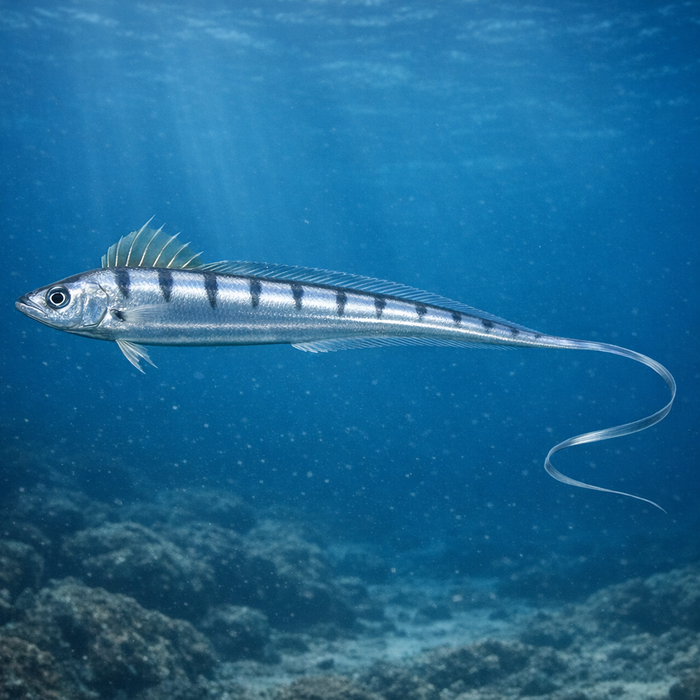
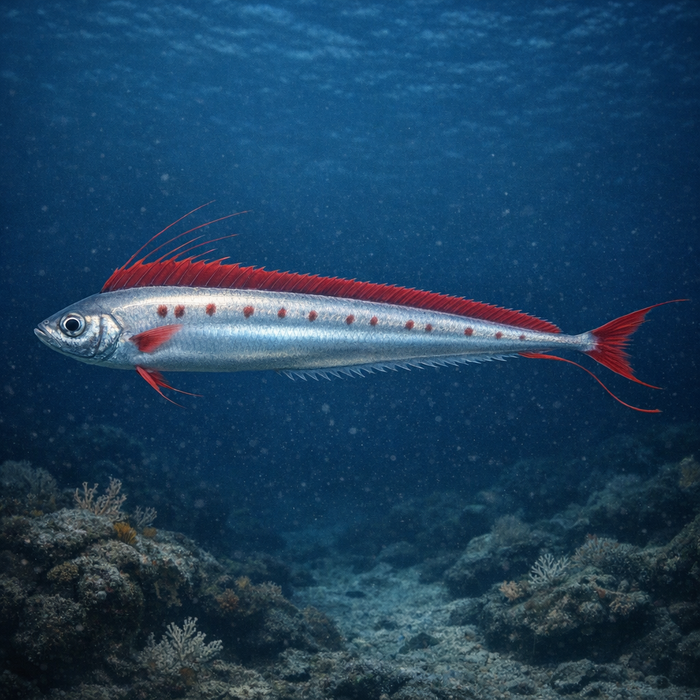
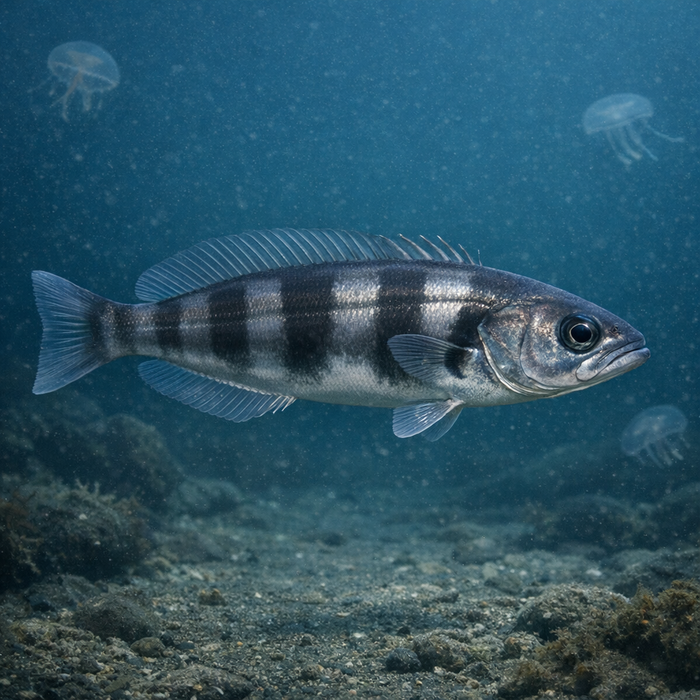
Scalloped Ribbonfish (Zu cristatus): Silver ribbon with a rockstar crest and a habit of showing up when lights hit water.IntroductionThe scalloped ribbonfish is the ocean's weirdly elegant after-hours guest. Long as a yardstick and thin as a ruler, it glides up from the deep like a backstage pass holder when the deck lights flip on. Anglers don't chase it so much as stumble into it, and when it shows, everyone on board leans over the rail for a look. If you're here for scalloped ribbonfish facts and a clean read on scalloped ribbonfish habitat, buckle up. This one's a lampriform curveball with style.What Makes the Scalloped Ribbonfish Unique?Start with the body plan: a gleaming, paper-thin ribbon bordered by a tall, frilly anterior dorsal that looks outright ceremonial. That scalloped crest is the calling card. Unlike chunky gamefish, the scalloped ribbonfish swims by rippling its ultra-long dorsal, sliding through midwater with almost no splash or drama. It's also a card-carrying relative of the mythic oarfish, only travel-sized and way more catchable around bright lights. It's a specialist in the low-light world, with big eyes and mirrored skin that screams stealth.Habitat & Global RangeThis species is a textbook offshore midwater resident, hanging from near-surface twilight zones down into the mesopelagic. Think continental-shelf edges, canyons, seamount flanks, and deep blue water rather than reef or beach structure. It often rides the night elevator upward, slipping into the top layer where squid and flyingfish mingle under lights. As a widely distributed oceanic fish, you can encounter the scalloped ribbonfish in temperate and tropical waters worldwide, especially where currents pinch bait against structure like ledges or island shelves.Behavior & TemperamentThe scalloped ribbonfish is not a brawler. Hook one and it helicopters, kites, and comes quietly. That's fine; you're not here for a slugfest. You're here because it looks like a silver banner with its own crest. These fish cue off light, current, and the night cycle, patrolling open columns rather than hunkering on bottom. Singles are the norm, though small loose groups happen. They'll take small jigs and baits when the presentation drifts naturally, especially top-to-mid column in the glow.Ecological ImportanceTake a lap through the pelagic buffet and you'll see why these ribbons matter. They feed on small fishes and cephalopods and, in turn, slide into the diets of larger predators. They are one of the many midwater connectors that shuttle energy between deep scattering layers and near-surface night life. The scalloped ribbonfish, like other lampriforms, wears the silver uniform that helps pelagic animals stay invisible in open water, smoothing out predator-prey transactions in a place with nowhere to hide.Conservation & Environmental PressuresFormal stock work on Zu cristatus is thin, which isn't surprising for a midwater drifter that rarely features in targeted fisheries. They show up as bycatch in various pelagic gears and are episodically stranded by wind events. The big-picture risks are the usual pelagic suspects: light pollution altering night-feeding behavior, climate-driven shifts in currents and temperature bands, and broad-scale fishing pressure on the bait cloud they depend on. While not flagged as a high-concern species, the scalloped ribbonfish rides the same roller coaster the rest of the open ocean is on.The FishyAF TakeThe scalloped ribbonfish isn't a checklist target; it's a curveball that makes night trips memorable. If you're jigging under a strong glow and something thin, silver, and crested materializes, you just won the weird-fish lottery. Handle it gently, admire the parade-crest dorsal, snap a photo, and appreciate that the ocean keeps a few cards close to the vest. Among odd pelagics, this one is both approachable and theatrical, and that's exactly why anglers talk about it long after the cooler gets emptied. Scalloped ribbonfish facts might be scarce, but the vibe is loud. And when you finally see one in the lights, you'll get it immediately.